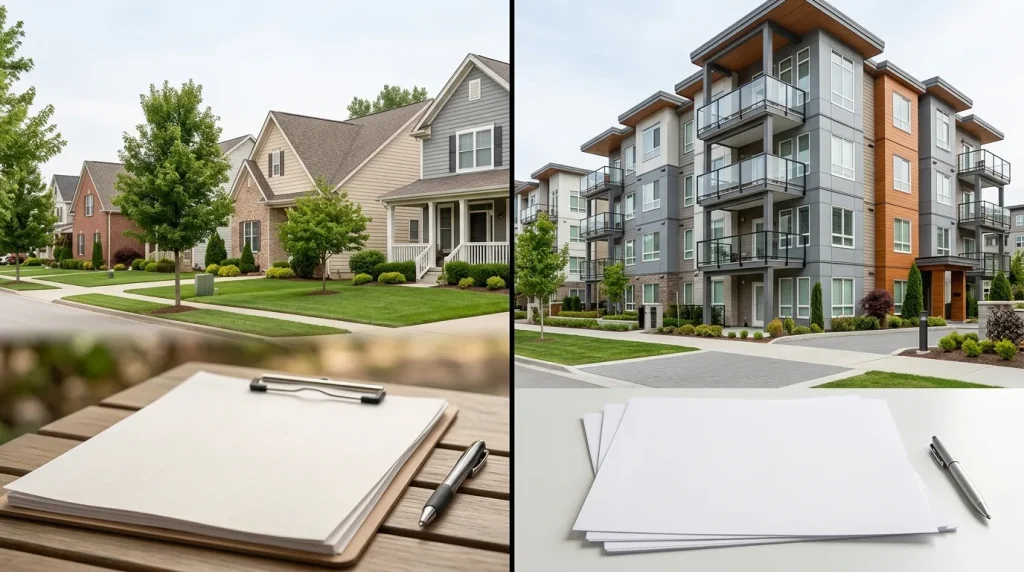
Single-family rentals and apartments are no longer moving in the same way.
In 2026, apartments are seeing the clearest affordability improvement because a wave of multifamily construction has added supply in many markets. Single-family rentals remain more expensive and less broadly affordable, but their rent growth has also cooled from earlier levels.
For renters, that means the best deal may depend on whether they need space, privacy and a yard — or whether they can take advantage of apartment concessions and new supply.
Key takeaways
- Zillow said 79.4% of multifamily rental listings were affordable to a median-income household in May.
- Zillow said 47.3% of single-family rental listings were affordable.
- Zillow reported the typical U.S. rent at $1,951 in May, up 2% year over year.
- Nearly 40% of Zillow rental listings offered a concession in May.
- Cotality reported single-family rents rose 1.4% year over year in April 2026.
- Cotality said detached-rental rent growth was 1.1% in April.
- Apartments are generally seeing more supply-driven relief than single-family rentals.
Apartment affordability is improving faster
Zillow’s May 2026 rent report shows the difference clearly.
Zillow reported that 74% of rental listings on its platform were affordable to a median-income household in May, the highest May share in its data. The affordability gain was strongest in multifamily rentals, where 79.4% of listings were affordable, up from 75.5% a year earlier.
That improvement reflects the apartment supply wave. More apartments mean renters have more options, and landlords have more reason to offer concessions or keep rent increases limited.
Zillow also reported that 39.6% of rental listings offered a concession in May, up from 35.1% a year earlier.
Single-family rentals remain less affordable
Single-family rentals are improving too, but they remain much less affordable than apartments.
Zillow reported that 47.3% of single-family rental listings were affordable to a median-income household in May, up from 44.9% a year earlier.
That gap makes sense. Single-family rentals often offer more space, yards, garages and school-district access. Those features can command a premium, especially when many would-be buyers are priced out of ownership but still want single-family living.
For families, a single-family rental may be the only practical alternative to buying. For renters focused mainly on price, apartments may offer more relief.
Single-family rent growth has slowed
Cotality’s Single-Family Rent Index showed that U.S. single-family rents rose 1.4% year over year in April 2026. That was a slowdown from the 2.8% year-over-year increase recorded in April 2025.
Cotality also reported that rent growth for detached rentals increased 1.1% in April, while attached rentals rose 1.0%. High-end single-family rentals rose 2.1% year over year, while low-end single-family rental prices increased 0.6%.
That pattern shows a market that is still rising nationally, but more slowly and unevenly.
Regional differences matter
National comparisons can hide major local differences.
Cotality said Midwestern and Northeastern markets such as Chicago, Philadelphia and New York led single-family rent gains in April, while some Sun Belt markets were flat or declining. It also reported that 11 of the 50 largest metros had annual decreases.
Zillow’s rent report also showed large metro differences, with many markets seeing more affordability while others saw affordability decline from a year earlier.
The rental market is not one market. It is a collection of local supply and demand stories.
What renters should compare
Renters deciding between a single-family home and an apartment should compare base rent, concessions, utilities, parking, pet fees, yard maintenance, renter’s insurance, commute, school access, lease term, renewal history, maintenance responsibilities and move-in costs.
A cheaper apartment may be a better financial choice. A more expensive single-family rental may still be worth it for space, privacy or lifestyle needs.
What landlords should watch
Apartment owners should watch concessions, vacancy and lease-up velocity. In supply-heavy markets, occupancy may matter more than pushing rents.
Single-family rental owners should watch local homebuying affordability. When buying is difficult, demand for single-family rentals can stay resilient. But if rents rise too far or household budgets weaken, growth can slow.
Investors should compare rent growth with expenses. Property taxes, insurance, maintenance and financing costs can reduce returns even when rents are still rising.
What this means
Apartments are currently getting more supply-driven affordability relief than single-family rentals. But single-family rentals continue to serve households that want ownership-like features without buying.
For renters, the best option depends on price, space and flexibility. For investors, the best market depends on local supply, tenant demand and expense growth.
The answer to which rents are rising faster is not fixed. In 2026, both apartment and single-family rent growth are cooler than during the peak years, but the affordability gap between the two property types remains wide.
FAQ
Are single-family rents rising faster than apartment rents?
Single-family rents are still rising nationally, but growth has slowed. Cotality reported single-family rents up 1.4% year over year in April 2026.
Are apartments more affordable than single-family rentals?
Yes, based on Zillow’s May 2026 data. Zillow said 79.4% of multifamily listings were affordable to a median-income household, compared with 47.3% of single-family listings.
Why are apartment rents cooling?
A large wave of multifamily construction has added supply, giving renters more choices and increasing concessions in some markets.
Why are single-family rentals still expensive?
Single-family rentals often offer more space, yards, garages and school access, and many households priced out of buying still want those features.
Should renters choose an apartment or single-family rental?
It depends on budget, space needs, location, pets, commute, schools, concessions and lease terms.
Sources with clickable URLs
- Zillow — May 2026 Rent Report
- Cotality — Single-Family Rent Growth Slows Across U.S.
- Apartment List — National Rent Report
- CBRE — Q1 2026 U.S. Multifamily Figures