
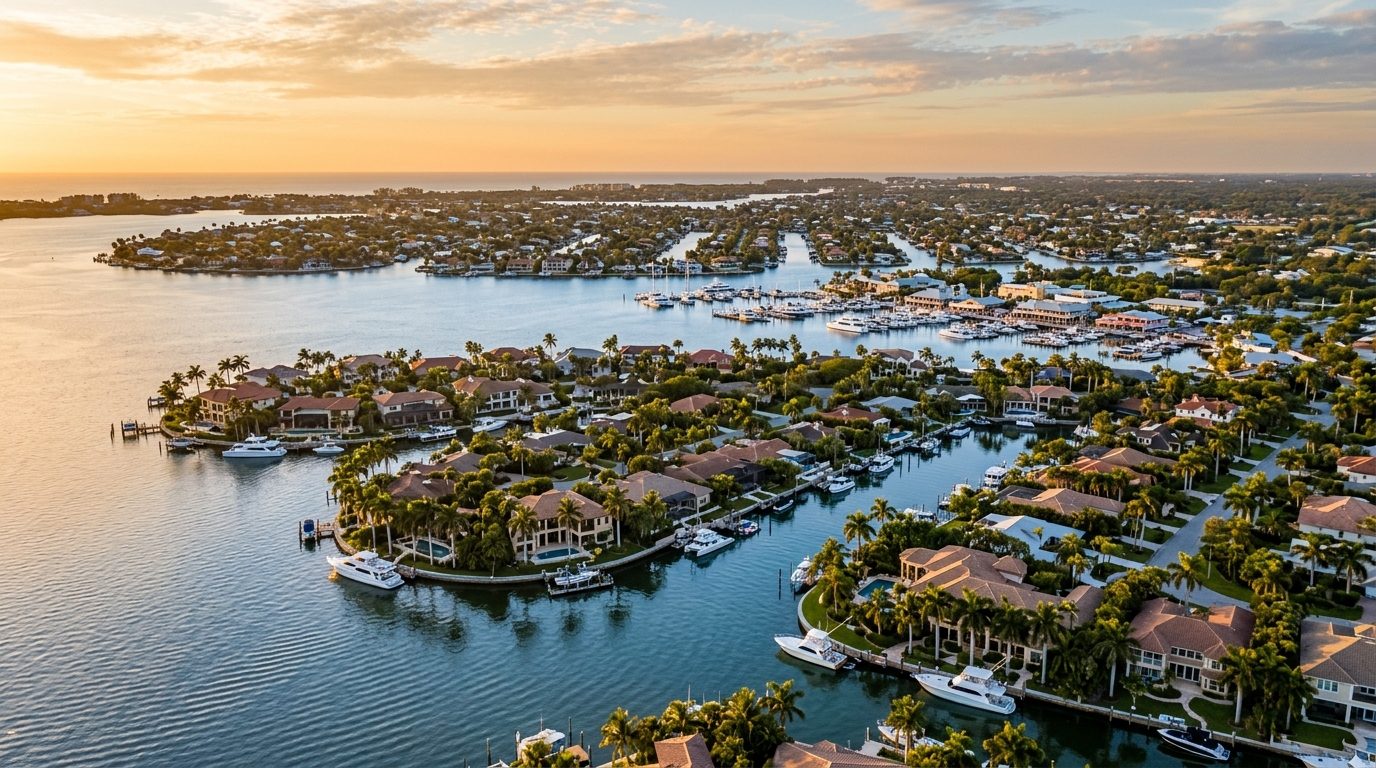
Current real estate market data, news and analysis for the Punta Gorda, FL metropolitan area — 217,212 residents across Charlotte county.
Data as of May 2026. Sources: Redfin Data Center, U.S. Census Bureau.
Latest Punta Gorda Real Estate News
Punta Gorda Real Estate Market Overview
This metro covers a single county in southwest Florida, low and flat, centered on the harbor where a river meets one of the state’s largest natural estuaries. Punta Gorda’s historic downtown sits right at that harbor, while the rest of the county is threaded with an extensive network of dredged canals built from the mid-twentieth century onward, with the excavated material used to raise the surrounding lots for building. Housing stock ranges from a small historic core with early-twentieth-century buildings to vast canal-front and golf-course subdivisions from mass developers, plus a newer, purpose-built master-planned town rising on the county’s northern edge.
Waterfront lots with direct boating access to the harbor, along with the county’s gated golf and marina communities, price at the top of the market, trading on either open-water access or bundled amenities like golf and clubhouse facilities. A large, distinctively laid-out planned community built around canals and golf courses on a peninsula south of the harbor prices in the middle of the range, shaped by its deed restrictions and recreational amenities rather than direct open-water access. The county’s largest and oldest platted community, developed decades ago as one of Florida’s biggest lot-sale subdivisions, remains the most affordable broad option in the metro, reflecting smaller original lots, older housing stock, and inland rather than waterfront locations. The newer master-planned town to the north, built with resilience in mind from the ground up, sits at a different point in the market defined by new construction rather than by waterfront access.
Healthcare is the backbone of the private-sector economy here, with several hospitals serving a county whose population skews notably older than the national average. The county school district and county government are among the largest public-sector employers. A regional airport served primarily by a low-cost carrier has become a genuine economic driver in its own right, supporting a meaningful number of direct jobs tied to aviation and tourism. The newer planned community on the county’s northern edge, still under active construction, is itself a significant source of construction and eventually commercial employment as it continues to build out. Overall the local economy leans heavily on services tied to retirees, tourism, and healthcare rather than corporate headquarters or manufacturing.
This is one of the more hurricane-exposed metros in the country, having taken a direct hit from a major hurricane in recent years, and homeowner insurance costs here remain elevated as a result, particularly for older homes without impact windows or updated roofs. Flood zone designation and elevation documentation matter enormously for both insurance pricing and financing, and the county requires new construction to meet or exceed federal flood-elevation standards. Florida has no state income tax, and a homestead exemption combined with an assessment-growth cap benefits long-term owner-occupants, though a newly purchased home can see a substantial reassessment jump compared with what the previous owner was paying. There is no fixed-route public bus system in this county, only a reservation-based shared-ride service, so the metro is essentially car-dependent. Many communities here are deed-restricted or age-restricted, and buyers should carefully check homeowners association fees, community development district assessments, and any restrictions on boat or RV storage, along with seawall condition on any canal-front lot.
Cities and Towns in the Punta Gorda Metro Area
Notable Communities and Neighborhoods
Punta Gorda Real Estate Market FAQ
How is the Punta Gorda-area housing market organized?
The metro is a single county built around a harbor and an extensive canal system, ranging from the historic downtown at the harbor’s edge to large mid-century platted subdivisions and a newer master-planned town still under construction.
Which parts of the metro tend to be pricier?
Direct waterfront lots with open harbor access and the county’s gated golf and marina communities tend to price above the county’s largest inland subdivision and above homes without deeded water access.
What should buyers verify locally before purchasing?
Check a property’s flood zone designation and elevation certificate, confirm whether it’s covered by a homeowners association or community development district, and inspect seawall condition directly for any canal-front lot.
What’s a region-specific risk buyers should know about?
Hurricane exposure and the insurance costs that come with it are the defining local risk, and buyers should look closely at a home’s roof age, window protection, and construction date relative to the county’s current building code before assuming a quote will be affordable.
Nearby Markets