
Current real estate market data, news and analysis for the Albany-Schenectady-Troy, NY metropolitan area — 915,835 residents across 5 counties in New York.
Data as of May 2026. Sources: Redfin Data Center, U.S. Census Bureau.
Latest Albany Real Estate News
Albany Real Estate Market Overview
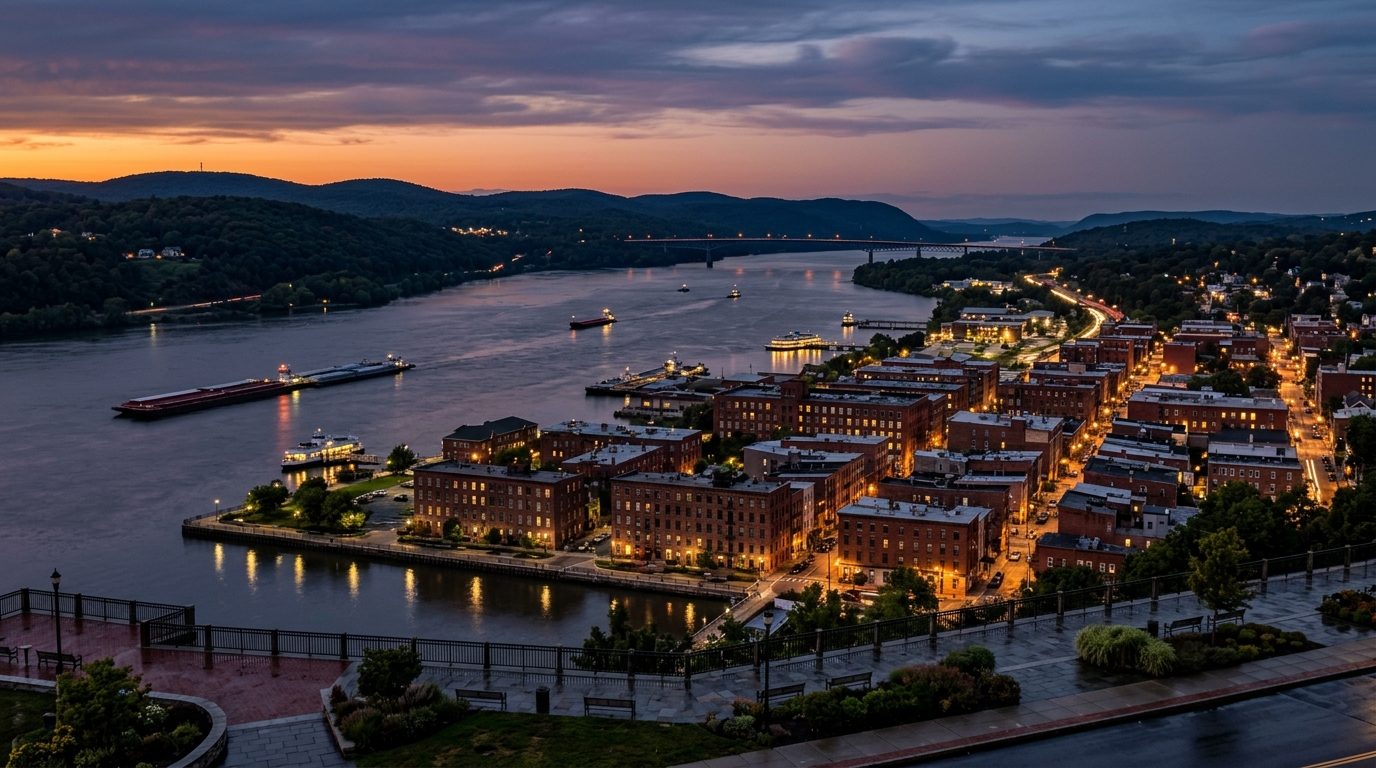
New York’s Capital District sits where the Hudson and Mohawk rivers meet, with Albany on the Hudson, Troy just upstream, Schenectady along the Mohawk to the west, and Cohoes marking the actual river confluence — a river-valley landscape ringed by low hills, with rural, hilly Schoharie County to the west standing in contrast to the urbanized valley floor. Housing stock splits sharply along those lines: dense 19th-century rowhouse and brownstone neighborhoods fill the urban cores of Albany, Troy, and Schenectady, broad mid-20th-century subdivisions cover suburban towns like Colonie, Clifton Park, and Guilderland, and older farmhouse and small-village housing predominates in rural Schoharie.
Saratoga Springs, a historic resort city built on 19th-century spa and horse-racing wealth, sits at the top of the market, with well-preserved Victorian districts along Broadway and around Franklin Square. Loudonville, a Colonie neighborhood that began as a summer retreat for wealthy Albany residents, occupies similar territory today as an upscale suburban address, as does the GE Realty Plot in Schenectady, built by General Electric a century ago to house its executives and still a prestige address near Union College. The urban cores of Albany, Troy, and Schenectady sit toward the more affordable end of the market, reflecting industrial-era rowhouse density and decades of post-industrial change, even as individual historic pockets within those cities — designated districts with well-preserved 19th-century architecture — draw buyers for character rather than price.
State government is the region’s largest employer by a wide margin, Albany being New York’s capital, and Albany Medical Center anchors the private healthcare sector as one of the area’s biggest employers alongside St. Peter’s Health Partners. Semiconductor manufacturing has become a major growth driver: GlobalFoundries operates a large chip fabrication plant in Malta, in Saratoga County, with continued state-backed investment expanding its footprint, while the Albany NanoTech Complex, tied to the University at Albany, anchors related chip research. Higher education is a substantial employer in its own right, with SUNY Albany, Rensselaer Polytechnic Institute in Troy, Union College in Schenectady, and Skidmore College in Saratoga Springs all significant presences, alongside General Electric’s still-notable, if much reduced, Schenectady operations.
Winters here are genuinely cold and snowy, meaning heating costs and snow removal are real line items for anyone relocating from a milder climate. New York carries among the highest property tax burdens in the country, and within the region Schenectady in particular has repeatedly ranked among the highest-taxed localities in the state — worth checking district by district rather than assuming a metro-wide rate. Flood risk along both rivers is well documented, especially in Schenectady’s low-lying Stockade neighborhood, which has flooded from the Mohawk multiple times historically. Properties within any of the region’s several designated historic districts carry added review requirements for exterior changes, a detail worth understanding before planning renovations. GlobalFoundries’ continued expansion is actively driving housing demand and growth pressure specifically around Malta and greater Saratoga County.
Cities and Towns in the Albany Metro Area
Notable Communities and Neighborhoods
Albany Real Estate Market FAQ
How is the Albany-Schenectady-Troy housing market organized?
It splits between dense 19th-century rowhouse neighborhoods in the urban cores of Albany, Troy, and Schenectady, mid-century suburban towns like Colonie and Clifton Park, and rural, small-village Schoharie County to the west.
Which areas tend to be pricier and which more affordable?
Saratoga Springs and upscale suburban enclaves like Loudonville sit at the top of the market, while the urban cores of Albany, Troy, and Schenectady are generally more affordable, apart from certain historic pockets.
What should buyers verify before purchasing here?
Check property tax rates by specific school district rather than assuming a metro-wide figure, and for river-adjacent properties, especially in Schenectady’s Stockade neighborhood, review flood history directly.
What regional risk factor is most important to understand?
GlobalFoundries’ continued semiconductor expansion around Malta is driving real growth pressure and housing demand in Saratoga County specifically, which is reshaping that submarket faster than the rest of the region.
Nearby Markets