
Current real estate market data, news and analysis for the Kingston, NY metropolitan area — 183,330 residents across Ulster county.
Data as of May 2026. Sources: Redfin Data Center, U.S. Census Bureau.
Latest Kingston Real Estate News
Coverage of this market is coming soon. Browse all housing market news.
Kingston Real Estate Market Overview
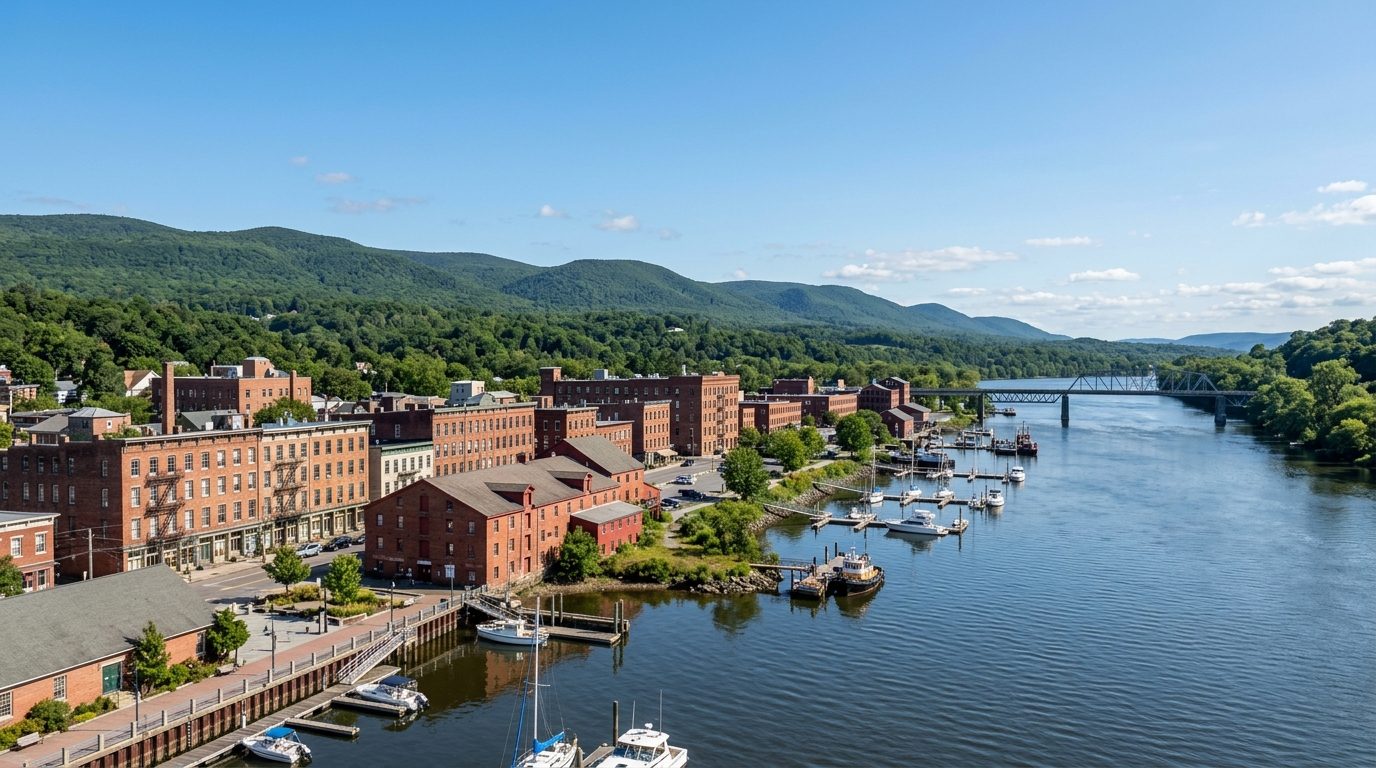
The Kingston, NY metro area is coextensive with Ulster County, a Hudson Valley county stretching from the tidal Hudson River on its eastern edge into the foothills of the Catskill Mountains and the Shawangunk Ridge to the west. The City of Kingston, the county seat, sits where Rondout Creek meets the Hudson, while New Paltz, Saugerties, and Ellenville anchor the surrounding towns along with numerous smaller hamlets. Housing stock reflects this settlement history: Kingston’s Stockade District retains stone Dutch colonial houses dating to the 17th century, its Rondout waterfront mixes Federal and Victorian rowhouses with former warehouses converted to lofts, and Midtown carries early-20th-century frame housing built around former industry. Outside the city, housing shifts toward postwar ranches near Kingston and New Paltz, and toward farmhouses and newer construction on larger lots toward the Catskills.
Within the metro, price tiers track history, walkability, and proximity to outdoor recreation more than any single factor. Kingston’s Uptown Stockade District and revitalized Rondout waterfront draw strong interest for historic architecture and a concentration of restaurants, galleries, and shops within walking distance. New Paltz village commands similar appeal thanks to its college-town amenities, its position beneath the Shawangunk Ridge climbing areas, and its association with Mohonk Mountain House. Saugerties pairs a walkable village core with Hudson riverfront access. By contrast, Kingston’s Midtown, built around industry that has since left, and Ellenville and much of southern Ulster County, farther from the Kingston-New Paltz corridor, sit in a more accessible tier, even as both see revitalization.
The metro’s economy centers on institutions rather than one dominant employer. Ulster County government is headquartered in Kingston, which also hosts the Kingston City School District. Health care is a major sector through HealthAlliance Hospital, part of the Westchester Medical Center Health Network and one of the county’s largest employers. Higher education contributes through SUNY New Paltz and SUNY Ulster. Tourism and hospitality are longstanding pillars, exemplified by the historic Mohonk Mountain House resort and a broader visitor economy tied to the Catskills, the Shawangunk Ridge, and the Hudson River. Manufacturing and logistics are re-emerging through redevelopment of the former IBM campus in the Town of Ulster into a light-industrial, food and agriculture, and arts campus. An arts and creative-business community, concentrated in Kingston’s Midtown Arts District, further diversifies the economy.
Buyers should verify flood-zone status, since the Hudson River, Esopus Creek, Rondout Creek, and Wallkill River carry mapped flood hazard areas through populated parts of the county, and standard homeowner policies do not cover flood damage. The Ashokan Reservoir, part of New York City’s water supply system, sits in the western county and can influence downstream flow, while areas near the Catskill Park and the city watershed carry added land-use rules worth confirming locally. Rural and hamlet properties frequently rely on private wells and septic systems rather than municipal service, so both should be tested before purchase. New York property taxes are relatively high and vary by district, so confirming the actual bill for a given parcel matters. Public transit is limited: there is no passenger rail station in the city, the nearest Amtrak stop is across the Hudson at Rhinecliff, and intercity bus is the main link to New York City. Historic districts in Kingston carry design-review rules affecting renovations, and winters bring routine snow to plan for.
Cities and Towns in the Kingston Metro Area
Notable Communities and Neighborhoods
Kingston Real Estate Market FAQ
How is the Kingston, NY market organized geographically?
The Kingston metro area is coextensive with Ulster County, running from the tidal Hudson River in the east to the Catskill Mountains and Shawangunk Ridge in the west. The City of Kingston is the county’s only city and its government and commercial hub, while New Paltz, Saugerties, and Ellenville are separate towns and villages, each with its own downtown, along with numerous smaller hamlets scattered across the county.
Which parts of the Kingston metro tend to be pricier or more affordable, and why?
Areas with historic architecture, walkable downtowns, and proximity to outdoor recreation tend to draw the strongest interest, including Kingston’s Uptown Stockade District, the Rondout waterfront, and New Paltz village near the Shawangunk Ridge and Mohonk Mountain House. Areas farther from this Kingston-New Paltz corridor, including Kingston’s Midtown and Ellenville and much of southern Ulster County, are generally more accessible, reflecting greater distance from the main job and amenity centers even as revitalization efforts are underway there.
What should buyers verify locally before purchasing in the Kingston metro?
Buyers should check FEMA flood-zone status for any property near the Hudson River, Esopus Creek, Rondout Creek, or Wallkill River, since standard homeowner insurance does not cover flooding. In rural hamlets and outlying towns, buyers should confirm whether a property relies on a private well and septic system rather than municipal water and sewer, and have both tested. It is also worth checking whether a property sits within a local historic district, since exterior renovations there can be subject to design review, and confirming the exact property tax bill, which varies by school district, village, and town.
What is a region-specific risk to understand in the Kingston metro?
Flooding along the Hudson River and its tributaries, including the Esopus and Rondout Creeks and the Wallkill River, is the most notable recurring risk, and the Ashokan Reservoir upstream, part of New York City’s water supply system, can affect downstream flow during heavy rain. Winters bring routine snow and occasional ice. The local economy also leans on a relatively small number of large institutional employers in health care, education, and government, which makes local job conditions somewhat tied to the health of those institutions.
Nearby Markets