
Current real estate market data, news and analysis for the Glens Falls, NY metropolitan area — 124,373 residents across Warren and Washington counties.
Data as of May 2026. Sources: Redfin Data Center, U.S. Census Bureau.
Latest Glens Falls Real Estate News
Coverage of this market is coming soon. Browse all housing market news.
Glens Falls Real Estate Market Overview
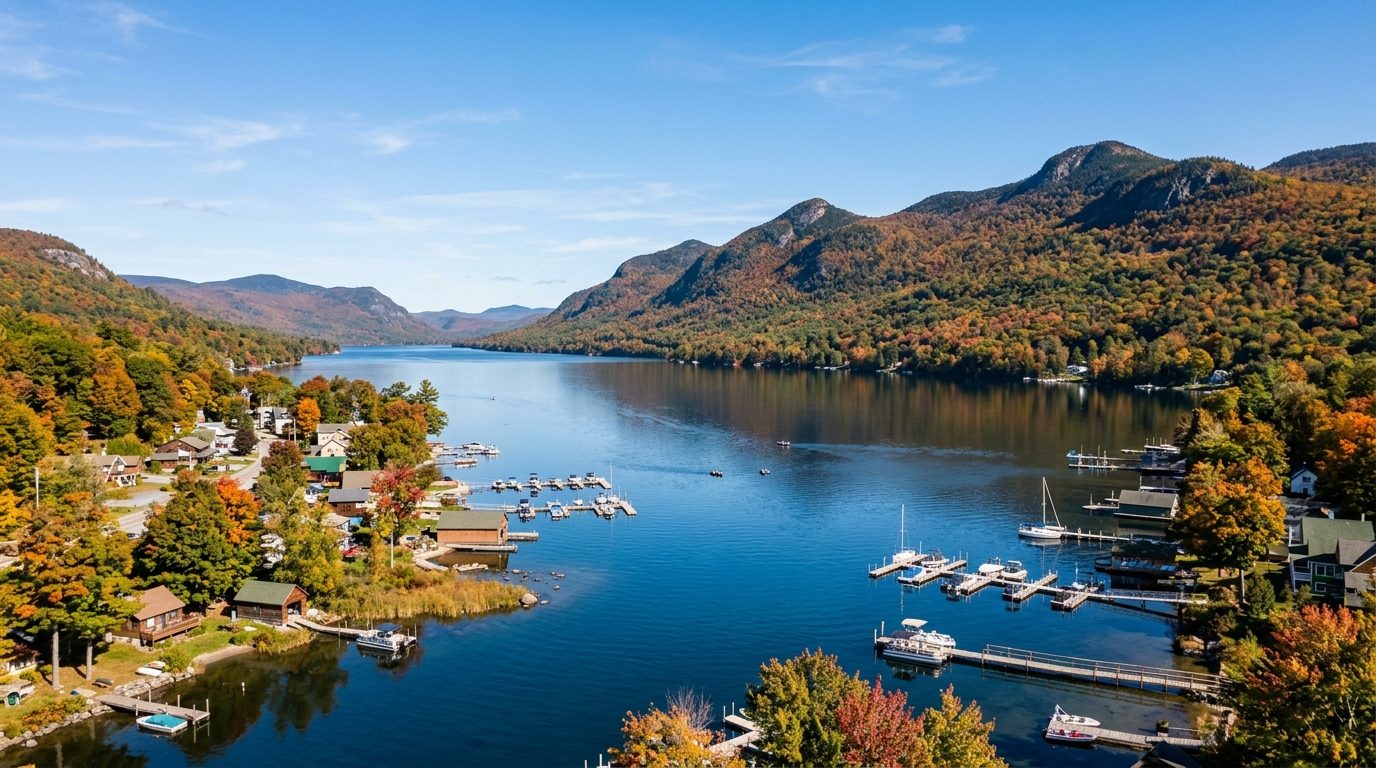
The Glens Falls metro sits at the southeastern edge of the Adirondack Mountains, where the foothills meet the upper Hudson River valley just north of New York’s Capital Region. Terrain ranges from the relatively flat river corridor around Glens Falls, Hudson Falls, and Fort Edward to increasingly hilly, forested ground moving toward Lake George and the interior of Warren County. Washington County, to the east, is gentler and more agricultural, rolling toward the Vermont border. Winters are long and snowy; summers are mild and humid. Housing stock reflects this layered history: dense mill-town blocks and worker housing in the river cities, farmhouses and small hamlet centers scattered through Washington County, and a distinct band of lakefront cottages, camps, and newer vacation homes ringing Lake George, where tourism and second-home demand have shaped construction for generations.
Price tiers within the metro track proximity to Lake George and the broader tourism economy more than any other single factor. Lakefront and near-lake communities such as Bolton Landing, Diamond Point, and Cleverdale, along with Lake George village itself, sit at the top of the range, driven by limited shoreline inventory, boating and vacation-rental demand, and buyers who treat the lake as a seasonal or investment property rather than a primary residence. Inland river communities including Hudson Falls, Fort Edward, Fort Ann, and Whitehall, historically built around paper mills, rail lines, and canal industry, sit toward the lower end. Glens Falls, Queensbury, and the Washington County farm towns fall in between, offering year-round convenience without a lake premium.
The regional economy centers on healthcare, manufacturing, and tourism. Glens Falls Hospital, part of the Albany Med Health System, is the area’s largest employer and anchors a broader medical and social-services sector. Manufacturing remains significant, led by paper and forest-products companies such as Finch Paper in Glens Falls and Irving Tissue in Fort Edward, alongside medical-device and precision manufacturing tied to the region’s long industrial base. Financial services are represented by Arrow Financial Corporation and its subsidiary banks, headquartered in Glens Falls. Tourism, anchored by Lake George, Six Flags Great Escape & Hurricane Harbor in Queensbury, and access to Adirondack recreation and nearby ski areas, supports hospitality, retail, and seasonal employment across the metro, with activity concentrated in summer and, to a lesser extent, ski season. SUNY Adirondack, based in Queensbury, adds an education and workforce-training presence.
Winters bring sustained snow cover and periodic heavy snow events, and buyers should factor in heating costs, plowing, and roof-load considerations that are less relevant further south. New York’s property tax structure, layered across county, town, school district, and sometimes village lines, varies considerably even between adjacent towns, so local rates are worth confirming directly rather than assuming. Transit is limited and largely car-dependent, though Amtrak’s Adirondack line serves the region through a station in Fort Edward. Much of Warren County lies within the Adirondack Park’s Blue Line, where the state Adirondack Park Agency layers additional permitting and shoreline-development review on top of local zoning; Washington County largely sits outside the Park and is governed by local rules alone. Lake George’s shoreline market runs heavily on seasonal and short-term-rental demand, so rental ordinances vary by town. Buyers should also confirm flood-zone status near the Hudson River and its tributaries, and well-and-septic conditions in the rural towns of both counties.
Cities and Towns in the Glens Falls Metro Area
Notable Communities and Neighborhoods
Glens Falls Real Estate Market FAQ
How is the Glens Falls metro area organized geographically?
The metro covers Warren and Washington counties in upstate New York. Warren County, anchored by the city of Glens Falls and the town of Queensbury, extends northwest into the Adirondack foothills and includes the Lake George shoreline. Washington County lies to the east, running from the Hudson River toward the Vermont border, and is more rural and agricultural, organized around small towns and villages rather than a dense urban core.
Which areas of the market tend to be more expensive, and why?
Communities directly on or near Lake George, including Lake George village, Bolton Landing, Diamond Point, and Cleverdale, sit at the higher end because of scarce shoreline inventory, strong tourism and vacation-rental demand, and buyers purchasing second or seasonal homes rather than primary residences. Inland former mill and rail towns along the Hudson River tend to be more affordable, while Glens Falls, Queensbury, and the Washington County farm towns fall in between.
What should buyers verify locally before purchasing in this market?
Property tax rates and assessment practices, which vary by town and school district even over short distances; flood-zone status for properties near the Hudson River or lake and stream shorelines; whether a property relies on a private well and septic system, common in the rural parts of both counties; and, for shoreline or forested parcels in Warren County, whether the property falls within the Adirondack Park and is subject to additional state land-use review.
What is the Adirondack Park, and how does it affect property in this area?
Much of Warren County lies inside the Adirondack Park’s boundary, known locally as the Blue Line. Towns within the Park that have their own approved local land-use programs handle most permitting themselves, but development, subdivision, and shoreline projects can still trigger review by the state Adirondack Park Agency in addition to local zoning and building codes. Washington County is largely outside the Park and is not subject to this additional layer of review. Buyers should check a parcel’s status with the local code office before assuming standard municipal zoning is the only rule that applies.
Nearby Markets