
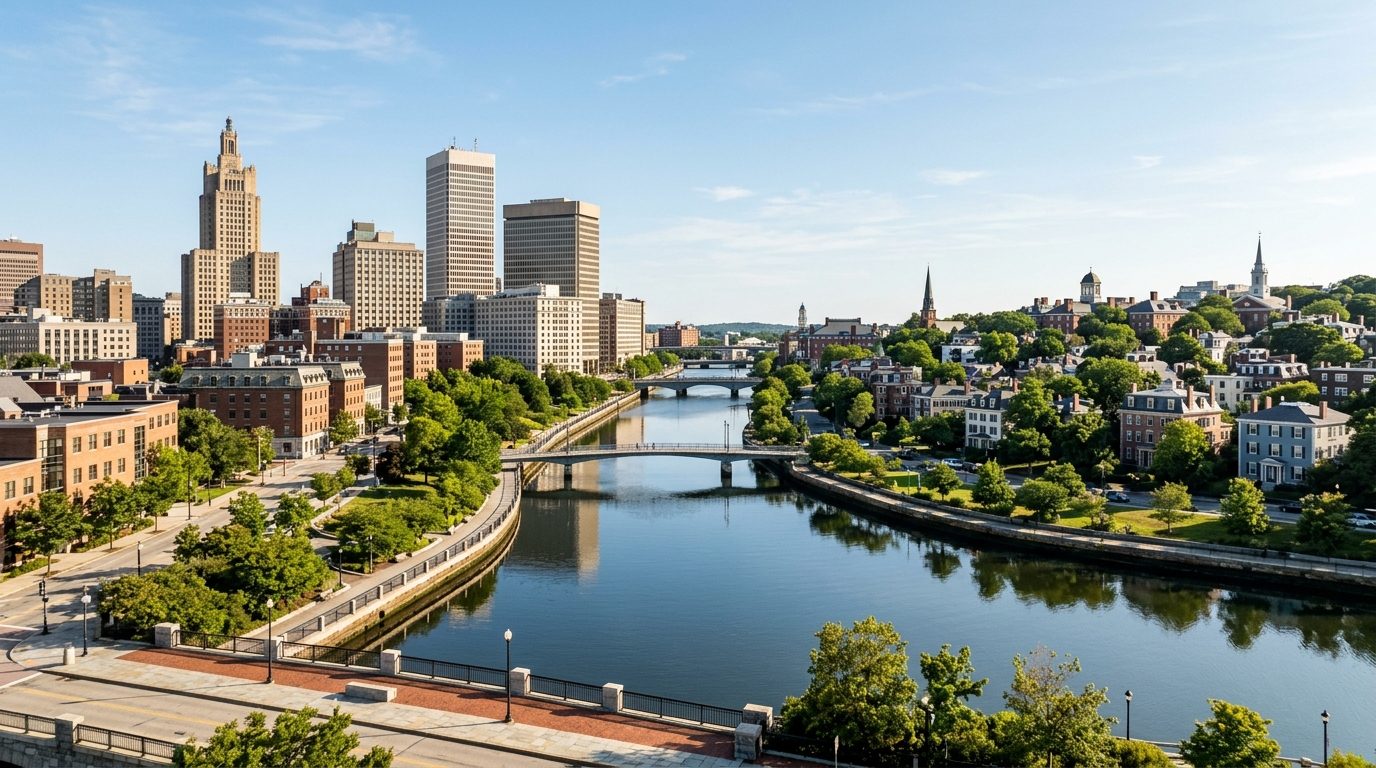
Current real estate market data, news and analysis for the Providence-Warwick, RI-MA metropolitan area — 1.7M residents across 6 counties in Rhode Island and Massachusetts.
Data as of May 2026. Sources: Redfin Data Center, U.S. Census Bureau.
Latest Providence Real Estate News
Providence Real Estate Market Overview
Providence-Warwick spans Rhode Island and Bristol County in southeastern Massachusetts, linking Providence, Narragansett Bay, Newport County, South County and the former manufacturing cities of Fall River, New Bedford and Taunton. Providence contains colonial and Victorian houses, triple-deckers, multifamily buildings, apartments, condominiums and converted industrial properties. Pawtucket, Central Falls, Woonsocket and inner suburbs have dense housing associated with former mill and streetcar corridors. Warwick and Cranston combine established subdivisions with commercial centers, while Barrington, East Greenwich and North Kingstown contain lower-density neighborhoods near the bay. Newport County and coastal southern Rhode Island add historic houses, waterfront condominiums, cottages and seasonal property.
Higher price tiers are generally associated with College Hill and other East Side neighborhoods, Barrington, East Greenwich, Jamestown, Newport, Little Compton, coastal South County and selected Massachusetts communities with water access or larger lots. These areas often combine historic architecture, limited land, shoreline access, established schools or convenient travel to regional employment centers. More attainable choices are commonly found in Central Falls, Pawtucket, Woonsocket, West Warwick, Fall River, New Bedford and portions of Taunton. Lower acquisition costs in former industrial communities may be accompanied by older building systems, multifamily management responsibilities, limited parking or additional renovation work.
The regional economy is supported by health care, education, government, finance, tourism, defense, manufacturing and maritime activity. Brown University, Rhode Island Hospital, Lifespan, Care New England, the State of Rhode Island and other institutions anchor Providence employment. Naval facilities and defense-related research influence Newport County, while tourism and hospitality are important in Newport and coastal communities. Southeastern Massachusetts contributes health care, manufacturing, fishing, logistics and education employment. Providence, Warwick, Newport, Fall River, New Bedford and suburban business districts operate as separate job centers within the larger market.
Coastal exposure, older construction and municipal variation are central ownership considerations. Hurricanes, nor’easters, storm surge, tidal flooding, salt air and shoreline erosion affect coastal and bayfront properties. Inland homes may face basement water, freeze-thaw damage, aging sewer systems and winter heating demands. Commuter rail and regional bus services connect selected corridors, but many communities remain automobile-dependent. Rhode Island and Massachusetts apply different tax, insurance, permitting and closing systems. Buyers should verify lead-paint requirements, septic or sewer service, flood and wind coverage, historic-district rules, condominium reserves and whether waterfront improvements have valid local and state approvals.
Cities and Towns in the Providence Metro Area
Notable Communities and Neighborhoods
Providence Real Estate Market FAQ
How is the Providence-Warwick housing market geographically organized?
The market includes Providence and its inner suburbs, Narragansett Bay communities, Newport County, southern Rhode Island and Massachusetts cities and towns in Bristol County. Bay crossings, state boundaries, rail access, coastal exposure and local municipal systems divide the region into distinct submarkets.
Which Providence-area locations generally sit in higher price tiers?
College Hill, the East Side of Providence, Barrington, East Greenwich, Jamestown, Newport, Little Compton, coastal South County and selected Massachusetts communities generally occupy higher tiers. Historic architecture, water access, larger lots, limited land and proximity to employment or rail service contribute.
What should buyers inspect in an older Providence-area home?
Buyers should review foundations, roofs, masonry, wood siding, electrical systems, plumbing, heating equipment and evidence of basement moisture. Multifamily buildings may also require review of fire separation, lead-paint compliance, common utilities and the legality of prior conversions.
What should coastal buyers verify in Rhode Island and southeastern Massachusetts?
Buyers should examine flood zones, elevation, evacuation access, erosion, septic systems, shoreline restrictions and wind and flood insurance options. Coastal permitting and maintenance obligations can differ among municipalities and between Rhode Island and Massachusetts.
Nearby Markets