
Current real estate market data, news and analysis for the Worcester, MA metropolitan area — 888,502 residents across Worcester county.
Data as of May 2026. Sources: Redfin Data Center, U.S. Census Bureau.
Latest Worcester Real Estate News
Worcester Real Estate Market Overview
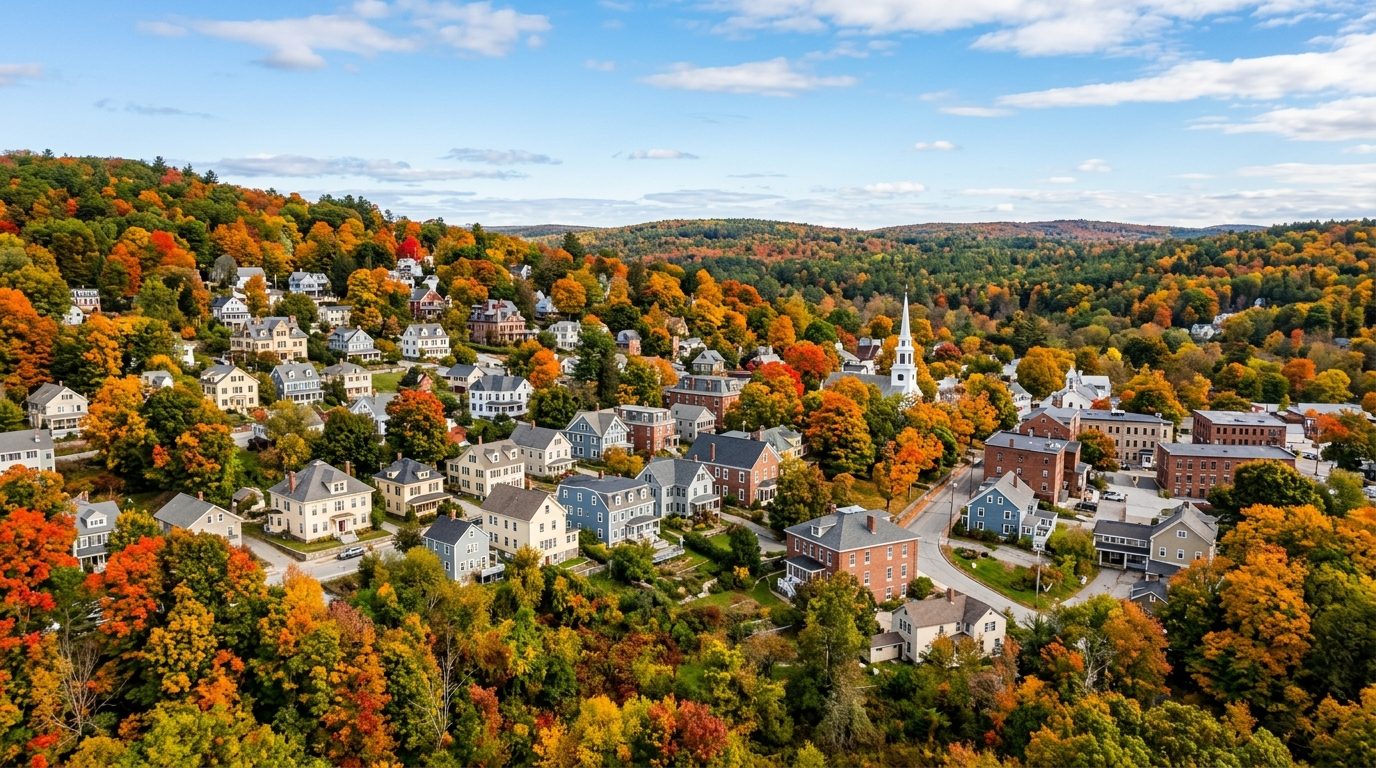
Worcester sits on hilly terrain in central Massachusetts, New England’s second-largest city, with a genuine four-season climate that brings cold, snowy winters. The city’s own housing stock is defined by triple-deckers — three-story, floor-through multi-family homes built largely between the 1880s and 1920s for the immigrant workforce of a once-substantial manufacturing base, many now protected as historic structures. Surrounding towns along the Route 9 and Massachusetts Turnpike corridor — Shrewsbury, Westborough, Northborough, Grafton, Auburn — are built out with newer, single-family colonial-style subdivisions dating from the mid-20th century onward, while towns further west, including Sturbridge and Southbridge, retain a more rural, small-town character tied to an earlier mill-town economy.
The Route 9/turnpike corridor towns of Shrewsbury, Westborough, and Northborough sit at the more affluent end of the metro, their appeal built on convenient commuting access toward Boston and newer suburban housing stock, with Westborough and Shrewsbury the more established of the three and Northborough still transitioning from a more rural past. Worcester’s own city neighborhoods, defined by their older multi-family triple-decker housing built for a working population, sit at the more affordable end of the market by design — smaller lots, denser construction, and a fundamentally different housing type than the surrounding suburbs. Western towns like Sturbridge and Southbridge, farther from both Worcester’s job base and Boston’s commuter rail, read as the metro’s most rural and affordable tier, shaped by a manufacturing economy that has substantially receded.
Healthcare and life sciences form the metro’s largest private employment base, led by UMass Memorial Health and UMass Chan Medical School, which anchor a growing biotech cluster that includes one of the country’s earlier dedicated biotech research parks and newer biomanufacturing investment nearby. Higher education is a major economic pillar in its own right, with Worcester Polytechnic Institute, Clark University, the College of the Holy Cross, Assumption University, and Nichols College all substantial local employers. The Hanover Insurance Group keeps its headquarters in Worcester, and manufacturing retains a real presence through companies including Saint-Gobain and Polar Beverages.
Winter weather is a real seasonal cost here, with heating and snow removal both worth budgeting for relative to warmer climates. Commuter rail is a genuine and valuable feature of this market — the MBTA line running from Worcester through Westborough and Grafton to Boston makes both the city and several of its eastern suburbs realistically commutable to the Boston job market, a significant draw for buyers priced out of Boston proper. Worcester’s older housing stock, particularly its city triple-deckers, warrants the usual caution around lead paint and dated wiring or plumbing common to pre-1950s New England construction. The metro’s positioning as a more affordable alternative within reach of Boston continues to drive in-migration and new construction pressure along the commuter corridor specifically, more so than in the city’s western towns.
Cities and Towns in the Worcester Metro Area
Notable Communities and Neighborhoods
Worcester Real Estate Market FAQ
How is the Worcester housing market organized?
It runs from Worcester’s own dense, historic triple-decker neighborhoods through newer suburban towns along the Route 9/turnpike commuter corridor, out to more rural, small-town western communities like Sturbridge and Southbridge.
Which areas tend to be pricier and which more affordable?
Route 9/turnpike corridor towns like Shrewsbury and Westborough sit toward the higher end for their newer construction and Boston commute access, while Worcester’s own city neighborhoods and the more rural western towns are generally more affordable.
What should buyers verify before purchasing here?
For any older triple-decker or pre-1950s home, check for lead paint and outdated wiring or plumbing, and confirm actual commuter rail schedules and travel times if a Boston commute is part of the plan.
What regional risk factor is most important to understand?
Winter weather brings real heating and snow-removal costs relative to milder climates, and older housing stock in the city core carries the age-related maintenance issues typical of pre-1950s New England construction.
Nearby Markets