
Current real estate market data, news and analysis for the San Angelo, TX metropolitan area — 122,065 residents across Irion and Tom Green counties.
Data as of May 2026. Sources: Redfin Data Center, U.S. Census Bureau.
Latest San Angelo Real Estate News
Coverage of this market is coming soon. Browse all housing market news.
San Angelo Real Estate Market Overview
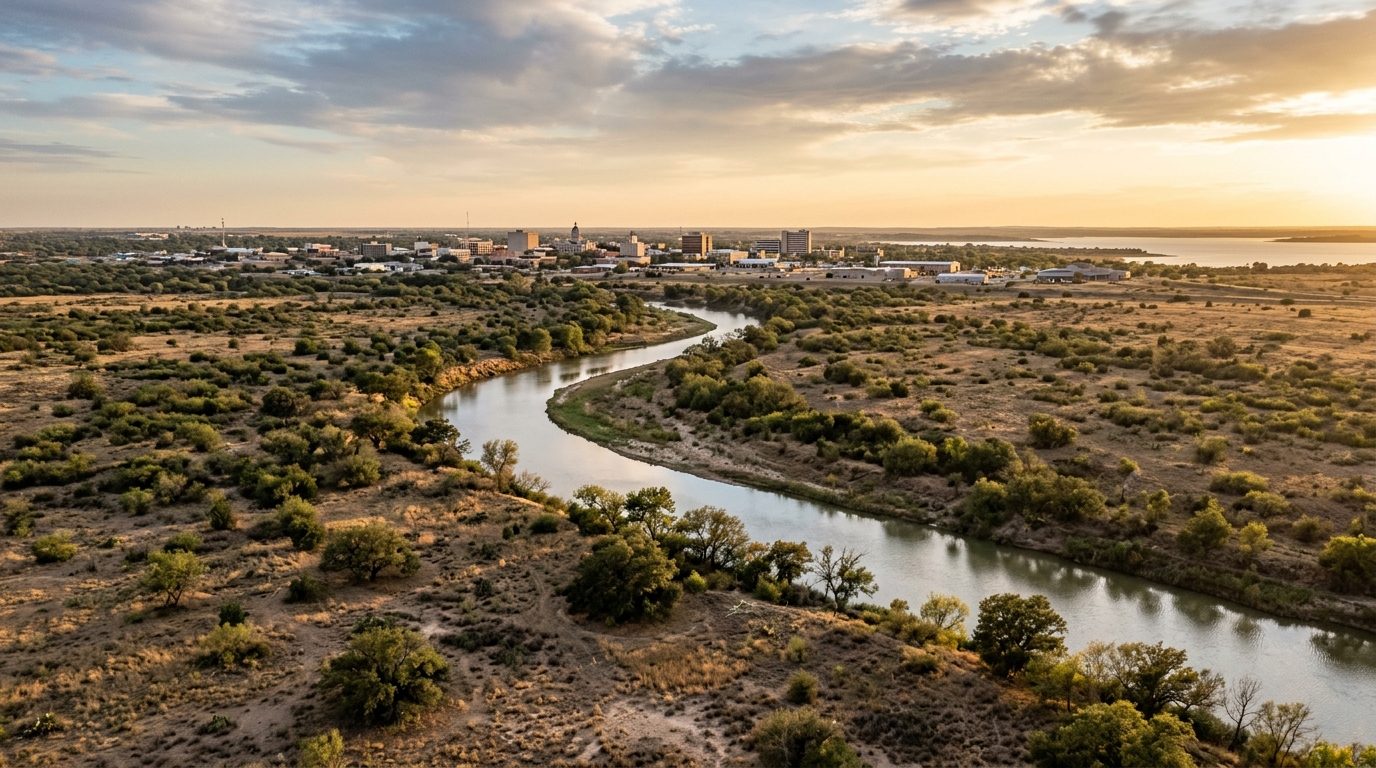
San Angelo sits in the Concho Valley of west-central Texas, at the point where the North and South Concho Rivers join to form the Concho River. The city occupies the transition zone between the Edwards Plateau to the east, the Permian Basin to the northwest, and the Chihuahuan Desert to the southwest, giving the metro a flat-to-rolling terrain of mesquite rangeland broken by the river corridor and three constructed reservoirs: Lake Nasworthy, O.C. Fisher Lake, and Twin Buttes Reservoir. The climate is semiarid, with hot summers, mild winters, and variable rainfall. The city grew outward from Fort Concho and the historic downtown along the river as ranching, the railroad, and later the oil industry drew settlement. Housing stock reflects that layered history: modest older homes and bungalows near the historic core, mid-century ranch-style construction through the middle rings, and newer subdivisions on the west and southwest sides. Goodfellow Air Force Base, on the city’s southeast side, has anchored military and civilian housing demand for generations.
Housing costs and demand vary by proximity to water, to the base, and to the urban core. Neighborhoods near Lake Nasworthy and the Concho River corridor, including planned development around the country-club area on the southwest side, tend to command higher prices, reflecting lake and river frontage, golf-course access, and newer construction. Established middle-income neighborhoods sit closer to the loop and to shopping corridors on the south and west sides. Areas nearer Goodfellow AFB see steady rental and starter-home demand tied to military turnover. The oldest neighborhoods near downtown and Fort Concho, including designated historic districts, feature smaller, older homes at generally lower price points. Outside the city limits, in unincorporated Tom Green County and Irion County toward Mertzon, housing shifts to acreage and ranch-style rural properties, where land size and water access drive value.
The metro’s economy centers on Goodfellow Air Force Base, which trains military and allied personnel in intelligence and firefighting disciplines and is the area’s largest single employer. Beyond the base, the economy draws on healthcare, led by Shannon Medical Center; higher education, through Angelo State University; ranching, historically including livestock and wool and mohair production; and oil and gas services tied to the nearby Permian Basin. Additional employers span telecommunications, insurance, food processing, and manufacturing, giving San Angelo a more diversified base than many smaller Texas metros, though energy cycles and military budget decisions carry outsized local influence.
Buyers should account for several region-specific factors. West Texas is prone to periodic drought, and the city’s water supply depends on surface reservoirs and groundwater from the Hickory Aquifer, with past dry periods pushing the area into strict conservation stages. The same river system that defines the city’s landscape has produced serious flash flooding historically, part of why the area’s flood-control reservoirs were built, and low-lying parcels near the Concho River warrant a flood-risk check. Texas has no state personal income tax, but property tax rates and appraisal practices should be verified with the county appraisal district. Land outside city limits may carry fewer zoning restrictions, so buyers should confirm local land-use rules before purchasing. Because the region sits near active oil and gas plays, rural buyers should verify who holds the mineral rights, whether the property is under lease, and how Texas’s split-estate law could affect surface use.
Cities and Towns in the San Angelo Metro Area
Notable Communities and Neighborhoods
San Angelo Real Estate Market FAQ
How is the San Angelo metro area organized geographically?
The metro consists of Tom Green County, where the city of San Angelo itself sits at the junction of the North and South Concho Rivers, and neighboring Irion County to the west, home to the small town of Mertzon. San Angelo is the metro’s urban center and economic hub, with Goodfellow Air Force Base on its southeast side; the surrounding county area is largely rural ranchland and small unincorporated communities.
Which parts of the metro tend to be pricier, and why?
Areas near Lake Nasworthy and the Concho River, along with planned residential development on the city’s southwest side near the country club, tend to carry higher home prices because of water frontage, golf-course amenities, and newer construction. Older neighborhoods closer to downtown and the historic Fort Concho area tend to be more affordable, with values tied closely to a home’s age and condition. Rural acreage in the county trades on land and water access rather than square footage.
What should buyers verify locally before purchasing in this metro?
Buyers should confirm flood zone status for any property near the Concho River system or its tributaries, check current water and drought-conservation stage information with the city or county water authority, verify property tax rates with the county appraisal district, and, for properties outside city limits, confirm what zoning or subdivision restrictions, if any, apply. Rural and acreage buyers should also check well and septic status where municipal utilities are not available.
What is a distinctive local risk buyers should understand in this area?
The region has a history of severe flash flooding along the Concho River system, which historically prompted construction of the area’s flood-control reservoirs, so drainage and elevation matter for riverside and low-lying parcels. Separately, because San Angelo sits near active oil and gas producing areas, buyers of rural or acreage property should understand Texas’s split-estate law, under which mineral rights can be owned separately from the surface and generally take precedence for access, and should confirm whether mineral rights convey with the property or are already leased to an operator.
Nearby Markets