
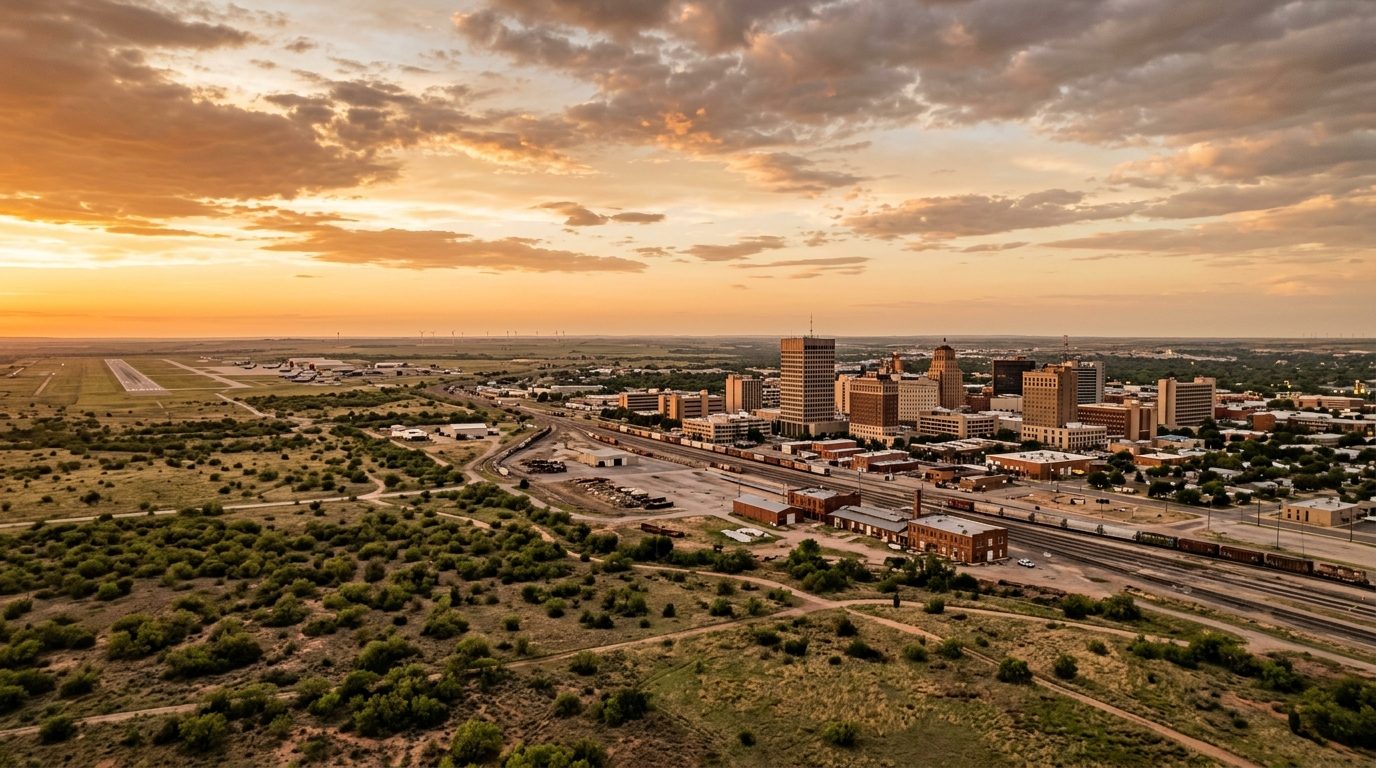
Current real estate market data, news and analysis for the Abilene, TX metropolitan area — 185,429 residents across Callahan, Jones and Taylor counties.
Data as of May 2026. Sources: Redfin Data Center, U.S. Census Bureau.
Latest Abilene Real Estate News
Coverage of this market is coming soon. Browse all housing market news.
Abilene Real Estate Market Overview
Abilene sits in west-central Texas where the rolling Cross Timbers give way to the flatter high plains of West Texas, within Taylor County and reaching into neighboring Callahan and Jones counties. The Clear Fork of the Brazos River and Elm Creek cross the area, feeding the regional reservoirs the city relies on for its water supply. Outside the built-up core, the landscape is mesquite grassland and farmland, with small rail and farm towns scattered through the surrounding counties. Housing stock reflects steady mid-century growth: brick single-story ranch homes dominate the subdivisions ringing downtown, older wood-frame and masonry homes cluster near the original rail grid, and newer brick subdivisions continue to expand on the south and southwest edges. Outlying towns mix small-town housing with acreage properties on the rural fringe.
Southwest Abilene, especially the corridor along Buffalo Gap Road and neighborhoods zoned to Wylie schools, tends to command higher prices because it holds the newest construction, larger lots, and amenities such as golf-course frontage, while remaining a short drive from employment centers. Areas near the municipal golf courses and country club grounds carry a similar premium tied to setting and views. By contrast, the older core north and east of downtown, built up around the original rail and stockyard district, tends to sit at the lower end of the market, with smaller homes, tighter lots, and older infrastructure, though a few historic pockets near downtown are prized for their early-twentieth-century architecture despite their central location. Rural communities on the metro’s edges offer a different value proposition built around acreage rather than proximity to newer subdivisions.
The economy is anchored by Dyess Air Force Base, a bomber and airlift installation that supports a large share of area employment directly and through its supply chain, along with a steady flow of military families and veterans into the civilian workforce. Hendrick Health is the dominant hospital and healthcare employer. Education is also a driver: Abilene Independent School District is a major employer, and the city hosts three private universities, Abilene Christian University, Hardin-Simmons University, and McMurry University, along with a state-supported living center and a technical college campus. Manufacturers such as Martin Sprocket & Gear, RENTECH Boiler Systems, Bridgestone Bandag, Great Lakes Cheese, and AbiMar Foods operate plants in the area, and a state prison unit also contributes jobs.
Buyers should weigh West Texas weather: the area is prone to hail, high wind, and occasional tornadoes, all of which affect homeowners insurance availability and cost, so checking a property’s storm and roof history is worthwhile. Water is a persistent regional concern; Abilene draws on a network of contracted reservoirs rather than one ample source and periodically imposes drought-related watering restrictions, so buyers should understand a property’s water source and any current restrictions. Texas has no state income tax, which shifts more of the tax burden onto property taxes, so confirming the applicable rate and exemptions matters. Within the city, floodplain status should be checked against Elm Creek and other drainages, while properties in unincorporated parts of the surrounding counties may rely on private wells and septic systems and fall outside city zoning oversight, so confirming utility service, road maintenance responsibility, and extraterritorial jurisdiction rules is worthwhile before buying outside city limits.
Cities and Towns in the Abilene Metro Area
Notable Communities and Neighborhoods
Abilene Real Estate Market FAQ
How is the Abilene, TX metro area organized geographically?
The metro is centered on the city of Abilene in Taylor County and extends into neighboring Callahan and Jones counties, taking in smaller towns such as Anson, Baird, Clyde, Merkel, and Stamford. Abilene itself grew up along a railroad grid, with a historic downtown core surrounded by concentric rings of mid-century and newer subdivisions, while the surrounding towns remain distinct small communities connected to Abilene by highway rather than continuous suburban development.
Which parts of Abilene are pricier and which are more affordable, and why?
Southwest Abilene, particularly along the Buffalo Gap Road corridor and in neighborhoods served by Wylie schools, tends to be priced higher because it has the newest homes, larger lots, and golf-course or country-club settings. The older core north and east of downtown, built around the original rail and stockyard area, is generally more affordable because the housing stock is older and lots are smaller, though a few historic in-town pockets buck that pattern due to their preserved early-twentieth-century architecture.
What should buyers verify locally before purchasing in the Abilene metro?
Buyers should confirm which school district and city a property falls in, since Abilene ISD and Wylie ISD serve different parts of the same city and taxing jurisdictions vary by address. Properties in unincorporated areas or the smaller outlying towns often rely on private water wells and septic systems rather than city utilities, so water rights, well condition, and septic permitting should be checked, along with floodplain status near local creeks and any extraterritorial jurisdiction rules that could affect future annexation or building requirements.
What regional risks should buyers in Abilene be aware of?
The area is subject to severe weather including hail, high winds, and occasional tornadoes, which can affect homeowners insurance cost and availability, so reviewing a property’s storm and roof history is advisable. Water supply is another regional factor, since Abilene depends on a network of contracted reservoirs rather than a single abundant source and has periodically enacted drought-related watering restrictions. The local economy also carries some concentration risk tied to Dyess Air Force Base and the broader defense and government sector, which is worth understanding for long-term value stability.
Nearby Markets