
Current real estate market data, news and analysis for the Odessa, TX metropolitan area — 173,801 residents across Ector county.
Data as of May 2026. Sources: Redfin Data Center, U.S. Census Bureau.
Latest Odessa Real Estate News
Coverage of this market is coming soon. Browse all housing market news.
Odessa Real Estate Market Overview
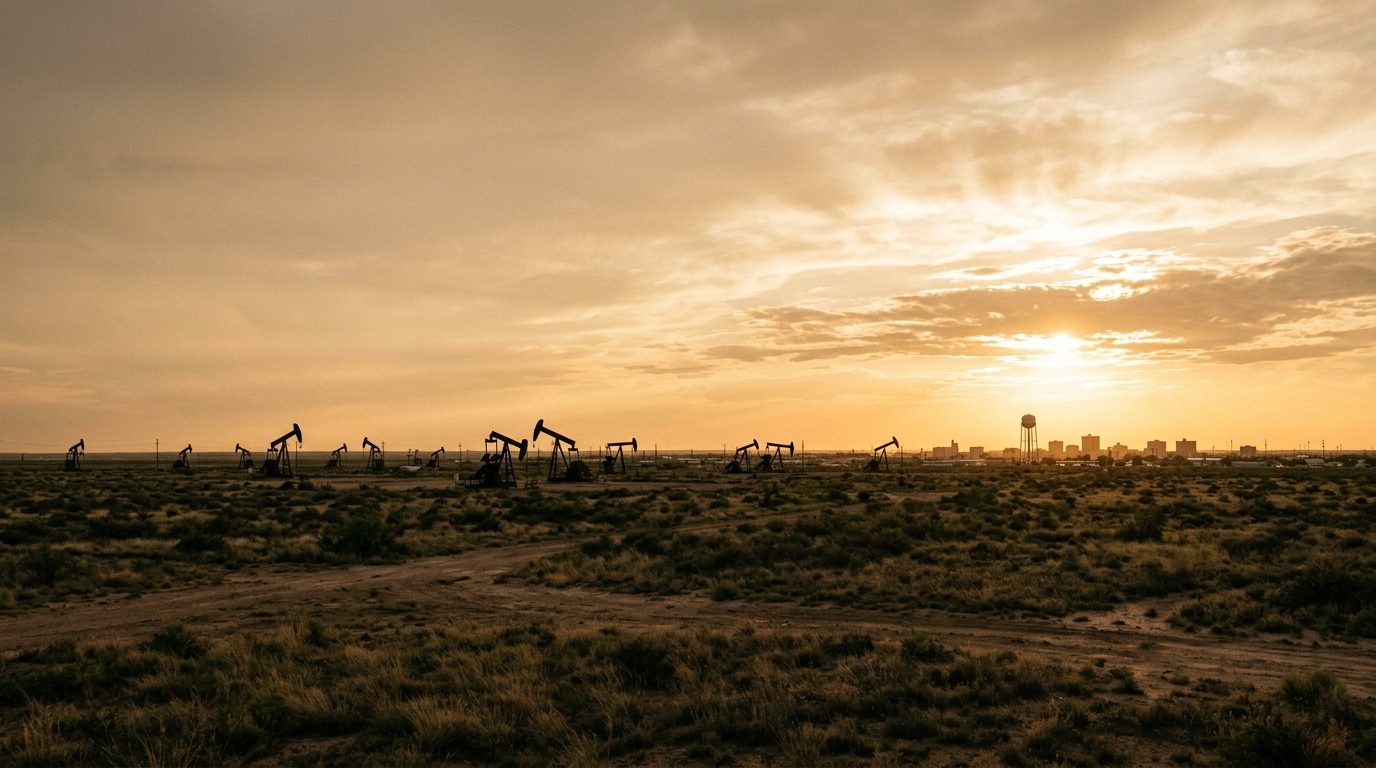
Odessa sits on the flat, semi-arid High Plains of West Texas, at the heart of the Permian Basin, with minimal topographic relief and a landscape where oilfield infrastructure — pump jacks and tank batteries — shares the horizon with open range and agricultural land. Ector County’s only incorporated city of real size is Odessa itself; Goldsmith is a very small incorporated town to the northwest, and West Odessa is a large unincorporated area on the city’s western edge, structurally distinct in that it sits outside city zoning and, in many cases, city utility service, favoring larger-acreage rural-residential lots. Housing stock within Odessa ranges from established mid-century neighborhoods near downtown to newer subdivisions on the north and east sides built during the shale-boom growth of the 2010s and after, while West Odessa’s housing is a mix of larger-lot site-built and manufactured homes without the density of the incorporated city.
Newer construction and golf-course amenities set the top of the local market. Mission Dorado, a golf-course community in northeast Odessa built around its own club, and the broader north and northeast side of the city near Mission Dorado and Ratliff Ranch Golf Links, tend to command a premium for newer homes and larger lots. Odessa’s historic downtown and Second Street corridor retain older, architecturally distinct buildings from the city’s 1920s oil-boom era, valued for character but generally smaller and older than newer-side housing stock. West Odessa is the metro’s more affordable option, trading full city utilities and zoning oversight for larger lots and lower prices, a straightforward space-for-services tradeoff rather than a difference driven by amenities or school quality.
Oil and gas define the local economy. Ector County Independent School District is the metro’s largest employer, and oilfield services companies including Halliburton, the Odessa-headquartered Saulsbury Company, and NexTier Complete Solutions and Liberty Oilfield Services maintain major local workforces, reflecting the depth of the Permian Basin service sector even though many large upstream operators keep their corporate offices in nearby Midland. Medical Center Health System and Odessa Regional Medical Center are the metro’s two hospital systems, and Texas Tech University Health Sciences Center’s Permian Basin campus, the University of Texas Permian Basin and Odessa College anchor higher education and health-sciences training locally.
Odessa’s economic and housing history has moved with Permian Basin oil-price cycles for a century, and buyers should treat that boom-and-bust pattern as a structural feature of the local market rather than a one-time event. A more specific and well-documented risk is induced seismicity: state regulators have linked oilfield wastewater-injection activity to earthquakes in the area and designated a seismic response zone covering part of northeast Ector County that restricts and monitors disposal-well injection. Ector County sits outside the state’s coastal windstorm-insurance pool, so standard private homeowners coverage applies, though severe convective storms bring real wind and hail risk. Municipal water is imported through a regional water district drawing from reservoirs well outside the county, a reminder that this is a genuinely water-stressed part of the state, and buyers considering a well in West Odessa or other unincorporated areas should understand Texas’s rule-of-capture groundwater doctrine before assuming unlimited water access.
Cities and Towns in the Odessa Metro Area
Notable Communities and Neighborhoods
Odessa Real Estate Market FAQ
How is the Odessa real estate market organized?
Odessa is Ector County’s only sizable incorporated city, with Goldsmith a small town to the northwest and West Odessa a large unincorporated area on the city’s western edge that sits outside city zoning and, in places, city utility service. Most of the metro’s housing stock and amenities are concentrated within Odessa’s city limits.
Which parts of the Odessa area tend to be pricier?
Golf-course neighborhoods such as Mission Dorado and the broader north and northeast side of Odessa near Mission Dorado and Ratliff Ranch Golf Links tend to command the most, reflecting newer construction and larger lots. West Odessa offers a more affordable, lower-density alternative in exchange for being outside full city zoning and utility service.
What should buyers verify locally in Odessa?
Buyers should check whether a property sits within the City of Odessa’s zoning and utility service area or in West Odessa’s extraterritorial jurisdiction, since the rules and available services differ. Anyone considering a well in an unincorporated area should also understand Texas’s rule-of-capture groundwater doctrine before assuming a given supply is guaranteed.
What’s a region-specific risk to know about in Odessa?
Odessa’s economy has moved with Permian Basin oil-price cycles for decades, and that boom-and-bust pattern is worth weighing as a long-term factor in local housing demand. State regulators have also linked oilfield wastewater injection to earthquakes in part of the county, and a formal seismic response zone now restricts and monitors disposal-well activity in northeast Ector County.
Nearby Markets