
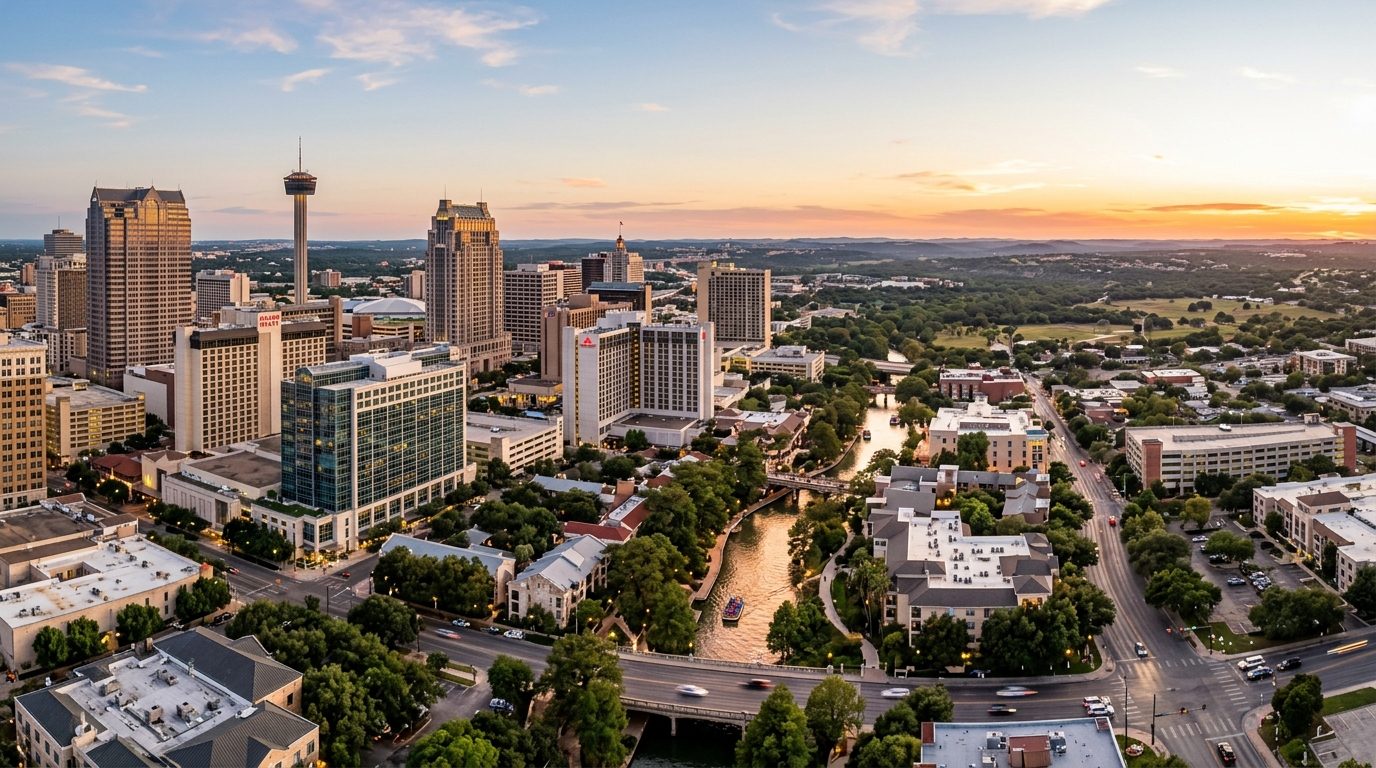
Current real estate market data, news and analysis for the San Antonio-New Braunfels, TX metropolitan area — 2.8M residents across 8 counties in Texas.
Data as of May 2026. Sources: Redfin Data Center, U.S. Census Bureau.
Latest San Antonio Real Estate News
San Antonio Real Estate Market Overview
San Antonio-New Braunfels covers San Antonio, the Interstate corridors toward New Braunfels and Seguin, the limestone Hill Country to the north and west, and lower-density communities south and east of Bexar County. Central San Antonio contains historic houses, bungalows, duplexes, apartments, condominiums and converted commercial buildings. Postwar neighborhoods spread across the inner city and established suburbs, while the outer north, west and northeast sides contain extensive newer subdivisions and master-planned communities. Boerne, Bulverde and Fair Oaks Ranch connect suburban growth with Hill Country terrain, and the counties beyond Bexar include ranchland, small towns, manufactured housing and larger residential parcels.
Higher price tiers are generally associated with Alamo Heights, Terrell Hills, Olmos Park, Hill Country Village, Shavano Park, The Dominion, selected north-side gated communities and established areas around Boerne and Fair Oaks Ranch. Their position reflects larger lots, mature neighborhoods, private amenities, school access or proximity to major employment corridors. More attainable options are often found on the south and west sides of San Antonio, in older northeastern suburbs and in outlying communities such as Pleasanton, Devine, Hondo, Floresville and Seguin. Buyers comparing those areas should account for commuting distance, property taxes, utility districts, well or septic systems and the timing of new roads and schools.
The regional economy is supported by military and defense activity, health care, tourism, cybersecurity, financial services, manufacturing, logistics, education and government. Joint Base San Antonio and its related contractors influence employment across the metro. USAA, H-E-B and Valero maintain major operations, while University Health, Methodist Healthcare and other medical systems support large employment centers. The University of Texas at San Antonio contributes education and research activity, and Toyota’s manufacturing operations anchor an industrial cluster on the south side. New Braunfels and Seguin add manufacturing, distribution, tourism and service employment along the corridor toward Austin.
Heat, drought, flash flooding, hail, expansive soils and occasional freezes are important property-level considerations. Hill Country and recharge-zone properties may face limits involving water, septic systems, impervious cover or wildfire mitigation, while low-water crossings and drainage channels can become hazardous during intense rain. Much of the region is automobile-dependent, with VIA Metropolitan Transit serving San Antonio and limited options in outer counties. Newer developments may include homeowners associations, municipal utility districts or public improvement districts. Buyers should review foundation performance, drainage, roof condition, water source, utility obligations, deed restrictions and nearby approved development before relying on a broad neighborhood description. Historic-district rules and archaeological review can also affect renovations in selected central neighborhoods.
Cities and Towns in the San Antonio Metro Area
Notable Communities and Neighborhoods
San Antonio Real Estate Market FAQ
How is the San Antonio metro housing market geographically organized?
The market extends from central San Antonio and established inner suburbs to fast-growing northern corridors, Hill Country communities, New Braunfels and Seguin, and rural counties south and west of Bexar County. Terrain, commuting routes, military installations and water systems create distinct submarkets.
Which San Antonio-area locations generally sit in higher price tiers?
Alamo Heights, Terrell Hills, Olmos Park, Hill Country Village, Shavano Park, The Dominion and selected areas near Boerne and Fair Oaks Ranch generally occupy higher tiers. Larger lots, mature neighborhoods, gated amenities, school access and proximity to major employment corridors contribute.
What should buyers verify in a new San Antonio-area community?
Buyers should review homeowners association rules, utility or special-district obligations, builder warranties, drainage, school plans and nearby approved land uses. They should also determine whether roads, retail centers and community amenities are complete or still planned.
What water and flood issues should San Antonio-area buyers investigate?
Buyers should review the property’s water provider, floodplain status, drainage channels, low-water crossings and any well or septic systems. Hill Country and aquifer-sensitive locations may also have development, impervious-cover or water-use restrictions that require local verification.
Nearby Markets