
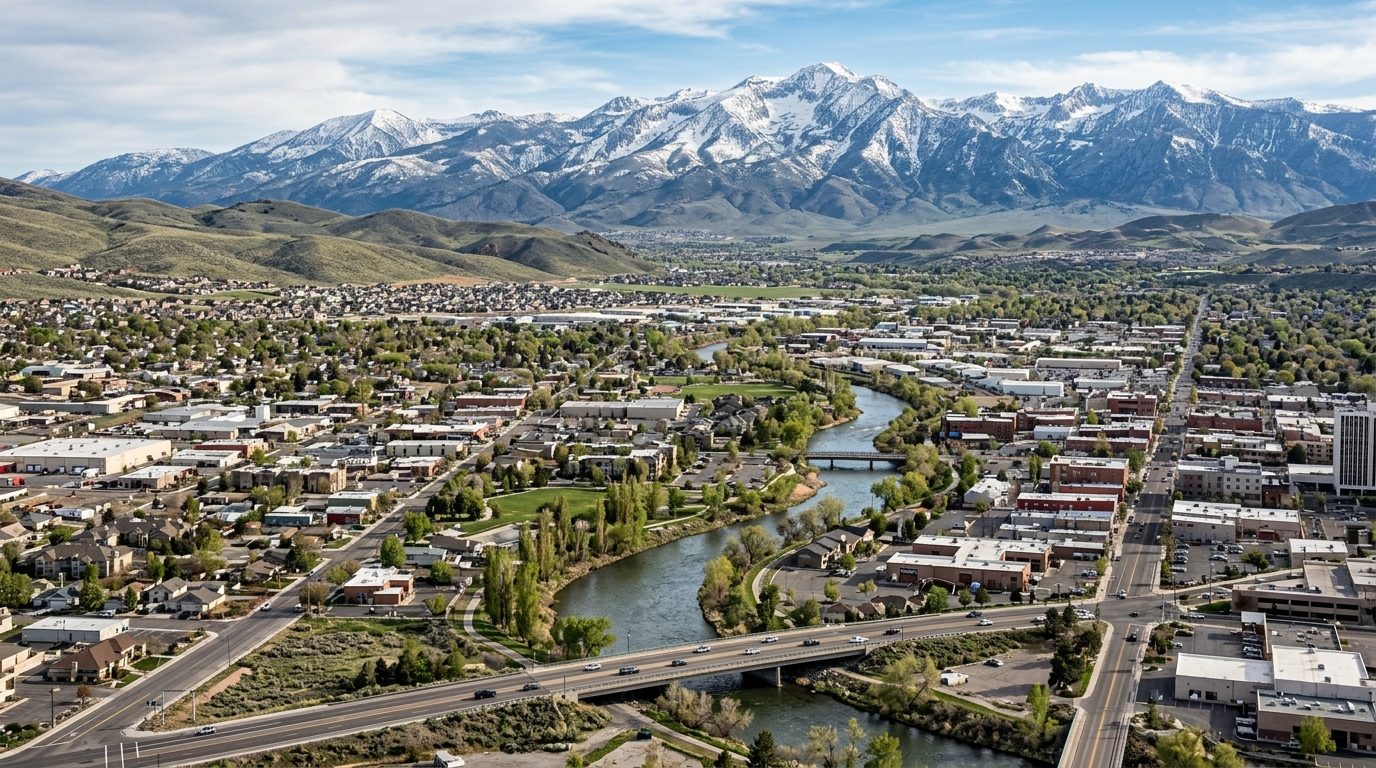
Current real estate market data, news and analysis for the Reno, NV metropolitan area — 578,734 residents across Lyon, Storey and Washoe counties.
Data as of May 2026. Sources: Redfin Data Center, U.S. Census Bureau.
Latest Reno Real Estate News
Reno Real Estate Market Overview
The Reno metro sits in the Truckee Meadows, a high desert valley between the eastern slope of the Sierra Nevada and the drier, sagebrush ranges of the Great Basin. The Truckee River runs through Reno and Sparks on its route from Lake Tahoe to Pyramid Lake, and its floodplain shapes building restrictions along the urban core. Reno and Sparks form one continuous built-up area, while Washoe County reaches north to Sun Valley and Lemmon Valley, west into the Sierra foothills, and south to Washoe Valley and Incline Village on Lake Tahoe’s north shore. Southeast of Reno, Lyon County follows the Carson River and Lahontan Reservoir through Dayton, Silver Springs, Fernley, and the county seat of Yerington, an agricultural valley town. Tiny Storey County, between Washoe and Lyon, holds the historic Comstock mining town of Virginia City. Housing stock reflects this layout: Reno’s older core and Sparks’ original grid hold mid-century ranch and bungalow homes, the west and south foothills are filled with newer custom homes on larger lots, and the Lyon County towns mix older rural homesteads with newer subdivisions built for commuters.
Price tiers generally track elevation and distance from the valley floor. Foothill communities along the western and southern edges of Reno, often built around golf courses and closer to the Sierra front, tend to sit at the upper end because of larger lots, mountain views, and newer construction. Established close-in neighborhoods with mature trees and short commutes to downtown and the university carry a premium tied to lot size and renovation rather than newness. Newer master-planned subdivisions in south Reno and northeast Sparks offer more moderately priced, family-oriented housing. The most affordable options sit farther from the urban core: older neighborhoods near the rail corridor and industrial areas of Sparks, and the Lyon County towns of Fernley, Dayton, and Yerington, where longer commutes and a more rural, high-desert setting offset lower land and construction costs.
Reno’s economy has shifted from a historic reliance on casino gaming toward a more diversified base built on logistics, advanced manufacturing, technology, and healthcare. The Tahoe-Reno Industrial Center in Storey County, one of the largest industrial parks in the country, hosts Tesla’s Gigafactory, Panasonic battery production, Switch data centers, and distribution operations for national retailers. The University of Nevada, Reno anchors education and research employment, while Renown Health is among the region’s largest private employers through its hospital and clinic network. Reno-Tahoe International Airport supports cargo and passenger traffic tied to this logistics base, and downtown casino resorts remain a visible, if smaller, share of employment than in past decades.
Buyers should account for a few factors specific to this area. Nevada has no state personal income tax, which affects cost-of-living comparisons but not property tax rates, which are set locally and vary by county and district. Wildfire exposure is a real consideration in the foothill and forested areas along the Sierra front, where insurance availability and defensible-space requirements can affect financing and cost. Hillside and slope-based zoning in parts of Washoe County also limits density in some canyon areas. In the rural stretches of Lyon and Storey counties, private wells, septic systems, and water rights are common and worth independent verification before purchase, along with flood-zone status for property near the Truckee River, Steamboat Creek, or the Lahontan Reservoir floodplain.
Cities and Towns in the Reno Metro Area
Notable Communities and Neighborhoods
Reno Real Estate Market FAQ
How is the Reno metro area laid out geographically?
The urban core is Reno and Sparks, which sit together in the Truckee Meadows valley along the Truckee River between the Sierra Nevada and the Great Basin. Washoe County extends beyond that core to unincorporated areas like Sun Valley and Lemmon Valley to the north, the Sierra foothills to the west, and Washoe Valley and Incline Village toward Lake Tahoe to the south. Lyon County, southeast of Reno along the Carson River, contains the towns of Fernley, Dayton, Silver Springs, and Yerington, while small Storey County between them holds the historic town of Virginia City.
Which parts of the Reno area tend to be more expensive, and why?
Foothill neighborhoods along the western and southern edges of Reno, many built around golf courses with mountain views and larger lots, generally sit at the higher end because of their setting and newer construction. Established, tree-lined neighborhoods close to downtown and the university also command a premium for their shorter commutes and mature landscaping. Newer subdivisions in south Reno and northeast Sparks are more moderately priced, and the most affordable homes tend to be in older Sparks neighborhoods or the more rural Lyon County towns, where land is cheaper but commutes into Reno are longer.
What should buyers verify locally before purchasing in this metro?
Because the Truckee River and its tributaries run through the urban core, confirming flood-zone status is worthwhile for property near the river, Steamboat Creek, or low-lying areas like Lemmon Valley. In foothill and forested areas, buyers should check wildfire risk, defensible-space requirements, and whether an HOA or master-plan governs the community. In the more rural parts of Lyon and Storey counties, many properties rely on private wells, septic systems, and appurtenant water rights rather than municipal utilities, and those should be inspected and verified independently rather than assumed to be in working order.
What is the biggest region-specific risk to weigh when buying in the Reno area?
Wildfire is the primary consideration for homes in and near the Sierra foothills and forested canyon areas, where dry summers and wind-driven fire behavior can affect both safety and the availability and cost of homeowners insurance. Properties farther out in the high desert of Lyon County face different considerations, including water availability and well capacity, since the region’s climate is arid and water rights are managed closely. Buyers should ask directly about insurance quotes and any wildfire-mitigation requirements before finalizing a purchase in higher-risk terrain.
Nearby Markets