
Current real estate market data, news and analysis for the Chico, CA metropolitan area — 209,211 residents across Butte county.
Data as of May 2026. Sources: Redfin Data Center, U.S. Census Bureau.
Latest Chico Real Estate News
Coverage of this market is coming soon. Browse all housing market news.
Chico Real Estate Market Overview
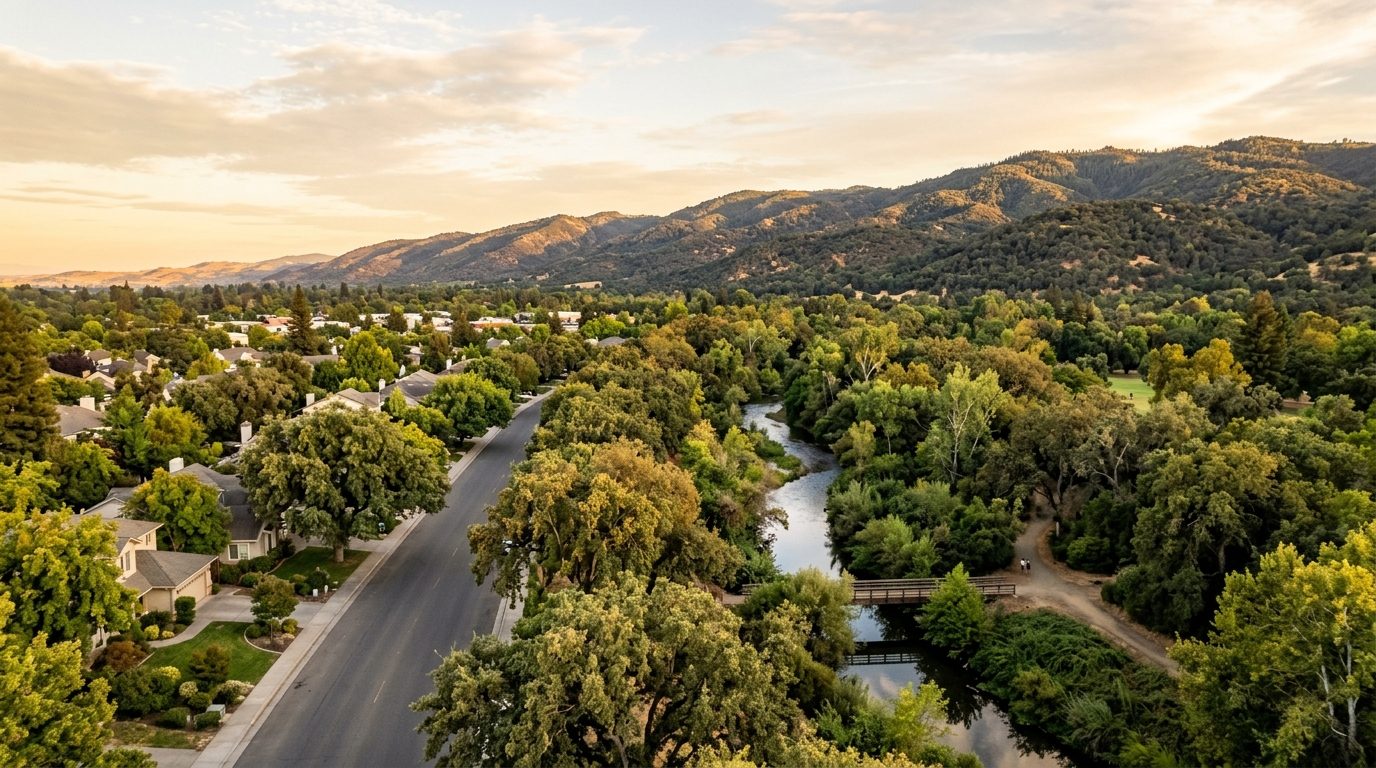
Chico anchors the northern end of the Sacramento Valley, on flat agricultural bottomland that gives way at the city’s eastern edge to oak-studded foothills of the Sierra Nevada and southern Cascades. Bidwell Park, one of the largest municipal parks in the country, threads through the city along Big Chico Creek, separating the flatland grid to the west from hillier terrain to the east. Housing stock mirrors this settlement history: Craftsman bungalows and Victorians cluster in older neighborhoods near downtown and the university, mid-century ranch homes fill surrounding flatland tracts, and newer subdivisions with larger lots climb toward the canyon rim. Outlying towns Oroville, Gridley, Biggs, and Paradise sit apart from Chico proper, each shaped by farmland, foothill terrain, or post-wildfire rebuilding rather than the city grid.
Within Chico, neighborhoods pushing into the eastern foothills, built around golf courses and private lake amenities near the canyon rim, tend to sit at the higher end of the market, reflecting larger lots, newer construction, and proximity to open space and trails. The historic core near downtown and California State University, Chico, including the tree-lined Avenues and Barber districts, holds value for walkability and character despite older, smaller homes. More modest pricing is typical on Chico’s south side in Chapmantown and the Mulberry district, semi-rural pockets outside the original city limits, and in Oroville, Gridley, and Biggs, where land is more agricultural and commutes into Chico run longer. Paradise sits apart: values depend on how much of a given street has rebuilt since the Camp Fire and on the parcel’s own wildfire exposure.
The regional economy rests on higher education, health care, agriculture, and manufacturing. California State University, Chico is both a major employer and an economic anchor, drawing students and staff into the local housing and rental market. Enloe Medical Center, a nonprofit hospital based in Chico, ranks among the largest employers in Butte County and serves as the referral hospital for the northern Sacramento Valley, while Oroville Hospital fills a similar role for the county’s southern reaches. Sierra Nevada Brewing Company, headquartered in Chico, is one of the country’s largest craft brewers and a significant local employer. Agriculture remains foundational outside city limits, with almonds, walnuts, rice, and olives grown and processed around Gridley, Biggs, and Durham. Butte College, plus county and municipal government, round out the employment base.
Wildfire is the defining risk factor here. The 2018 Camp Fire destroyed most of Paradise, and the foothill communities ringing Chico, along with Paradise itself, sit within mapped wildfire hazard severity zones. Insurance availability is a genuine concern; many homeowners rely on the California FAIR Plan or surplus-lines carriers rather than standard insurers, with terms tied to defensible space, roofing material, and distance from wildland vegetation. Paradise’s rebuilding has emphasized fire-hardened construction standards, so buyers should expect newly built homes alongside vacant lots still awaiting reconstruction. Property taxes follow California’s Proposition 13 framework, tying assessed value to purchase price. Public transit is limited and most residents depend on cars, though Amtrak service and a local bus line connect Chico to the wider region. Buyers should confirm a property’s wildfire hazard zone, get an insurance quote before closing, check whether foothill or rural parcels rely on well water and septic systems, and, in Paradise, verify rebuild permit and utility hookup status.
Cities and Towns in the Chico Metro Area
Notable Communities and Neighborhoods
Chico Real Estate Market FAQ
How is the Chico metro area organized geographically?
The metro centers on Chico, which sits on the flat floor of the northern Sacramento Valley and transitions into Sierra Nevada and Cascade foothills at its eastern edge, with Bidwell Park running through the middle of town along Big Chico Creek. Beyond Chico, the metro includes Oroville along the Feather River to the south, the farm towns of Gridley and Biggs further south in the valley, and Paradise, a foothill community above Chico that is still rebuilding after the 2018 Camp Fire.
Which parts of the Chico area tend to be more expensive, and why?
Neighborhoods in Chico’s eastern foothills, often built around golf courses or private lake amenities, tend to command higher prices because of larger lots, newer construction, and proximity to open space and trails. The historic neighborhoods near downtown and California State University, Chico also hold value due to walkability and architectural character. Outlying agricultural towns and semi-rural pockets within Chico generally price lower, and Paradise varies block by block depending on rebuilding progress.
What should buyers verify locally before purchasing in this area?
Buyers should confirm a property’s wildfire hazard severity zone designation and obtain a firm homeowners insurance quote before closing, since coverage and pricing vary widely by location and defensible space. In foothill and rural parcels, it’s important to check whether the property relies on a private well and septic system rather than municipal water and sewer. In Paradise, buyers should also verify the status of rebuild permits, utility hookups, and any local fire-hardening building requirements tied to the specific parcel.
What is the wildfire risk like in the Chico metro area?
Wildfire risk is a defining factor for this market, particularly in the foothill communities east of Chico and in Paradise, which was largely destroyed by the 2018 Camp Fire and has been rebuilding since. Much of this terrain falls within mapped wildfire hazard severity zones, which affects insurance availability, building requirements, and, in some cases, evacuation planning. Risk levels vary significantly by specific location, vegetation, and topography, so it should be assessed on a property-by-property basis rather than assumed uniformly across the metro.
Nearby Markets