
Current real estate market data, news and analysis for the Rapid City, SD metropolitan area — 156,934 residents across Custer, Meade and Pennington counties.
Data as of May 2026. Sources: Redfin Data Center, U.S. Census Bureau.
Latest Rapid City Real Estate News
Coverage of this market is coming soon. Browse all housing market news.
Rapid City Real Estate Market Overview
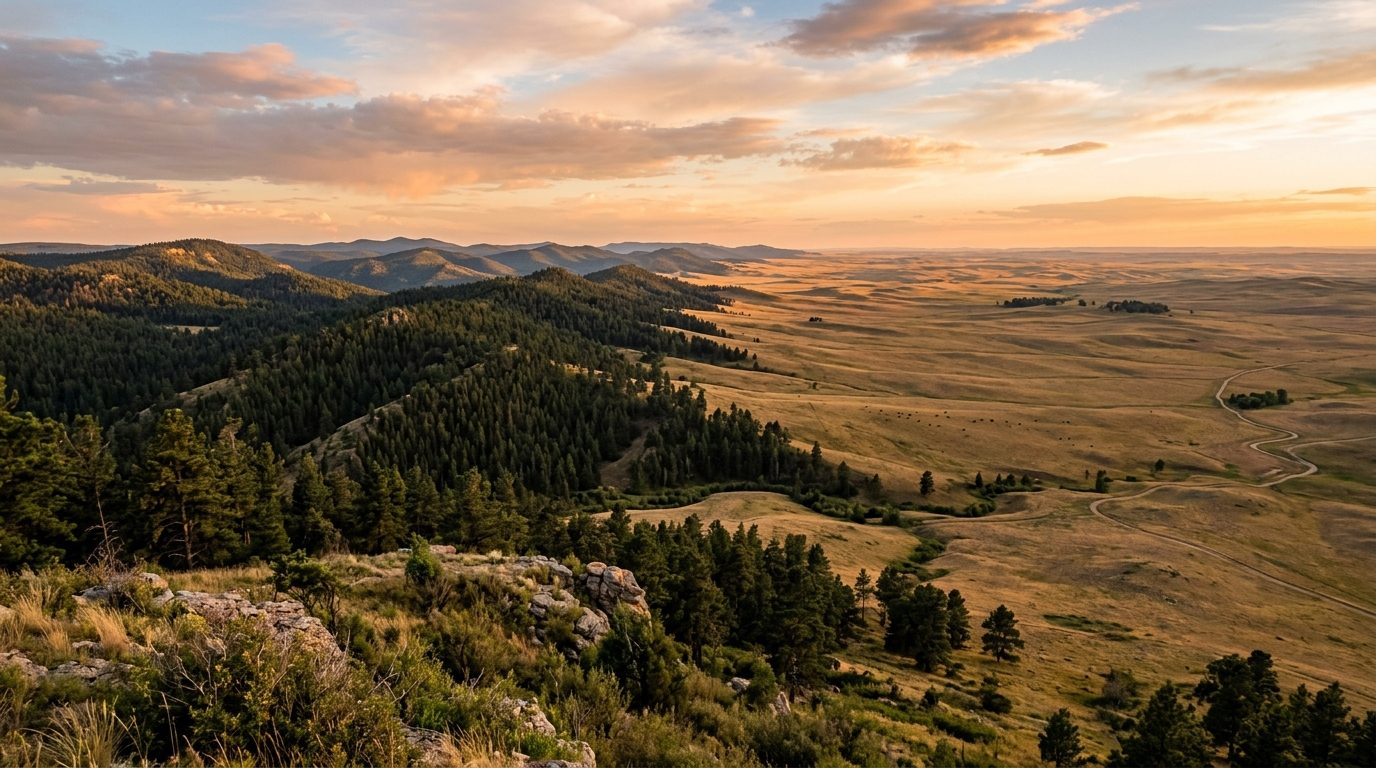
Rapid City sits where the Black Hills rise out of the high plains, splitting the metro into two distinct landscapes. West of downtown, terrain climbs into pine-covered ridges, canyons, and granite outcrops at the edge of the Black Hills National Forest; east and north of the city, the land flattens into open rangeland typical of western South Dakota. Housing stock reflects this split history: neighborhoods near downtown and Rapid Creek hold early-to-mid-20th-century bungalows and ranch houses on a traditional grid, while hillside additions climbing toward the forest are dominated by postwar ranch and split-level homes on irregular, view-oriented lots. Newer subdivisions extend along the city’s northern and eastern edges and toward Box Elder, with larger two-story homes on bigger lots. In the small Black Hills towns of Custer, Hill City, and Keystone, log and timber-frame cabin-style construction reflects a vacation-home market layered over year-round living.
Prices vary largely by proximity to the Black Hills and by a town’s role in the tourism economy. Rapid City’s west-side hill neighborhoods, with hill or city views, forested lots, and trail access, sit toward the upper end of the local market, as do newer subdivisions on larger lots. Communities closest to Mount Rushmore, Custer State Park, and the National Forest, including Hill City, Keystone, and Custer, carry a tourism premium from vacation-home buyers and limited buildable land hemmed in by public forest and park boundaries. Sturgis carries a narrower premium tied to its August motorcycle rally alongside a more modestly priced historic core. Plains and ranching communities farther from the hills, such as Wall, Quinn, Wasta, New Underwood, and Faith, tend to be more affordable, reflecting longer commutes and an agricultural economy.
The economy is anchored by Ellsworth Air Force Base, near Box Elder, the region’s largest single-site employer and now expanding as the first operational base for the Air Force’s B-21 Raider bomber, bringing new construction and personnel to Box Elder and northeast Rapid City. Health care is another pillar, led by Monument Health, a regional hospital and clinic system headquartered in Rapid City that serves much of western South Dakota and parts of Wyoming, Nebraska, and Montana. Government employment spans the City of Rapid City, Pennington County, area schools, and federal land-management agencies at Mount Rushmore, Badlands National Park, and the Black Hills National Forest, headquartered in Custer. Tourism built around Mount Rushmore, Custer State Park, Crazy Horse Memorial, and the Sturgis Motorcycle Rally supports a large hospitality and retail sector, and Rapid City functions as the region’s trade and medical hub.
Buyers should understand wildfire exposure in the forested Black Hills, where homes among ponderosa pine in west-side Rapid City, Hill City, and Custer face elevated fire risk and may carry insurance requirements around defensible space. The plains portion of the metro is prone to severe summer thunderstorms and hail, affecting roofing and exterior insurance costs. South Dakota has no state personal income tax, though property taxes are set locally and should be verified county by county. Transit is limited and the metro is largely car-dependent, with growth concentrated along Interstate 90 and toward Box Elder amid the Ellsworth expansion. Buyers should also confirm municipal water and sewer versus well and septic in outlying towns, HOA covenants in newer subdivisions, and floodplain rules along Rapid Creek dating to a historic flood.
Cities and Towns in the Rapid City Metro Area
Notable Communities and Neighborhoods
Rapid City Real Estate Market FAQ
How is the Rapid City real estate market organized?
The metro spans Custer, Meade, and Pennington counties and ranges from the city of Rapid City itself to small Black Hills tourist towns (Custer, Hill City, Keystone), the motorcycle-rally town of Sturgis, the area around Ellsworth Air Force Base near Box Elder, and rural high-plains towns to the east. Each area functions somewhat independently, with its own mix of year-round residents, seasonal or vacation buyers, and military-connected households, so market conditions can differ meaningfully from one town to the next even within the same metro.
Which parts of the Rapid City metro tend to be pricier, and why?
Areas closest to the Black Hills tend to command higher prices, largely because of views, forested lots, and proximity to trails and public land. Within Rapid City, the west-side hill neighborhoods fit this pattern, and small towns most closely tied to Mount Rushmore, Custer State Park, and the Black Hills National Forest, such as Hill City, Keystone, and Custer, carry an added premium from vacation-home demand and a limited supply of buildable land near park and forest boundaries.
What should buyers verify locally before purchasing in this metro?
Buyers should confirm whether a property relies on municipal water and sewer or on a private well and septic system, especially in outlying towns and unincorporated areas; check for HOA covenants in newer subdivisions; verify county and school district property tax rates, which vary across Custer, Meade, and Pennington counties; and, for property near Rapid Creek, check floodplain status and any building restrictions tied to the area’s flood history. For homes near Ellsworth Air Force Base, it’s also worth checking proximity to flight paths and any related land-use overlays.
Is wildfire a real risk for homes in the Rapid City area?
Yes, for homes in and near the forested parts of the Black Hills. Areas with ponderosa pine cover, including the hillside neighborhoods on Rapid City’s west side and the towns of Hill City and Custer, sit within a recognized wildfire-risk zone, and insurers and local fire authorities may expect defensible space and other mitigation measures around a home. The high-plains portion of the metro, to the east and north, carries much lower wildfire risk but is more exposed to severe thunderstorms and hail.
Nearby Markets