
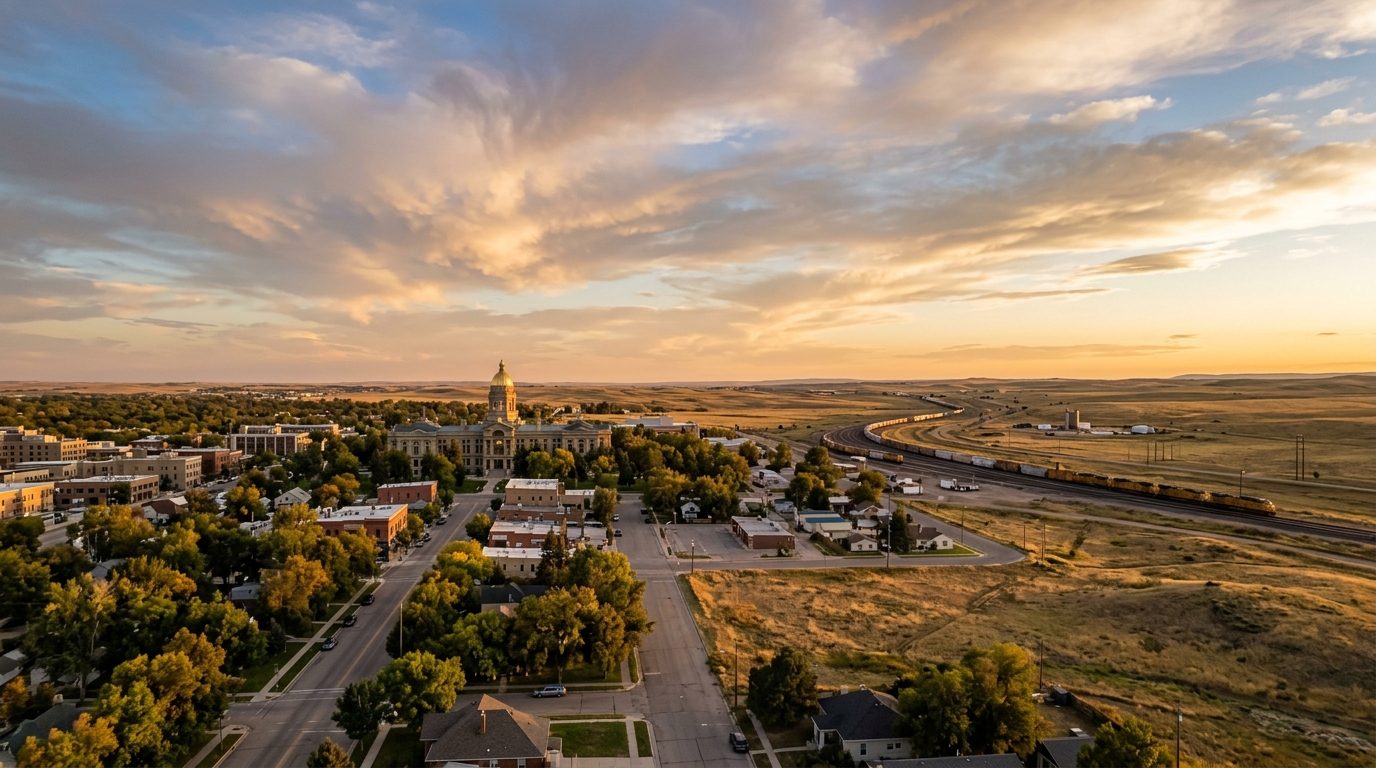
Current real estate market data, news and analysis for the Cheyenne, WY metropolitan area — 102,938 residents across Laramie county.
Data as of May 2026. Sources: Redfin Data Center, U.S. Census Bureau.
Latest Cheyenne Real Estate News
Coverage of this market is coming soon. Browse all housing market news.
Cheyenne Real Estate Market Overview
Cheyenne sits on the high plains of southeastern Wyoming, near the Colorado border, at an elevation above a mile where the Laramie Range breaks open onto the prairie and funnels near-constant wind across the surrounding grassland. As the state capital and seat of Laramie County, the city carries a housing stock built up over more than a century: brick and wood-frame homes near the historic core date to the railroad and territorial era, mid-century ranch and split-level houses fill established interior neighborhoods, and single-family subdivisions continue expanding along the western and northern edges of town. Wyoming’s lack of a state income tax, paired with easy highway access to Colorado’s Front Range, has kept steady demand flowing into the local market, sustaining new-home construction even as land beyond the city’s built edge remains open ranchland and prairie.
Within Cheyenne, the historic districts around downtown and the State Capitol, with century-old homes on tree-lined streets near the original railroad townsite, tend to carry a premium tied to walkability, mature landscaping, and architectural character, though the older houses often require more upkeep. Newer subdivisions on the west and northeast sides of the city, built with contemporary floor plans and planned amenities, generally command comparable or higher prices for buyers who favor new construction over historic character. Established mid-century neighborhoods between the historic core and the newer subdivisions sit in a middle tier. In the small towns and rural stretches of the wider county, housing tends to be less expensive but more spread out, often served by well and septic systems, and shaped by ranching land use.
The local economy is anchored by government and the military. Cheyenne is the seat of Wyoming state government, one of the area’s largest employers, and nearby Francis E. Warren Air Force Base, one of the oldest continuously active Air Force installations and originally a frontier fort built to protect Union Pacific Railroad workers, now hosts the 90th Missile Wing and its intercontinental ballistic missile mission under Air Force Global Strike Command. Union Pacific remains an important employer and a defining part of the city’s identity, since Cheyenne grew up as a railroad town where the transcontinental line met the base of the Rockies, and the company still maintains rail yard operations here. Healthcare is another significant sector, led by Cheyenne Regional Medical Center, the region’s principal hospital system.
Wind is a defining feature of life here: the city sits in a natural gap where plains winds accelerate, producing frequent gusty days and severe winter storms with whiteout conditions and heavy blowing snow, both worth weighing in roofing, fencing, and landscaping choices. Wyoming has no state income tax and comparatively low property taxes relative to much of the region, factoring into the overall cost of ownership beyond the purchase price. Development has grown outward from the historic railroad core, with zoning and subdivision approval handled jointly by the City of Cheyenne and Laramie County under a shared growth plan, so buyers should confirm whether a property sits inside city limits or unincorporated county land, since that affects utility service and codes. Buyers should also check flood zone status near local creeks, verify well and septic versus municipal service on rural parcels, review homeowners’ association covenants in newer subdivisions, and confirm wind and snow-load building requirements before purchasing.
Cities and Towns in the Cheyenne Metro Area
Notable Communities and Neighborhoods
Cheyenne Real Estate Market FAQ
How is the Cheyenne metro area laid out geographically?
The metro is centered on the city of Cheyenne, the state capital and Laramie County seat, with a historic core near downtown and the State Capitol, established interior neighborhoods built out through the mid-twentieth century, and newer subdivisions expanding along the western and northern edges of the city. Beyond the city, the rest of Laramie County is largely open plains and ranchland, with a handful of small outlying towns and unincorporated communities connected to Cheyenne by state highways and rail lines.
Which parts of Cheyenne tend to be pricier, and why?
Historic districts near downtown and the State Capitol, with older architecture, mature trees, and walkable streets, tend to command a premium tied to character and location rather than size. Newer master-planned subdivisions on the west and northeast sides of the city, offering contemporary construction and planned amenities, also tend to price at or above the middle of the market. Mid-century neighborhoods in between and rural county properties farther out generally offer more moderate pricing, though rural land trades on acreage and infrastructure rather than proximity.
What should a buyer verify before purchasing property in the Cheyenne area?
Confirm whether a property is inside Cheyenne city limits or in unincorporated Laramie County, since that determines which utilities, zoning rules, and building codes apply. Rural and edge-of-town parcels should be checked for well and septic systems versus municipal water and sewer. Buyers should also review any homeowners’ association covenants in newer subdivisions, check floodplain status near local drainages such as Crow Creek and Dry Creek, and confirm the age and construction standard of roofing, siding, and fencing given the local wind exposure.
What weather-related risks should homeowners in Cheyenne plan for?
Wind is the most persistent factor: the city sits in a natural gap where plains winds accelerate, producing frequent gusty days year-round and, in winter, blizzards that can bring whiteout conditions and heavy drifting snow. These conditions put a premium on well-secured roofing, durable fencing and siding, wind-tolerant landscaping, and reliable heating systems, and they are worth discussing with a local inspector or contractor familiar with high-plains construction standards.
Nearby Markets