
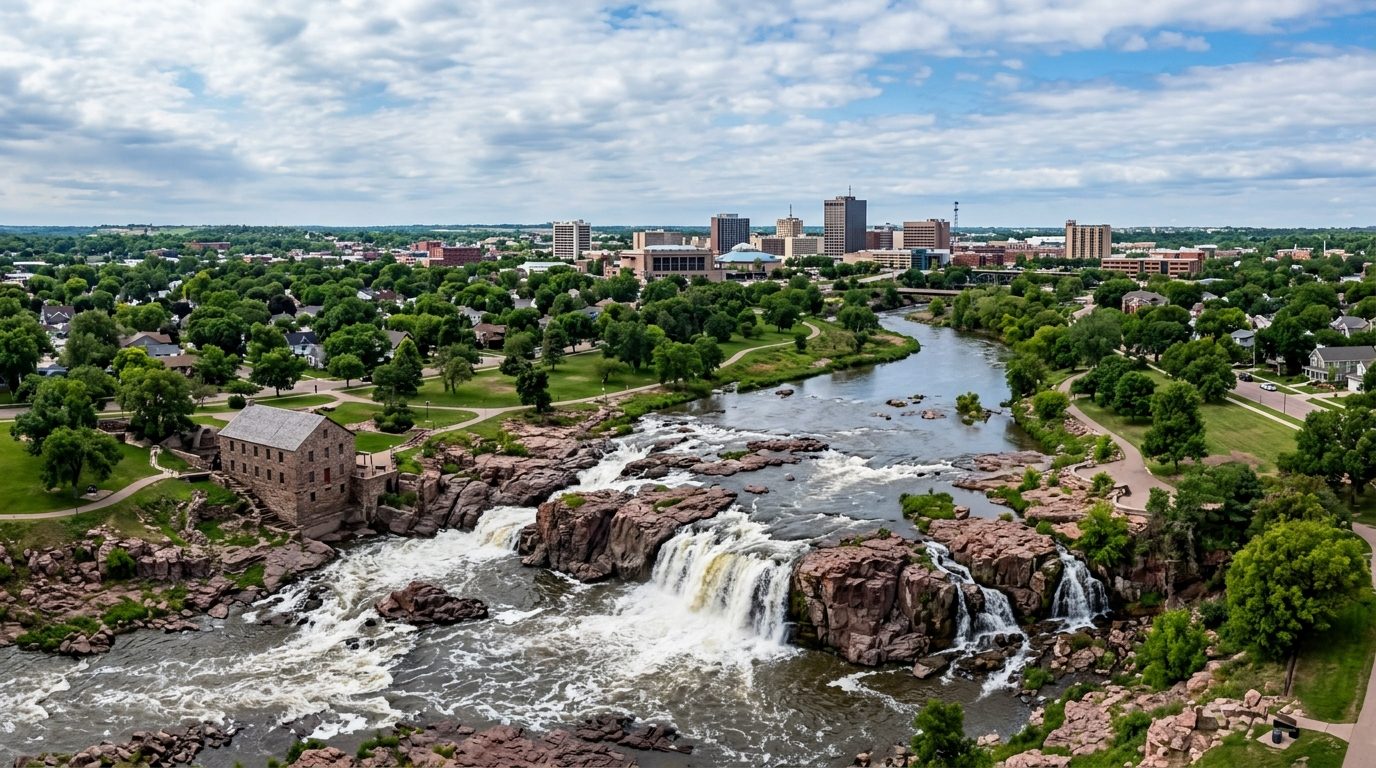
Current real estate market data, news and analysis for the Sioux Falls, SD-MN metropolitan area — 314,638 residents across 5 counties in South Dakota and Minnesota.
Data as of May 2026. Sources: Redfin Data Center, U.S. Census Bureau.
Latest Sioux Falls Real Estate News
Coverage of this market is coming soon. Browse all housing market news.
Sioux Falls Real Estate Market Overview
The Sioux Falls metro is built around the Big Sioux River and the waterfall at Falls Park that gives the city its name, a compact urban core surrounded by flat-to-rolling prairie and farmland across five counties in South Dakota and Minnesota. Established, tree-lined neighborhoods close to downtown and the falls — including the Cathedral Historic District, McKennan Park, and Whittier — reflect the city’s older, pre-war growth, while a ring of newer subdivisions has spread through the southeastern part of the city and into fast-growing satellite towns like Tea and Harrisburg. Brandon and Dell Rapids, also on the metro’s edges, have seen steadier if less explosive growth, and the rest of the metro spreads into small farming towns across Minnehaha, Lincoln, McCook, and Turner counties in South Dakota and Rock County just across the Minnesota line.
The southeastern growth corridor toward Tea and Harrisburg has drawn much of the metro’s newest construction and demand in recent years, reflecting both proximity to Sioux Falls and available land for large-scale subdivisions. The historic core neighborhoods — McKennan Park and the Cathedral district especially — hold their own premium for architecture and walkability rather than newness. Smaller farming communities scattered through the outer counties offer the most affordable, if thinnest, end of the market, with far less turnover than the city and its immediate suburbs.
Sioux Falls has built an unusually diversified economy for a metro its size, anchored by two competing regional health systems, Sanford Health and Avera Health, both headquartered in the city and together employing a large share of the local workforce. South Dakota’s favorable banking regulations drew major credit-card and financial-services operations here decades ago, and Citi, Wells Fargo, and locally based First PREMIER Bank/PREMIER Bankcard all maintain substantial operations in the city today. Smithfield Foods operates one of its largest pork-processing plants in Sioux Falls, a legacy industry that remains a significant employer even as the company plans to eventually replace its century-old downtown-adjacent facility. Agriculture and food processing more broadly remain foundational to the surrounding region’s economy.
South Dakota’s lack of a state income tax is a frequently cited draw for people relocating here, though property tax rates run above the national average and buyers should confirm current rates and any owner-occupied classification deadlines directly with the county. Severe weather, including tornadoes, is a real if moderate risk on the northern plains, and buyers should make sure homeowner’s insurance reflects that regional exposure. The pace of growth in the Tea and Harrisburg corridor has been fast enough that school capacity and road infrastructure are still catching up in places, worth asking about directly for any new-construction purchase. Because the metro is fairly isolated from other major markets, buyers relocating from elsewhere should also expect a real adjustment in terms of driving distance to other large cities for specialized shopping, healthcare, or air travel beyond what Sioux Falls itself offers.
Cities and Towns in the Sioux Falls Metro Area
Notable Communities and Neighborhoods
Sioux Falls Real Estate Market FAQ
How is the Sioux Falls metro organized?
Established neighborhoods near downtown and Falls Park form the historic core, a ring of newer subdivisions has spread through the city’s southeast side and into satellite towns like Tea and Harrisburg, and the rest of the metro spreads into small farming communities across five counties.
Which parts of the Sioux Falls metro tend to be pricier?
The southeastern growth corridor toward Tea and Harrisburg has drawn much of the newest construction and demand, while the historic McKennan Park and Cathedral neighborhoods hold their own premium for architecture and walkability.
What should buyers verify before purchasing here?
Confirm current property tax rates and owner-occupied classification deadlines with the county, and for new-construction purchases in fast-growing suburbs, ask directly about school capacity and road infrastructure.
What regional risk factor matters most here?
Severe weather, including tornadoes, which is a real if moderate risk on the northern plains and should be reflected in homeowner’s insurance coverage.
Nearby Markets