
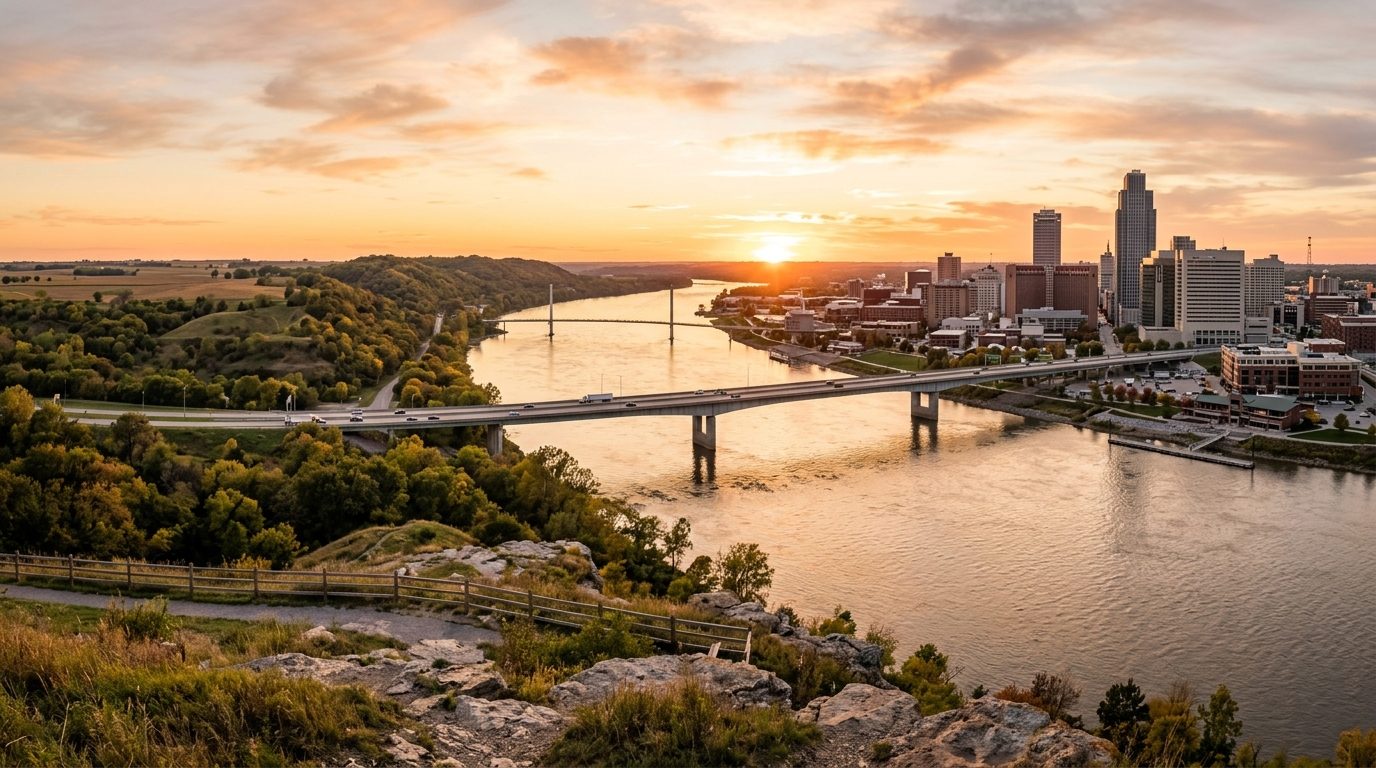
Current real estate market data, news and analysis for the Omaha, NE-IA metropolitan area — 1.0M residents across 8 counties in Nebraska and Iowa.
Data as of May 2026. Sources: Redfin Data Center, U.S. Census Bureau.
Latest Omaha Real Estate News
Omaha Real Estate Market Overview
The Omaha metro straddles the Missouri River, with Omaha on the Nebraska side and Council Bluffs, Iowa directly across the water, connected by several bridges. The terrain is rolling loess bluffs near the river, flattening into farmland toward the metro’s edges across its eight counties. The climate is humid continental, with hot summers, cold winters, and considerable day-to-day variability. Century-old streetcar-suburb neighborhoods near the urban core hold a mix of Craftsman, bungalow, and Victorian-era homes, while the western and southern suburbs have added large volumes of newer single-family subdivisions. Council Bluffs mixes older housing stock dating to the 1800s with newer development and active efforts to address blighted properties in its older neighborhoods.
The newer growth corridors to the west and southwest carry the metro’s strongest demand, prized for new construction, larger lots, and top-rated school districts, alongside a handful of established close-in neighborhoods known for mature tree canopy and distinctive early-20th-century architecture. More affordable housing is concentrated in the city’s older core neighborhoods, where housing stock tends to be older and has seen less investment over time, and in parts of Council Bluffs undergoing revitalization. A cluster of mixed-use, historically rooted neighborhoods near the university sits in between, combining older architectural character with newer infill development.
Omaha is a genuine corporate hub for a metro of its size: a major railroad, a global insurance and investment conglomerate, an insurance company, a packaged-foods company, a construction and engineering firm, and a large trucking company are all headquartered here, alongside roughly two dozen additional insurance company headquarters citywide. Offutt Air Force Base in Bellevue, home to U.S. Strategic Command, is one of the metro’s largest single-site employers. Healthcare is another major pillar, with an academic medical center and two additional hospital systems operating across the metro.
The metro sits within a zone of elevated tornado risk, with spring the peak season for both severe storms and Missouri River flooding, which has produced major flood events in the past. Property tax rates on the Nebraska side of the metro run well above state and national averages, a real ongoing cost worth verifying for any specific parcel, and Iowa-side assessment rules and rates differ from Nebraska’s, so buyers near the state line should understand which rules apply. Transit consists of local buses plus a bus-rapid-transit line connecting downtown to a western retail and job center, with the metro otherwise car-dependent. Omaha has a long history of annexing surrounding land, and school district boundaries are fragmented among several separate districts, so it’s worth confirming which district serves a specific address rather than assuming based on the city or suburb name. Buyers in the metro’s outer, unincorporated areas should also check well and septic status, and floodplain status near the Missouri River and its tributary creeks.
Cities and Towns in the Omaha Metro Area
Show all 78
Notable Communities and Neighborhoods
Omaha Real Estate Market FAQ
How is the Omaha metro housing market organized?
The metro spans the Missouri River, with Omaha, Nebraska on the west bank and Council Bluffs, Iowa on the east. The market runs from century-old streetcar neighborhoods near the urban core outward through mid-century suburbs to fast-growing newer subdivisions to the west and southwest.
Which parts of the Omaha area tend to be more expensive?
The newer growth corridors to the west and southwest, with new construction and top-rated schools, sit at the top of the market, along with a handful of established close-in neighborhoods known for mature architecture. The city’s older core neighborhoods and parts of Council Bluffs tend to be more affordable.
What should buyers verify before purchasing in the Omaha metro?
Confirm which school district actually serves a specific address, since boundaries are fragmented and don’t always match the city or suburb name. Check floodplain status near the Missouri River and its tributary creeks, and verify well and septic status in the metro’s unincorporated outer areas.
What should buyers know about property taxes across the Omaha metro’s two states?
Property tax rates on the Nebraska side run well above state and national averages, and Iowa-side assessment rules and rates differ from Nebraska’s. Buyers considering homes near the state line should confirm which state’s rules and rates apply to a specific property.
Nearby Markets