
Current real estate market data, news and analysis for the Grand Island, NE metropolitan area — 78,076 residents across Hall, Howard and Merrick counties.
Data as of May 2026. Sources: Redfin Data Center, U.S. Census Bureau.
Latest Grand Island Real Estate News
Coverage of this market is coming soon. Browse all housing market news.
Grand Island Real Estate Market Overview
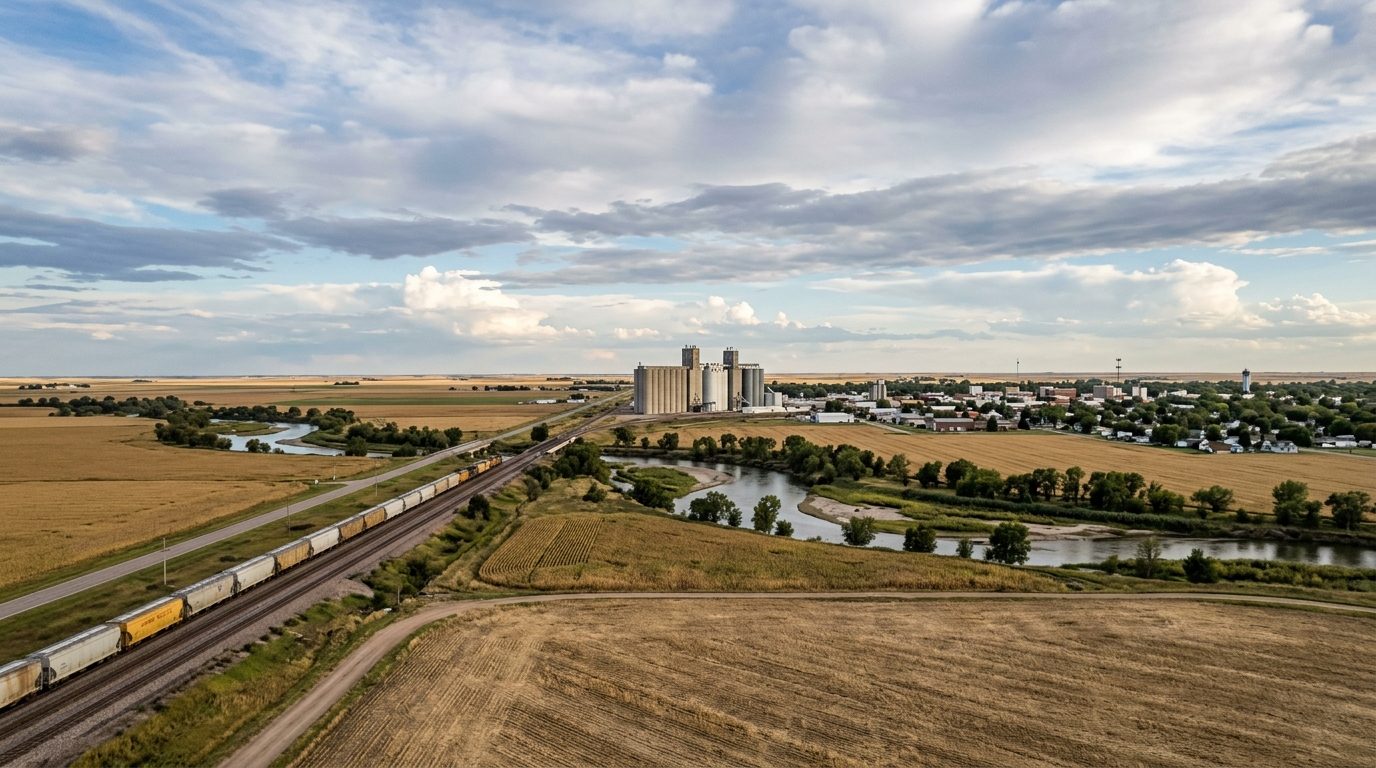
Grand Island sits in south-central Nebraska along the Platte River, at the junction of Interstate 80 and U.S. Highways 30, 34, and 281, roughly midway between the Omaha-Lincoln corridor and the Colorado border. The metro comprises Hall, Howard, and Merrick counties, radiating out from the principal city of Grand Island into a ring of small agricultural towns. The terrain is flat prairie tableland typical of the central Platte Valley, given over to row-crop and livestock agriculture outside the built-up core. Housing stock reflects the city’s layered growth: a compact historic core with early-20th-century homes and post-war ranch houses near downtown and the rail corridor, mid-century subdivisions filling out the city’s middle ring, and newer platted developments extending toward the west and northwest side along Highway 281. Surrounding county-seat towns add a smaller supply of older farmhouses and small-town infill lots.
Within the city, newer subdivisions on the west and northwest sides, including residential construction tied to the mixed-use Prairie Commons and Prairie District development along the Highway 281/34 corridor, generally sit toward the higher end of the local price range, reflecting larger lots, current building codes, and proximity to newer medical, hotel, and retail investment. Older neighborhoods closer to downtown, the Union Pacific rail yards, and the South Locust corridor near the fairgrounds tend to sit in a lower price tier, with smaller and older homes and a mix of owner-occupied and rental stock. Outlying towns in Howard and Merrick counties offer generally lower-cost housing tied to smaller local job markets and longer commutes into Grand Island.
The metro’s economy centers on agriculture and the industries built around it: beef processing, agricultural equipment manufacturing, and ammunition production sit alongside a historic rail-freight base. JBS USA operates a large beef processing plant under the Swift Beef Company name, one of the area’s largest private employers. CNH Industrial runs a Case IH agricultural equipment manufacturing plant, and Hornady Manufacturing, an ammunition maker, is headquartered in Grand Island. Union Pacific and BNSF Railway maintain substantial freight operations through the city, a legacy of Grand Island’s origin as a stop on the first transcontinental railroad. Healthcare is anchored by CHI Health St. Francis and the newer Grand Island Regional Medical Center at Prairie Commons. Public-sector and institutional employment includes Grand Island Public Schools, Central Community College, and the Nebraska Law Enforcement Training Center, the state’s law enforcement training academy.
Central Nebraska sits within a tornado-prone belt; Grand Island itself was struck by multiple tornadoes in a single night in 1980, and buyers should ask about a home’s storm shelter and confirm the wind and hail terms of any homeowners’ policy. Winters bring sustained cold and occasional ice, while summers bring heat and severe thunderstorm activity. There is no fixed-route regional transit beyond a local demand-response service, so most residents rely on personal vehicles. Property tax bills in Hall County run above the statewide median, reflecting Nebraska’s reliance on property tax for school and local funding, so buyers should review the layered city, county, and school district levies on any specific address. Because much of the metro’s newer growth has come through master-planned development on the city’s west side, buyers should also confirm platting status, floodplain status given the Platte River’s proximity, and any special assessment or HOA terms tied to newer subdivisions.
Cities and Towns in the Grand Island Metro Area
Notable Communities and Neighborhoods
Grand Island Real Estate Market FAQ
How is the Grand Island housing market organized?
The market centers on the city of Grand Island in Hall County, with a historic core near downtown and the rail corridor, mid-century neighborhoods in the middle ring, and newer subdivisions extending toward the west and northwest side. The wider metro also includes smaller towns in Howard and Merrick counties that offer a more limited, generally older housing supply tied to local agricultural economies.
Which parts of the metro tend to have higher home prices?
Newer subdivisions on Grand Island’s west and northwest side, particularly those connected to the Prairie Commons and Prairie District mixed-use development along Highway 281/34, tend to sit toward the higher end locally due to larger lots, newer construction, and proximity to recent medical and commercial investment. Older neighborhoods near downtown and the South Locust corridor, along with the smaller outlying towns, tend to be more affordable.
What should buyers verify locally before purchasing in this metro?
Buyers should confirm which city, county, and school district property tax levies apply to a specific address, check floodplain status given the Platte River’s proximity, verify whether a property is in a newer platted subdivision with special assessments or an HOA, and ask about storm shelter or safe-room provisions given the area’s severe weather exposure.
What is the main regional risk to be aware of when buying here?
Severe convective weather, including tornadoes, is the primary regional risk; Grand Island was struck by multiple tornadoes in a single night in 1980. Buyers should review a home’s storm shelter situation and confirm the wind, hail, and other severe-weather terms of homeowners’ insurance rather than assuming standard coverage is sufficient.
Nearby Markets