
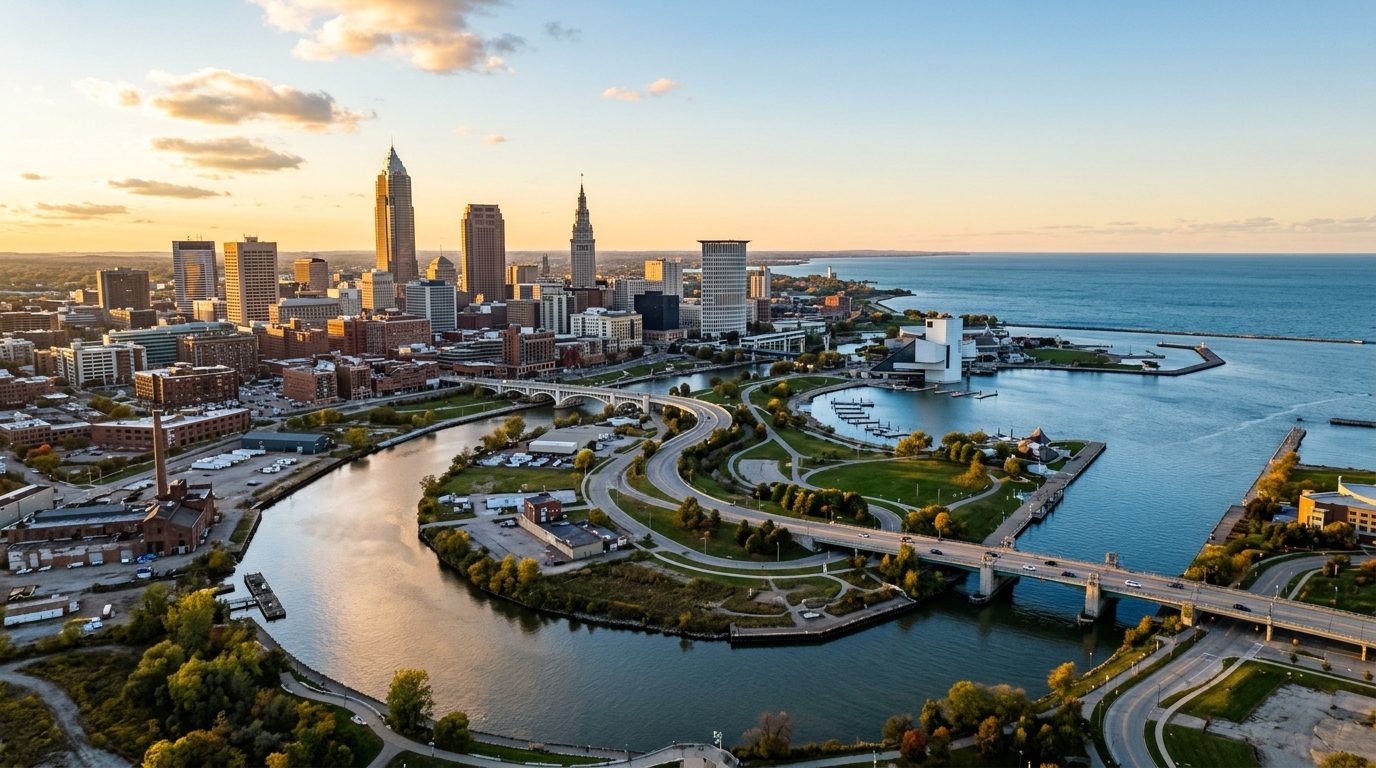
Current real estate market data, news and analysis for the Cleveland, OH metropolitan area — 2.2M residents across 6 counties in Ohio.
Data as of May 2026. Sources: Redfin Data Center, U.S. Census Bureau.
Latest Cleveland Real Estate News
Cleveland Real Estate Market Overview
Cleveland, OH extends from the Lake Erie shoreline through Cuyahoga County and into Ashtabula, Geauga, Lake, Lorain and Medina counties. Cleveland contains brick and wood-frame houses, duplexes, apartment buildings, converted industrial properties and neighborhoods developed around former streetcar lines. Inner-ring suburbs such as Cleveland Heights, Lakewood, Shaker Heights, Euclid and Parma contain substantial stocks of early and mid-century housing. Farther east and west, communities such as Mentor, Westlake, Avon, North Ridgeville and Brunswick include postwar subdivisions, townhouses and newer construction. Geauga, Medina and inland Ashtabula County add villages, farms, wooded lots and lower-density properties.
Higher price tiers are generally associated with Hunting Valley, Gates Mills, Pepper Pike, Moreland Hills, Chagrin Falls and selected communities near the lake or established western employment corridors. These areas tend to combine larger lots, mature landscaping, distinctive architecture, school districts or limited developable land. More attainable choices are commonly found in Cleveland neighborhoods, East Cleveland, portions of Euclid and Maple Heights, Lorain, Elyria, Ashtabula and older suburban corridors. A lower acquisition cost may be accompanied by substantial work involving roofs, foundations, sewer lines, mechanical systems or deferred maintenance, so housing condition can matter as much as location.
The regional economy is supported by health care, higher education, manufacturing, finance, professional services, logistics and government. Cleveland Clinic, University Hospitals and MetroHealth anchor major medical employment, while Case Western Reserve University and other institutions support research and education. Manufacturing remains important across Cuyahoga, Lorain, Lake and Medina counties, and the Port of Cleveland, rail infrastructure and interstate network support freight movement. Downtown Cleveland, University Circle, Independence, Beachwood, Westlake and suburban industrial corridors form separate employment centers that influence commuting and housing demand.
Lake Erie and the region’s older infrastructure create property-specific considerations. Lake-effect snow and freeze-thaw cycles affect roofs, masonry, pavement and foundations, while shoreline properties may require review of erosion, bluff stability and flood exposure. Basements are common and should be checked for drainage, sewer backups and prior water intrusion. Greater Cleveland Regional Transit Authority rail and bus services cover selected urban corridors, but most outer communities remain automobile-dependent. Municipalities maintain different inspection, occupancy, tax and utility practices. Buyers should verify the precise jurisdiction, school assignment, sewer responsibility, lead or rental requirements where applicable, and whether roads, retaining walls or shared driveways carry private maintenance obligations.
Cities and Towns in the Cleveland Metro Area
Show all 114
Notable Communities and Neighborhoods
Cleveland Real Estate Market FAQ
How is the Cleveland metro housing market geographically organized?
The market extends from Cleveland and its inner suburbs along Lake Erie into Lake, Lorain and Ashtabula counties, with additional suburban and rural communities in Geauga and Medina counties. Housing form, municipal services, school districts, highway access and distance from major employment centers create distinct submarkets.
Which Cleveland-area locations generally sit in higher price tiers?
Hunting Valley, Gates Mills, Pepper Pike, Moreland Hills, Chagrin Falls, selected western suburbs and lakefront communities generally occupy higher tiers. Larger lots, established architecture, school districts, limited supply and proximity to employment or cultural institutions contribute.
What should buyers inspect in an older Cleveland-area home?
Buyers should review foundations, basements, roofs, masonry, sewer lines, electrical systems, plumbing and evidence of prior water intrusion. Older lakefront and inner-ring properties may also require examination of windows, insulation, retaining structures and renovations completed under earlier codes.
What local risks should Cleveland-area buyers investigate?
Lake-effect snow, freeze-thaw cycles, severe storms, shoreline erosion and basement water can affect properties differently across the region. Buyers should verify drainage, flood exposure, roof condition, sewer responsibility and any municipal inspection or point-of-sale requirements.
Nearby Markets