
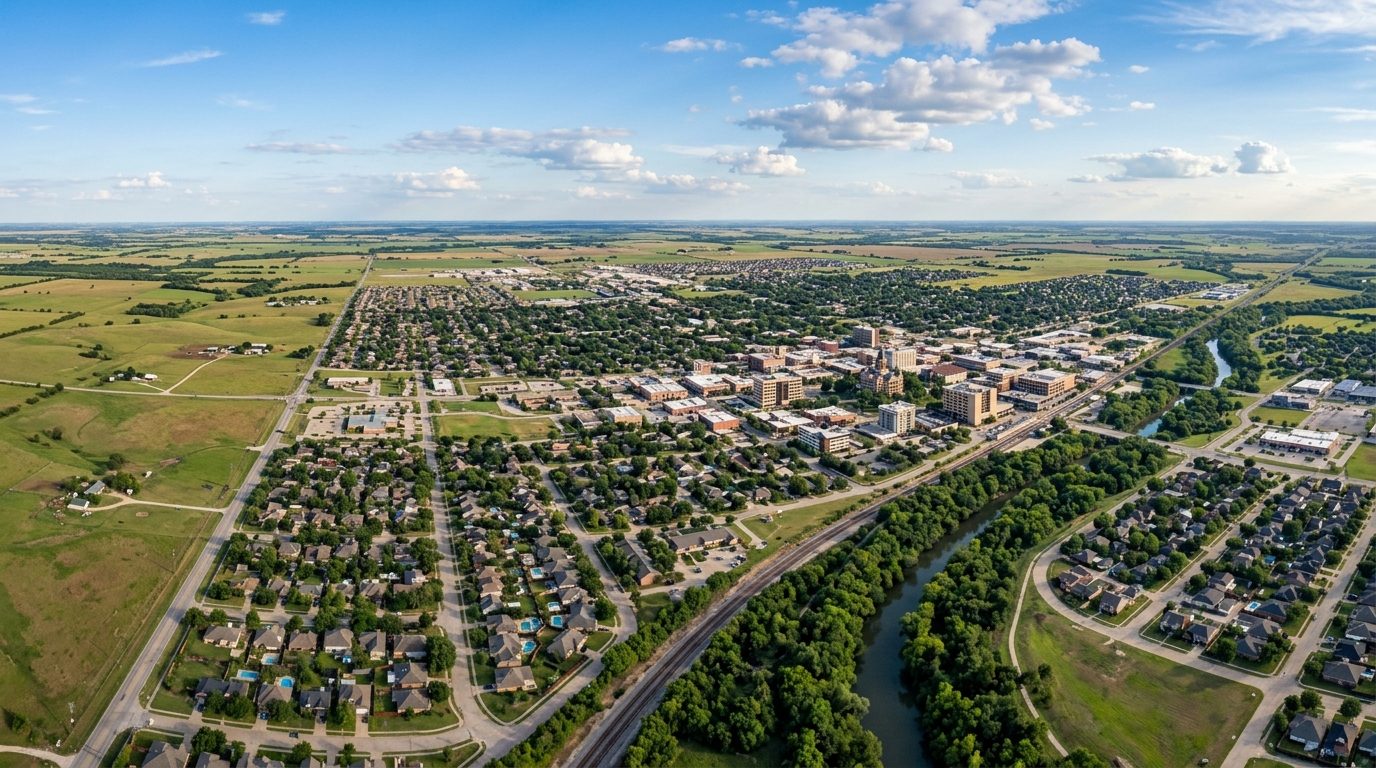
Current real estate market data, news and analysis for the Wichita Falls, TX metropolitan area — 149,448 residents across Archer, Clay and Wichita counties.
Data as of May 2026. Sources: Redfin Data Center, U.S. Census Bureau.
Latest Wichita Falls Real Estate News
Coverage of this market is coming soon. Browse all housing market news.
Wichita Falls Real Estate Market Overview
Wichita Falls sits in north central Texas along the Wichita River, near enough to the Oklahoma border to work as a gateway between Dallas–Fort Worth and Oklahoma City. The land is flat to gently rolling prairie, broken by the river corridor curling through town and by a scattering of small reservoirs built for water supply and recreation. The surrounding counties of Archer, Clay, and Wichita are mostly open ranch and farm country, with small towns like Iowa Park, Burkburnett, Electra, and Henrietta strung along highways radiating from the city. Housing stock in the city skews toward brick ranch homes from the mid-twentieth century, a legacy of a building boom tied to earlier oil and agricultural growth, while newer construction appears mainly on the western and southwestern edges where undeveloped land remains. The smaller towns carry a more rural, larger-lot character, mixing older farmhouses with newer manufactured and site-built homes.
Within the core city, areas near the country club and the newer subdivisions toward the west and southwest tend to command higher prices, reflecting larger lots, mature landscaping, and proximity to golf and park amenities. Neighborhoods around the city’s namesake parks and river trail also draw a premium for tree cover and closeness to downtown’s restored commercial buildings. Homes nearer the eastern and northern parts of the city, closer to rail corridors and older industrial districts, tend to be more affordable, reflecting older housing stock and mixed commercial-residential use. Areas nearest the air force base see a steady rental and starter-home market driven by military turnover, keeping entry pricing accessible but bringing transient demand. The smaller towns ringing the city generally price below the core, trading job proximity for space and quiet.
The economy has historically rested on agriculture and oil and gas extraction, both still present in the surrounding counties, though it has broadened over time. Sheppard Air Force Base anchors the local economy as a major training installation, drawing military families and civilian contractors into housing on a rotating basis. Manufacturing is a significant employer, with aerospace parts, industrial pumps, metals, flooring, and glass producers in and around the city. Health care is another pillar, centered on a regional hospital system serving patients from north Texas and southern Oklahoma, supplemented by a public university adding education and public-sector jobs. Retail, food service, and logistics round out the base, serving the wider rural trade area that depends on Wichita Falls as its hub.
Buyers should treat severe weather as routine here, since the metro sits in a corridor prone to strong thunderstorms, hail, and tornadoes, particularly in spring; insurance costs and terms can vary by carrier and by a property’s construction and roof age. Some low-lying pockets near the river and its tributaries carry flood risk, so checking flood zone status and drainage history for a specific address is worthwhile. Texas has no state income tax, but local governments lean heavily on property taxes to fund schools and services, so comparing rates and special districts across city, county, and school lines is worth the effort. Public transit is limited and most residents rely on cars, so commute patterns and road access matter more than transit proximity. New development generally pushes toward the western and southwestern edges of the city, while the smaller towns lean on the core city for services.
Cities and Towns in the Wichita Falls Metro Area
Notable Communities and Neighborhoods
Wichita Falls Real Estate Market FAQ
How is the Wichita Falls housing market organized across the metro?
The market centers on the city of Wichita Falls itself, which holds most of the population, retail, and employment base, while smaller towns in Archer, Clay, and Wichita counties such as Iowa Park, Burkburnett, and Henrietta offer more rural, lower-density living within commuting distance. Most daily services, hospitals, and major employers are concentrated in the core city, so proximity to it tends to shape both convenience and price across the surrounding towns.
Which areas of Wichita Falls tend to be pricier, and why?
Neighborhoods near the country club and the newer subdivisions on the western and southwestern edges of the city tend to price higher, reflecting larger lots, newer construction, and proximity to golf and park amenities. Areas closer to the older industrial and rail corridors on the east and north sides tend to be more affordable, largely because the housing stock is older and land use is more mixed.
What should buyers verify locally before purchasing in this metro?
Buyers should confirm a property’s flood zone status and drainage history given the presence of the river and its tributaries through the city, check current property tax rates and any special district assessments that vary by school district and municipality, and ask about roof condition and insurance history given the region’s exposure to hail and severe storms. It is also worth confirming proximity to Sheppard Air Force Base, since flight patterns and base activity can affect noise levels in nearby neighborhoods.
What is the primary weather-related risk for homeowners in the Wichita Falls area?
The dominant risk is severe convective weather, including tornadoes, high winds, and hail, which occurs with some regularity in spring and can affect roofs, siding, and insurance premiums. Buyers should ask sellers or inspectors about prior storm damage and repair history, and should compare insurance quotes carefully since coverage and cost can vary by carrier and by a home’s age and construction.
Nearby Markets