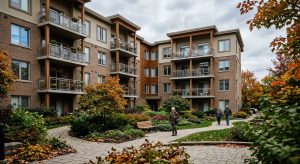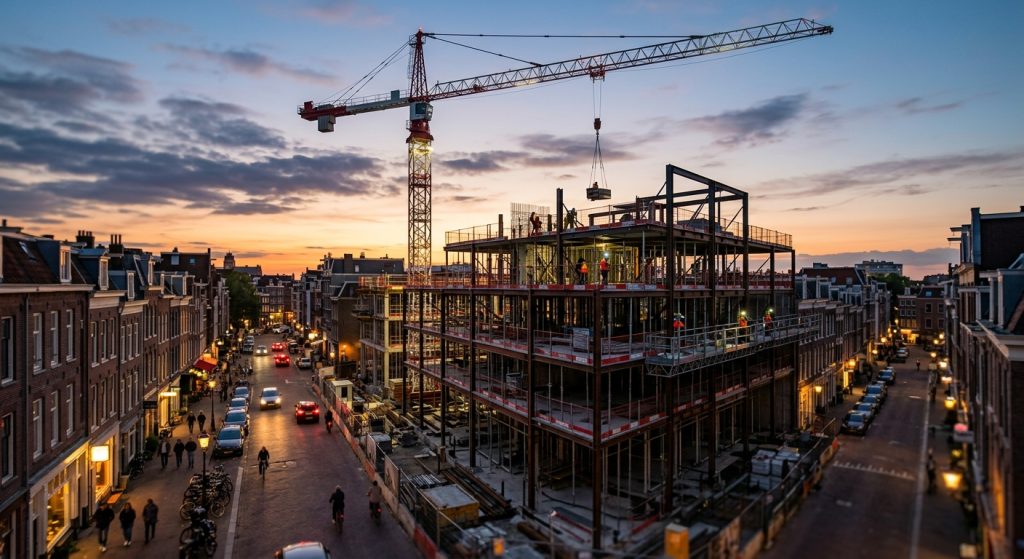
Kairoi Residential broke ground Monday on a 420-unit ultra-luxury apartment development in Denver, Colo., partnering with institutional investors PGIM Real Estate and Germany’s Helaba Bank on one of the largest multifamily starts in the city’s Lower Highlands neighborhood this year.
The San Antonio-based developer announced the groundbreaking in a press release distributed Monday, describing the project as a Class A mid-rise designed to be “one of the highest-quality multifamily communities in the country.”
The development sits off Speer Boulevard and Zuni Street in the LoHi neighborhood, a walkable district northwest of downtown Denver that has drawn steady investment from apartment developers. It will include 420 apartments in studio, one-, two- and three-bedroom layouts, along with a sky pool deck with downtown skyline views, men’s and women’s health spas, a 24-hour fitness center, work-from-home spaces, golf and ski simulators, multiple sky lounges and outdoor social areas.
“We are thrilled to break ground on this transformative project in the LoHi neighborhood,” said Tyler Sibley, principal of Kairoi Development. “This project is the culmination of nearly a decade of dedicated pursuit and extensive planning with an exceptional team of design and construction professionals. Our vision is to deliver one of the highest-quality multifamily communities in the country featuring thoughtfully crafted residences, a best-in-class amenity package and seamless connectivity to all that the LoHi neighborhood and Denver metro area has to offer.”
Kairoi did not disclose total construction cost, a completion date or the specific size of the equity and debt commitments from its partners. PGIM is providing equity through its real estate investment platform, while Helaba, a German Landesbank, is financing the project — a structure increasingly common in U.S. multifamily deals as developers pair domestic sponsors with international capital.
“This development reflects our strong conviction around high-quality rental housing in markets supported by durable demand and long-term growth,” said Soultana Reigle, head of U.S. equity for PGIM’s real estate investment group. “Denver’s LoHi neighborhood combines walkability with access to employment, and our partnership with Kairoi and Helaba Bank allows us to deliver a differentiated residential community while investing with discipline and selectivity on behalf of our investors.”
Helaba, in a statement included in the release, framed the financing as consistent with a cautious lending posture toward multifamily. “This financing underlines Helaba’s commitment to high quality residential real estate in strong urban markets and to projects that create modern rental housing and vibrant communities,” the bank said. “In a market environment that remains challenging and selective, Helaba continues to focus on resilient assets and experienced partners with strong track records in development and asset management.”
Institutional backing behind the deal
The three companies bring different scales of institutional weight to the project. Kairoi has developed or owned more than 57,000 multifamily units since 2002 and has built roughly $2.5 billion in new developments across San Antonio, Dallas, Chicago, Denver, Houston, Miami, Charlotte and Austin, according to the release. PGIM, the global asset management arm of Prudential Financial, managed $1.4 trillion in assets as of March 31. Helaba, headquartered in Frankfurt and Erfurt, manages about €201.8 billion in total assets and serves as a central clearing institution for German regional savings banks.
The pairing reflects a broader pattern in U.S. apartment development this year, where domestic developers are increasingly leaning on international balance sheets to fund large, amenity-heavy projects as construction and labor costs keep total development budgets elevated. Denver’s apartment market has cooled from its pandemic-era construction peak, and other Western metros have seen apartment construction pipelines shrink as developers grow more selective about where they break ground.
What it means
The confirmed facts: Kairoi, PGIM and Helaba have started construction on a 420-unit luxury apartment project in Denver’s LoHi neighborhood, with named executives from Kairoi and PGIM on record backing the project and Helaba providing financing. Kairoi’s characterization of the project as among “the highest-quality multifamily communities in the country” is the company’s own marketing language, not an independent assessment.
What isn’t yet public is the total capital stack — neither the equity contribution nor the loan amount was disclosed, nor was an expected completion date. That level of detail is typical for early construction announcements and often surfaces later through municipal permitting records or subsequent financing disclosures.
The project adds to a stream of large apartment announcements this year that show institutional capital continuing to flow into select urban submarkets even as national multifamily construction starts have slowed. Large apartment buildings captured a majority share of last year’s multifamily completions nationally, a trend that projects like this one in Denver appear likely to extend into 2026 and beyond.
Watch for permit filings and municipal records to confirm the project’s total valuation and timeline, and for whether other LoHi-area sites attract similar institutional joint ventures as Denver’s luxury apartment supply concentrates in a handful of amenity-rich buildings.