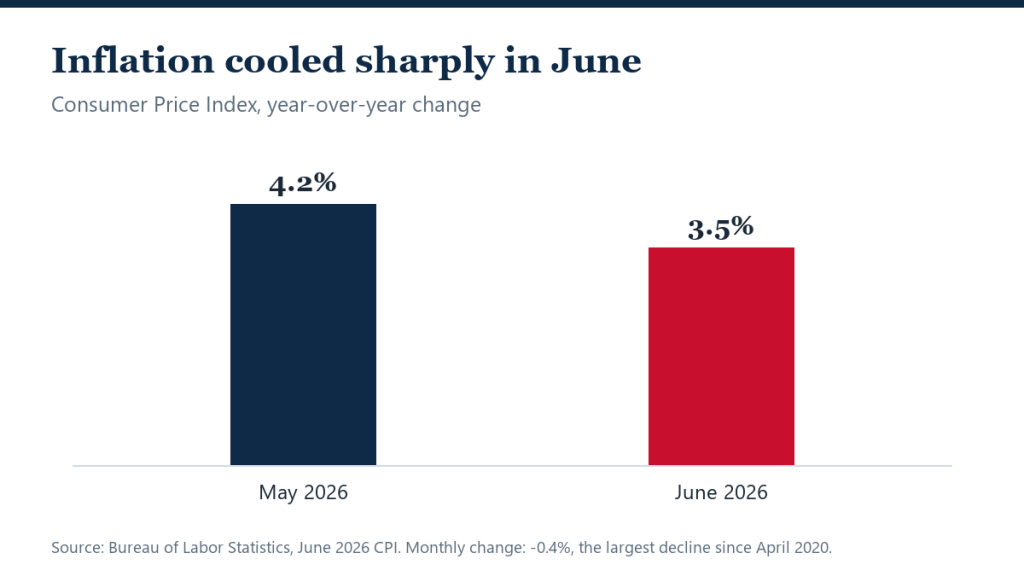
The Consumer Price Index fell 0.4% in June on a seasonally adjusted basis — the largest monthly decline since April 2020 — pulling annual inflation down to 3.5% from 4.2% in May, the Bureau of Labor Statistics reported. Core CPI, which excludes food and energy, was flat for the month and stood 2.6% above a year earlier.
For housing, the report removed an immediate source of pressure. Mortgage rates track expectations for Federal Reserve policy through the bond market, and June’s cooling sharply reduced bets on further tightening: CME FedWatch data put the probability of no change at the Fed’s next meeting at 85.6% after the release.
One report is still one report. The June data does not guarantee lower mortgage rates or dictate the Fed’s next move — but it shifts the risk balance, and it arrived just days after a survey showed forecasters leaning the other way.
Inside the June report
- Headline CPI: -0.4% month over month; +3.5% year over year, down from 4.2% in May.
- Core CPI: flat month over month; +2.6% year over year.
- Gasoline: down 9.7% for the month — the biggest single drag on the index.
- Shelter: up just 0.1%, continuing the slow cooling in housing costs that dominate the index.
Why mortgage borrowers should care — carefully
The Fed does not set mortgage rates, but inflation expectations move the 10-year Treasury yield that mortgage pricing follows — the mechanism explained in RealtyWire’s guide to what actually moves mortgage rates. Cooler inflation lowers the odds of Fed tightening and tends to ease yields; several Fed officials publicly welcomed the June reading within hours of its release.
The shelter component matters most for how durable the trend is. Housing costs are the largest slice of CPI and move slowly; a 0.1% monthly rise suggests the rent disinflation documented in the 2026 rental market data is finally flowing through to the official index.
What borrowers can do with this
For buyers mid-transaction, a cooling print strengthens the case for consulting a lender about float-down options rather than panic-locking — the trade-offs covered in RealtyWire’s rate-lock guide. For owners holding 7%-plus loans from 2023–2024, each step down in inflation expectations brings the refinance math closer to working.
The gasoline collapse deserves its own asterisk. A 9.7% monthly drop in pump prices is the kind of swing that can reverse just as quickly, which is why the Fed anchors on core inflation — and core’s flat month, its best reading of the year, is the more durable signal in the report.
Timing sharpens the story: a Blue Chip survey taken July 6–7, one week before the release, found 34% of forecasters expected the Fed’s next move to be a hike, up from 9% earlier in 2026. June’s data deflated that view within hours — a reminder of how fast the rate conversation can swing on one print, in either direction.
What to watch next: the Fed’s meeting concludes next week with markets pricing an 85.6% probability of no change, and the July CPI lands in mid-August. Two more readings like June’s would move the conversation from “no hike” toward “when is the first cut” — with everything that implies for fall mortgage pricing.
FAQ
Does falling CPI mean mortgage rates will drop?
Not automatically. Mortgage rates follow bond-market expectations, which weigh many factors. June’s report reduces upward pressure; it does not schedule a decline.
Why did CPI fall when prices still feel high?
A negative monthly reading means the overall price level slipped in June — driven by a 9.7% drop in gasoline. Annual inflation of 3.5% means prices remain well above year-ago levels; they are rising more slowly, not reversing.
What is the difference between headline and core CPI?
Headline counts everything; core strips out volatile food and energy to reveal the underlying trend. June’s flat core reading at 2.6% annually is the number the Fed watches most closely.