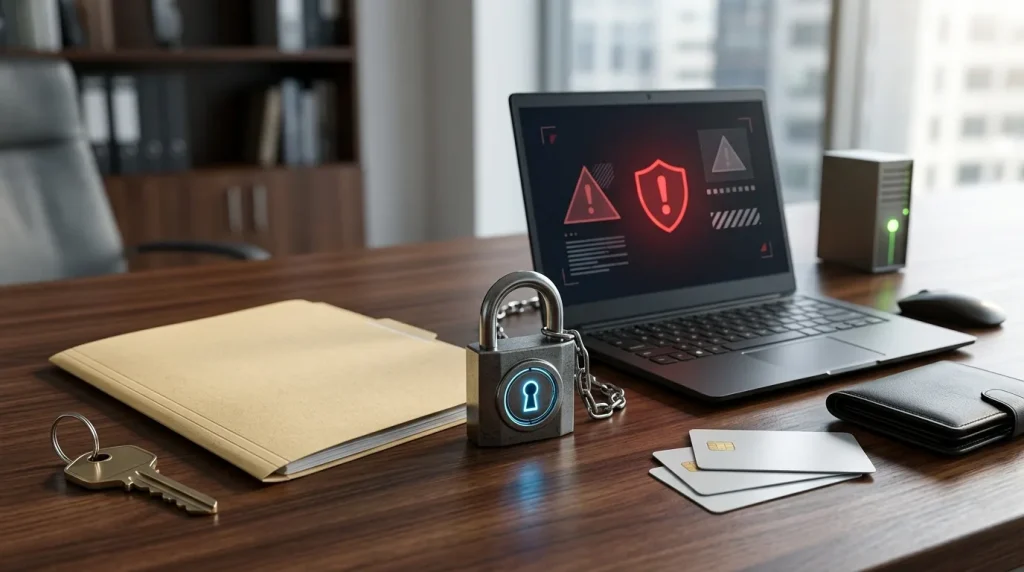
Real estate wire fraud can turn a home closing into a financial disaster in minutes.
The scam is usually simple but convincing. A buyer, seller, agent, attorney or title company receives what looks like a legitimate email about wiring closing funds. The message may appear to come from a trusted party and may reference real details from the transaction. But the wiring instructions point to a criminal’s account.
Once the money is sent, recovery can be difficult. That is why buyers, sellers and real estate professionals need a verification plan before closing week.
This article is general information, not legal or cybersecurity advice.
Key takeaways
- The FBI describes business email compromise as one of the most financially damaging online crimes.
- Real estate wire fraud often involves spoofed emails or compromised accounts during closing.
- CFPB says buyers should verify wiring instructions with trusted representatives before sending money.
- ALTA says wire fraud remains a significant threat to real estate transactions.
- Buyers should never rely only on emailed wiring instructions.
- If money is sent to a fraudulent account, contact the bank immediately and report to IC3.
- Verification should happen before the wire is sent, not after.
How real estate wire fraud works
Real estate wire fraud is often a form of business email compromise, or BEC.
The FBI says BEC is one of the most financially damaging online crimes because it exploits reliance on email for personal and professional business. The FBI gives a real estate example: a homebuyer receives a message that appears to be from the title company with instructions for wiring the down payment, but the message is fake.
Scammers may spoof email addresses, compromise legitimate accounts, monitor transaction timelines and send last-minute changes to wiring instructions. The message may look real because the scammer has studied the transaction.
CFPB says scammers can send spoofed emails posing as a real estate agent, settlement agent, legal representative or other trusted person with false instructions for wiring closing funds.
Why closing is vulnerable
Closing is a high-pressure moment.
Buyers may be sending large amounts of money, sellers may be expecting proceeds, and many professionals may be communicating at once. Last-minute document changes, deadlines and urgency create the exact conditions criminals exploit.
ALTA warns that wire fraud remains one of the most significant threats facing real estate transactions and says education, strong verification procedures and consumer awareness are critical to protecting funds.
The most dangerous phrase in a closing email may be: “Updated wiring instructions.”
Buyer checklist before wiring funds
Before wiring money, buyers should:
- Identify two trusted contacts early, such as the title company and settlement officer.
- Write down their verified phone numbers at the start of the transaction.
- Confirm the expected wiring process before closing.
- Ask whether wiring instructions are expected to change.
- Verify instructions by phone using a number obtained independently.
- Never call a phone number only provided in an email with wiring instructions.
- Do not click links in unexpected closing emails.
- Do not email bank account information.
- Confirm the receiving account name and number.
- Ask the bank about wire recall procedures before sending large funds.
CFPB recommends identifying trusted individuals in advance, confirming payment instructions by phone or in person, avoiding email-only verification and never emailing financial information.
What to do if fraud happens
Speed matters.
If a wire has been sent to a fraudulent account, contact the sending bank immediately, ask for a wire recall, ask the bank to contact the receiving bank’s fraud department, contact the title company and real estate professionals, file a report with the FBI’s Internet Crime Complaint Center, preserve emails and wire receipts, and consider contacting local law enforcement and legal counsel.
The best protection is a no-change rule
The simplest closing-funds rule is this:
Assume any change to wiring instructions is fraudulent until independently verified.
That does not mean every change is fake. It means the risk is too high to trust email alone.
What this means
Real estate wire fraud is preventable only when everyone treats verification as a required step.
Buyers should verify before wiring. Sellers should verify before changing proceeds instructions. Agents should educate clients early. Title and settlement professionals should use clear protocols. Banks should be contacted immediately if anything goes wrong.
Closing funds should never move based only on an email.
FAQ
What is real estate wire fraud?
Real estate wire fraud is a scam where criminals trick buyers, sellers or real estate professionals into sending closing funds or sale proceeds to a fraudulent account.
How does wire fraud happen in real estate?
Scammers may spoof email addresses, compromise accounts, monitor transaction details and send fake wiring instructions near closing.
Should buyers trust emailed wire instructions?
No. CFPB says buyers should verify closing instructions with trusted representatives by phone or in person before wiring money.
What should I do if I wired money to a scammer?
Contact your bank immediately, request a wire recall, notify the real estate and title professionals involved, and file a report with the FBI’s IC3.
Can sellers be victims of wire fraud?
Yes. Sellers can be targeted through proceeds fraud, payoff fraud or property-owner impersonation schemes.
Sources with clickable URLs
- FBI — Business Email Compromise
- FBI IC3 — Business Email Compromise
- CFPB — Mortgage Closing Scams
- ALTA — Wire Fraud
- ALTA — Information Security and Wire Verification Tools