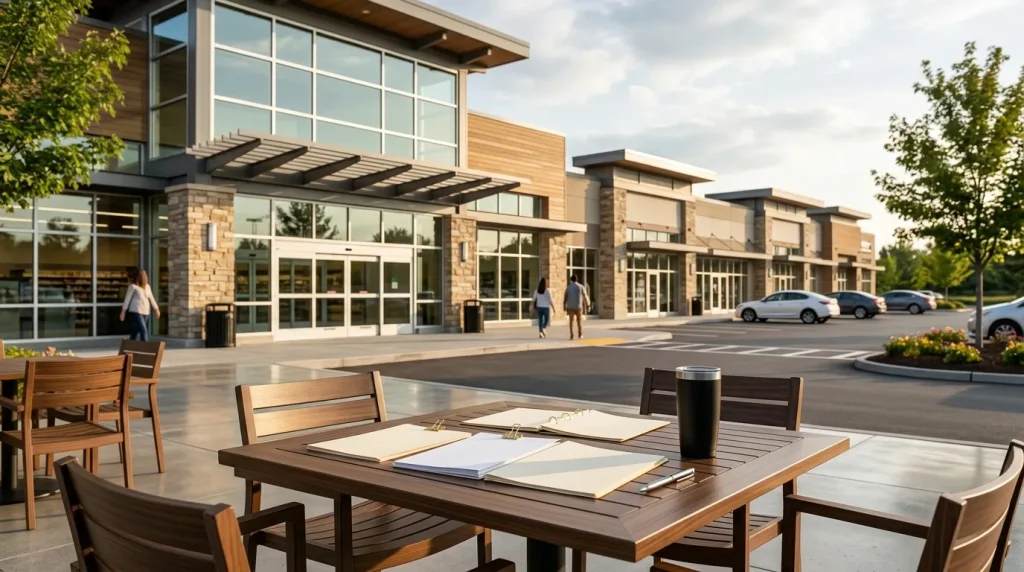
Grocery-anchored retail centers remain one of the most favored property types in retail real estate.
The reason is simple: people keep buying groceries in good economies and weak ones. A strong grocer can bring repeat traffic to a center several times a week, supporting nearby restaurants, service tenants, fitness users, medical providers and everyday retailers. That steady demand is especially valuable in a retail market where new supply is limited.
But not every grocery-anchored center is equally strong. The quality of the grocer, trade area, rent roll, lease terms, co-tenancy and competition all matter.
Key takeaways
- CBRE says grocery-anchored centers are positioned to outperform for occupancy and rent growth in 2026.
- CBRE’s 2026 North American Investor Intentions Survey found 85% of retail investors favored grocery-anchored centers.
- CBRE reported grocery-anchored investment volume totaled $12.8 billion over the rolling four quarters ending Q1 2026.
- JLL said restaurants, discount retailers and grocery operators are leading retail tenant expansion.
- Grocery anchors can drive recurring traffic, but weaker grocers may not support a center as effectively.
- Investors should evaluate the anchor, trade area, lease structure and tenant mix before buying.
Why grocery anchors matter
A grocery store can function as a daily-needs traffic engine.
Unlike a fashion tenant or discretionary retailer, a grocer brings regular customer visits tied to household necessities. That repeat traffic can help smaller shops, restaurants and service tenants in the same center.
CBRE’s 2026 retail outlook said grocery-anchored centers, neighborhood and strip centers, and high-income suburban corridors are positioned to outperform for both occupancy and rent growth.
That does not mean every grocery-anchored asset is safe. It means the format has structural advantages when the anchor is strong and the location supports demand.
Investor demand remains strong
Institutional and private investors continue to pursue grocery-anchored centers.
CBRE said its 2026 North American Investor Intentions Survey found that 85% of retail investors favored grocery-anchored centers, making them the most preferred retail format by a wide margin. CBRE also cited MSCI data showing grocery-anchored investment volume of $12.8 billion over the prior rolling four quarters, the largest such total since 2022.
CBRE Investment Management’s April 2026 acquisition of a nearly 1.1-million-square-foot grocery-anchored portfolio across five states is another example of investor appetite for necessity-based retail. CBRE IM described grocery-anchored retail as offering durable income, limited new supply and tenancy tied to non-discretionary consumer demand.
Grocery demand supports surrounding tenants
The investment case is not only about the grocery box.
A successful grocery anchor can help create cross-shopping. A customer may buy groceries, pick up takeout, visit a pharmacy, stop at a fitness studio or use a service tenant during the same trip.
JLL’s Q1 2026 retail market report said restaurants, discount retailers and grocery operators are leading tenant expansion, while apparel and electronics are contracting. JLL also said structural scarcity continues to support retail fundamentals, with new supply at historic lows and vacancy holding steady at 4.4%.
Not every grocery anchor is equal
A grocery logo alone does not guarantee performance.
ICSC reported that the grocery sector is changing as value-focused and premium fresh-format grocers gain momentum, while traditional supermarkets face more competition. ICSC quoted JLL’s Naveen Jaggi saying grocery-anchored centers remain one of the strongest retail formats, but “the days when any grocery store could anchor a center equally well are fading.”
Investors should ask:
- Is the grocer gaining or losing market share?
- Is the store productive?
- How long is the lease term?
- Are there renewal options?
- Is the rent below or above market?
- Are there co-tenancy clauses?
- Are there competing grocers nearby?
- Is the trade area growing?
- Are inline tenants benefiting from traffic?
Limited new supply helps the format
Grocery-anchored centers also benefit from retail supply scarcity.
CBRE’s 2026 retail outlook said new construction will remain limited due to financing constraints, high costs and limited land availability. That can help keep space availability low, especially in strong open-air centers.
When desirable retail space is hard to build, existing centers with strong anchors become more valuable.
What this means
Grocery-anchored retail remains attractive because it combines necessity demand, recurring traffic and limited new supply. That combination can support occupancy and income in a way many discretionary retail formats cannot.
But the best grocery-anchored centers are not simply “any center with a supermarket.” They are centers with the right grocer, strong demographics, durable leases, healthy inline tenants and limited nearby competition.
For investors, the grocery anchor is the starting point. The real underwriting is the trade area, tenant mix and long-term cash flow.
FAQ
What is a grocery-anchored retail center?
A grocery-anchored retail center is a shopping center where a grocery store is the main anchor tenant and traffic driver.
Why do investors like grocery-anchored retail?
Investors like the format because grocery demand is tied to everyday needs, which can create recurring traffic and support smaller tenants.
Are grocery-anchored centers still popular in 2026?
Yes. CBRE said 85% of retail investors in its 2026 North American Investor Intentions Survey favored grocery-anchored centers.
Is every grocery-anchored center a good investment?
No. The grocer’s strength, lease terms, competition, demographics, access, visibility and tenant mix all matter.
Sources with clickable URLs
- CBRE — U.S. Real Estate Market Outlook 2026: Retail
- CBRE — Grocers Adding More Stores to Meet Rising Consumer Demand
- CBRE Investment Management — National Grocery-Anchored Retail Portfolio Acquisition
- JLL — United States Retail Market Dynamics Q1 2026
- ICSC — New Grocery Formats, Store Growth and Investment Signal Sector in Motion
Related Articles
- Retail Real Estate in 2026: Why Low Supply Is Helping Landlords
- Mixed-Use Real Estate Explained: Why Developers Still Like Live-Work-Play Projects
- Commercial Real Estate Outlook 2026: Office Is Stabilizing, Industrial Is Rebounding, Retail Is Tight, and Multifamily Demand Is Healing
- More Commercial Real Estate news →