Retail real estate is one of the more resilient commercial property stories of 2026.
That may surprise anyone who remembers years of “retail apocalypse” headlines. But the sector has changed. Weak malls and obsolete big-box centers still face pressure, while grocery-anchored centers, open-air centers, neighborhood centers and high-income suburban corridors are benefiting from limited new supply and steady tenant demand.
The retail real estate story in 2026 is not that every property is strong. It is that scarcity is helping the right properties.
Key takeaways
- CBRE reported average U.S. retail asking rent rose 2.4% year over year to $24.59 per square foot in Q1 2026.
- CBRE reported retail availability at 4.9%.
- JLL reported national retail vacancy held steady at 4.4% in Q1 2026.
- JLL said new supply is at historic lows.
- Restaurants, discount retailers and grocery operators are leading tenant expansion.
- CBRE expects limited new construction to keep supply scarcity in place.
- Retail performance is highly dependent on asset type, location and tenant mix.
Retail has a supply advantage
The biggest reason retail landlords have more leverage is not explosive demand. It is limited supply.
CBRE reported that average retail asking rent increased 2.4% year over year to $24.59 per square foot in Q1 2026, supported by historically low construction completions and three consecutive quarters of positive net absorption. CBRE also reported that retail availability rose slightly to 4.9% as certain retailer bankruptcies created closures and space reductions.
JLL’s Q1 2026 retail report told a similar scarcity story. JLL said the U.S. retail market began the year with negative net absorption of 4.4 million square feet, but structural scarcity continued to support fundamentals, with new supply at historic lows and vacancy holding steady at 4.4%.
That is why retail can look healthier than expected even when some retailers are closing stores.
Not all retail is winning
Retail real estate is not one asset class.
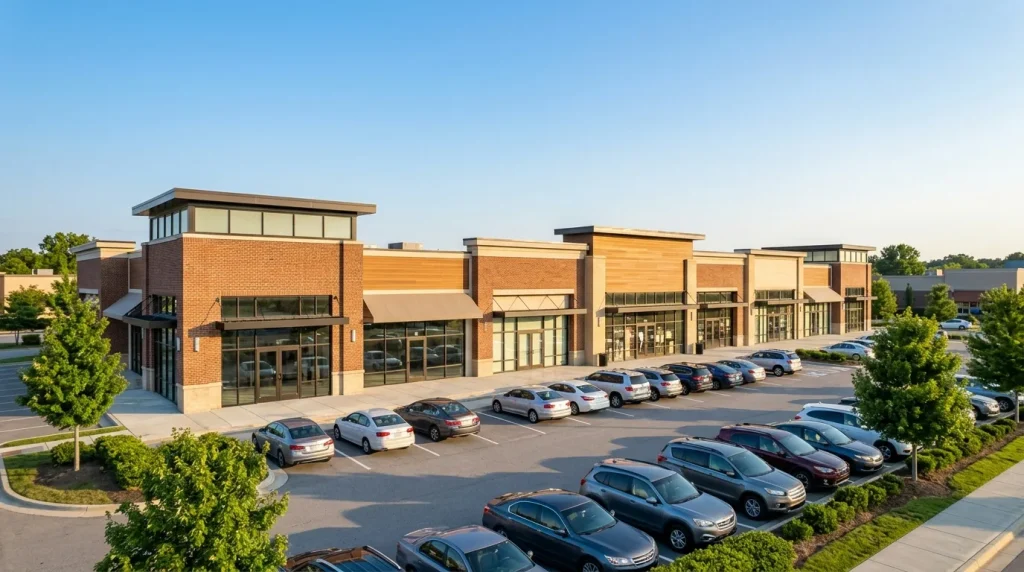
A well-located grocery-anchored center may have strong demand. A high-income suburban strip center may have pricing power. A weak mall with obsolete department-store boxes may still struggle.
CBRE’s 2026 retail outlook said grocery-anchored centers, neighborhood and strip centers, and high-income suburban corridors are positioned to outperform for both occupancy and rent growth. It also said weaker malls and older power centers will continue to lag because of higher capital-improvement needs and slower backfill activity.
The dividing line is increasingly clear: necessity, convenience and strong location are outperforming weaker discretionary retail.
Which tenants are expanding?
Tenant demand is coming from specific categories.
JLL said restaurants, discount retailers and grocery operators are leading tenant expansion, while apparel and electronics retailers are contracting. JLL also said national rent growth slowed to 2.0%, but Sun Belt markets significantly outpaced the national average.
That tenant mix matters because it supports open-air centers and everyday-use retail. Shoppers may reduce discretionary spending, but they still buy groceries, use services, eat out, visit medical providers and shop value retailers.
Why low construction matters
Retail has not been overbuilt recently the way some other property types were.
CBRE’s 2026 retail outlook said new construction will remain limited because of financing constraints, high costs and limited land availability. That can help keep space availability low, especially in strong open-air centers.
When desirable retail space is hard to build, existing centers with strong anchors become more valuable.
Risks for retail landlords
Retail’s strong supply position does not eliminate risk.
Landlords still need to watch tenant bankruptcies, consumer spending pressure, retailer consolidation, weak junior anchors, capital needs, interest rates, lease rollover, e-commerce pressure and local competition.
A center with strong grocery, restaurant and service tenants may be resilient. A center dependent on discretionary apparel, electronics or weak big-box users may face more uncertainty.
What this means
For landlords, 2026 retail conditions favor well-located centers with limited competition and strong tenant demand. Low supply can support rent growth, but tenant quality still matters.
For tenants, the best retail space may not be easy to find. Scarcity can limit options in strong trade areas, especially for restaurants, grocers, discount retailers and service users.
For investors, retail is no longer a simple avoid-or-buy decision. The best assets are necessity-based, well-located and defensible. The weakest assets still need capital, repositioning or new uses.
Retail real estate is not universally back. But the best retail is scarce, and scarcity is helping landlords.
FAQ
Is retail real estate strong in 2026?
Retail real estate is stronger than many expected, especially for well-located open-air, grocery-anchored and necessity-based centers.
What is the U.S. retail availability rate?
CBRE reported retail availability at 4.9% in Q1 2026.
Are retail rents rising?
Yes. CBRE reported average retail asking rent rose 2.4% year over year to $24.59 per square foot in Q1 2026.
Why is low supply helping retail landlords?
Limited new construction means fewer competing spaces, which helps landlords in strong trade areas maintain occupancy and pricing power.
Which retail tenants are expanding?
JLL said restaurants, discount retailers and grocery operators are leading tenant expansion.
Sources with clickable URLs
- CBRE — Q1 2026 U.S. Retail Figures
- CBRE — U.S. Real Estate Market Outlook 2026: Retail
- JLL — United States Retail Market Dynamics Q1 2026
Related Articles
- Grocery-Anchored Retail Centers: Why Investors Still Like Them
- Commercial Real Estate Outlook 2026: Office Is Stabilizing, Industrial Is Rebounding, Retail Is Tight, and Multifamily Demand Is Healing
- Mixed-Use Real Estate Explained: Why Developers Still Like Live-Work-Play Projects
- More Commercial Real Estate news →