
Current real estate market data, news and analysis for the Cape Coral-Fort Myers, FL metropolitan area — 875,607 residents across Lee county.
Data as of May 2026. Sources: Redfin Data Center, U.S. Census Bureau.
Latest Cape Coral Real Estate News
Cape Coral Real Estate Market Overview
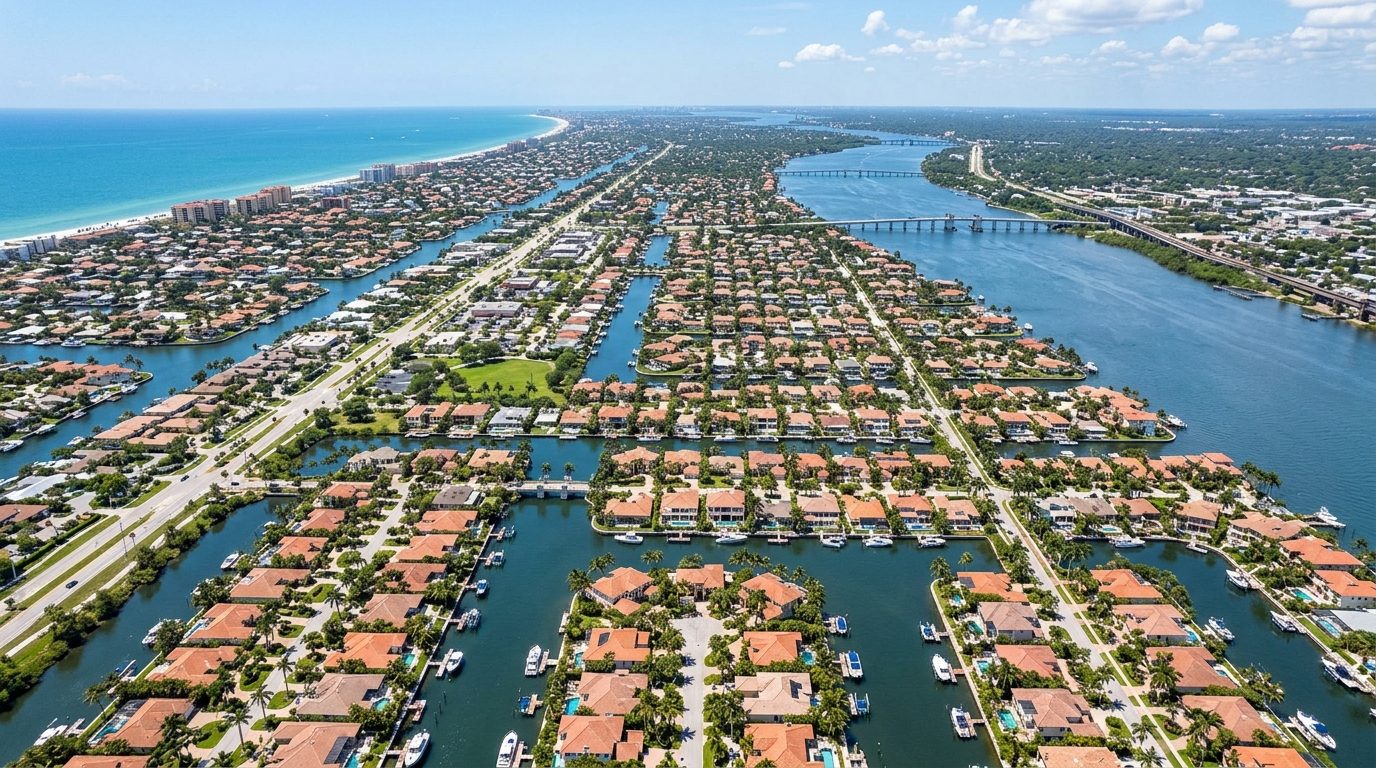
The Cape Coral-Fort Myers metro sits on the Gulf Coast of southwest Florida, entirely within Lee County, split by the Caloosahatchee River as it flows to the Gulf. Cape Coral occupies a peninsula on the river’s north side, platted around a grid of dredged canals giving many lots water access. Fort Myers, the county seat, sits along the river’s south side with an older street pattern anchored by a historic downtown river district. Bonita Springs and Estero extend the metro south toward Collier County, while barrier islands including Sanibel, Captiva, Fort Myers Beach, and Pine Island line the Gulf, reached by causeways and bridges. Cape Coral is dominated by single-family homes on canal or interior lots, many newly rebuilt after recent storms. Fort Myers mixes older bungalows and riverfront homes near downtown with later inland subdivisions, and the islands favor elevated homes and low-rise condominiums, while golf and country-club communities ring the metro’s eastern and southern edges.
Waterfront access is the clearest driver of price tier. Homes on saltwater or Gulf-access canals in Cape Coral, along the river in Fort Myers, and on the barrier islands carry a premium because they allow boat access to the Gulf without bridges or locks. Sanibel and Captiva sit at the top of the tier structure due to limited land, strict development restrictions, and an environment built around conservation and low-density living. Bonita Springs and Estero trend upper-tier too, reflecting newer housing stock and proximity to Collier County’s costlier Naples-area market. Interior-canal and inland neighborhoods in Cape Coral, and older sections of central and east Fort Myers, sit lower largely because they lack direct water access. Fort Myers Beach and low-lying Pine Island remain in active post-storm rebuilding.
Healthcare, education, retail, and tourism anchor the economy. Lee Health, the county’s public hospital system, is the region’s largest employer, running hospital campuses and outpatient centers across Fort Myers and Cape Coral. The Lee County School District and Lee County government are also major employers, alongside Publix Super Markets and Florida Gulf Coast University, based near Estero. Fort Myers is the corporate home of Chico’s FAS, a publicly traded apparel company, and the region hosts operations tied to Arthrex, a global orthopedic device maker headquartered in nearby Naples. Tourism supports many service jobs, and the Lee County Port Authority operates Southwest Florida International Airport. Construction and real estate remain active given ongoing rebuilding.
Hurricane exposure shapes the area’s housing and insurance landscape. The metro has been struck by major storms, including Hurricane Ian, which caused severe wind, surge, and flood damage in Cape Coral, Fort Myers Beach, Sanibel, and Pine Island. Insurance costs vary by flood zone, elevation, construction date, and coastal proximity, and should be confirmed for any specific property. Building codes have tightened across storm cycles, so buyers should check a home’s permit history and elevation certificate rather than assume uniform standards metro-wide. Florida has no state income tax, but property tax rates and special assessment fees vary by municipality and should be checked before purchase. Public transit is limited, and the region is built around car travel. Buyers should verify canal and seawall maintenance obligations in Cape Coral, HOA and deed restrictions in planned communities, and whether a property carries wind or flood mitigation credits.
Cities and Towns in the Cape Coral Metro Area
Notable Communities and Neighborhoods
Cape Coral Real Estate Market FAQ
How is the Cape Coral-Fort Myers housing market organized geographically?
The metro is built around the Caloosahatchee River, which splits Cape Coral on the north side from Fort Myers on the south side, with both connected by bridges. Cape Coral is laid out on a canal grid that gives a large share of its residential lots water access, while Fort Myers has an older, less uniform street pattern centered on a historic downtown river district. Bonita Springs and Estero extend the metro south toward Collier County, and barrier islands including Sanibel, Captiva, Fort Myers Beach, and Pine Island sit off the mainland, reached by causeways and bridges rather than being part of the continuous street grid.
Which areas in the Cape Coral-Fort Myers metro tend to be pricier, and why?
Waterfront access is the main factor. Homes on Gulf-access canals in Cape Coral, along the river in Fort Myers, and on the barrier islands command more because they allow boat access to the Gulf without bridges or locks. Sanibel and Captiva sit at the top of the range due to limited land and strict local development restrictions that keep density low and preserve a conservation-oriented character. Bonita Springs and Estero also trend toward the upper end, reflecting newer housing stock and closeness to Collier County’s costlier Naples-area market. Interior-canal and inland neighborhoods, along with older sections of central and east Fort Myers, tend to be more affordable because they lack direct water access.
What should buyers verify locally before purchasing in this market?
Buyers should confirm a property’s flood zone and elevation certificate, since these directly affect insurance requirements and cost. In Cape Coral, canal and seawall maintenance responsibilities should be checked, as these can be owned by the city, a homeowners association, or the individual property owner depending on location. Any HOA or deed restrictions in gated or master-planned communities should be reviewed for fees, rules, and reserve funding. It is also worth checking a home’s permit history and construction date against current building code requirements, since standards have changed significantly across recent storm cycles, and confirming property tax and any special assessment obligations tied to the specific municipality or community.
How significant is hurricane and flood insurance risk in this market?
The metro sits directly on the Gulf Coast and has experienced direct hits from major hurricanes, including storm surge and wind damage affecting low-lying coastal and canal-front areas. Homeowners insurance and, where a property sits in a mapped flood zone, flood insurance are material ongoing costs that vary by elevation, distance from the coast, construction date, and building materials. Newer construction built to current Florida building code standards, including impact-rated windows and elevated foundations, generally carries different insurance considerations than older homes. Because rates and requirements are set at the individual property level, buyers should obtain insurance quotes and confirm flood zone status early in the purchase process rather than relying on general assumptions about a neighborhood.
Nearby Markets