
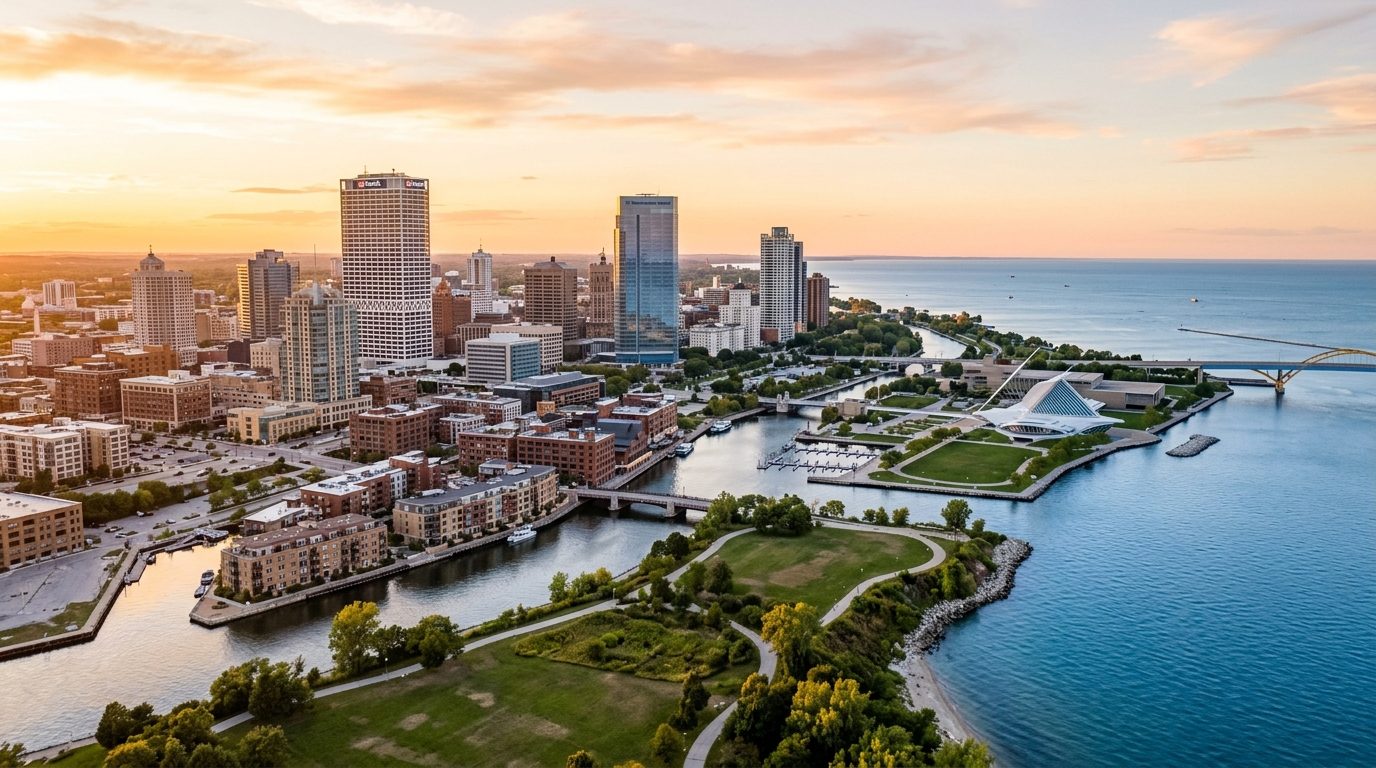
Current real estate market data, news and analysis for the Milwaukee-Waukesha, WI metropolitan area — 1.6M residents across Milwaukee, Ozaukee, Washington and Waukesha counties.
Data as of May 2026. Sources: Redfin Data Center, U.S. Census Bureau.
Latest Milwaukee Real Estate News
Milwaukee Real Estate Market Overview
Milwaukee-Waukesha covers Milwaukee, Ozaukee, Washington and Waukesha counties along Lake Michigan and the inland lake country of southeastern Wisconsin. Milwaukee contains duplexes, Polish flats, brick apartment buildings, bungalows, cottages, condominiums and converted industrial properties. Shorewood, Whitefish Bay, Wauwatosa and other close-in suburbs contain established early and mid-century housing with walkable commercial districts. Farther west, Brookfield, New Berlin, Waukesha, Pewaukee and Menomonee Falls include postwar subdivisions, townhouses, newer detached homes and suburban employment centers. Ozaukee and Washington counties add historic towns, lakefront communities, farms and lower-density residential development.
Higher price tiers are generally associated with River Hills, Chenequa, Elm Grove, Whitefish Bay, Shorewood, Mequon, Brookfield and selected Lake Country communities around Pewaukee, Oconomowoc and Delafield. These areas tend to combine lake access, larger lots, established architecture, school districts or convenient travel to major employment centers. More attainable choices are commonly found in portions of Milwaukee, West Allis, South Milwaukee, Cudahy-area neighborhoods, older suburban corridors and communities farther north or west. Housing condition can vary significantly within the same municipality, so the need for foundation, roof, sewer or mechanical work may matter as much as the location.
The regional economy is supported by manufacturing, health care, finance, education, food production, logistics and professional services. Northwestern Mutual is headquartered in Milwaukee, while major health systems and universities support medical and academic employment. Manufacturing remains important throughout Milwaukee and Waukesha counties, including machinery, controls, power systems and specialized industrial production. The Port of Milwaukee, General Mitchell International Airport, rail lines and interstate corridors support freight and distribution. Employment is spread among downtown Milwaukee, the Menomonee Valley, Wauwatosa, Brookfield, Waukesha and suburban industrial parks.
Winter climate and older infrastructure are central ownership considerations. Freeze-thaw cycles, snow loads, ice dams and road salt can affect roofs, foundations, masonry, pavement and exterior materials. Basements are common and should be checked for seepage, sewer backups and drainage problems. Lake Michigan moderates temperatures near the shore but can also contribute to lake-effect snow, wind and shoreline concerns. Public transit is concentrated in Milwaukee County, while most outer communities remain automobile-dependent. Buyers should verify the precise municipality, school district, property-tax jurisdiction, sewer and water provider, inspection requirements and responsibility for private roads or shared driveways.
Cities and Towns in the Milwaukee Metro Area
Notable Communities and Neighborhoods
Milwaukee Real Estate Market FAQ
How is the Milwaukee-Waukesha housing market geographically organized?
The market includes Milwaukee’s urban neighborhoods, lakefront communities, established inner suburbs, Waukesha County employment centers and lower-density towns in Ozaukee and Washington counties. Lake Michigan, freeway corridors, school districts and municipal boundaries separate the region into distinct submarkets.
Which Milwaukee-area locations generally sit in higher price tiers?
River Hills, Chenequa, Elm Grove, Whitefish Bay, Shorewood, Mequon, Brookfield and selected Lake Country communities generally occupy higher tiers. Lake access, larger lots, established architecture, school districts and proximity to employment centers contribute.
What should buyers inspect in an older Milwaukee-area home?
Buyers should review foundations, basements, roofs, masonry, electrical systems, plumbing, insulation and evidence of prior water intrusion. Older duplexes and multifamily properties may also require review of shared utilities, fire separation and the legality of previous conversions.
What climate and property issues should southeastern Wisconsin buyers investigate?
Freeze-thaw cycles, snow, ice dams, basement moisture, severe storms and shoreline conditions can affect properties differently. Buyers should examine drainage, roof ventilation, foundation condition, sewer responsibility and any flood or erosion exposure.
Nearby Markets