
Current real estate market data, news and analysis for the Green Bay, WI metropolitan area — 336,756 residents across Brown, Kewaunee and Oconto counties.
Data as of May 2026. Sources: Redfin Data Center, U.S. Census Bureau.
Latest Green Bay Real Estate News
Coverage of this market is coming soon. Browse all housing market news.
Green Bay Real Estate Market Overview
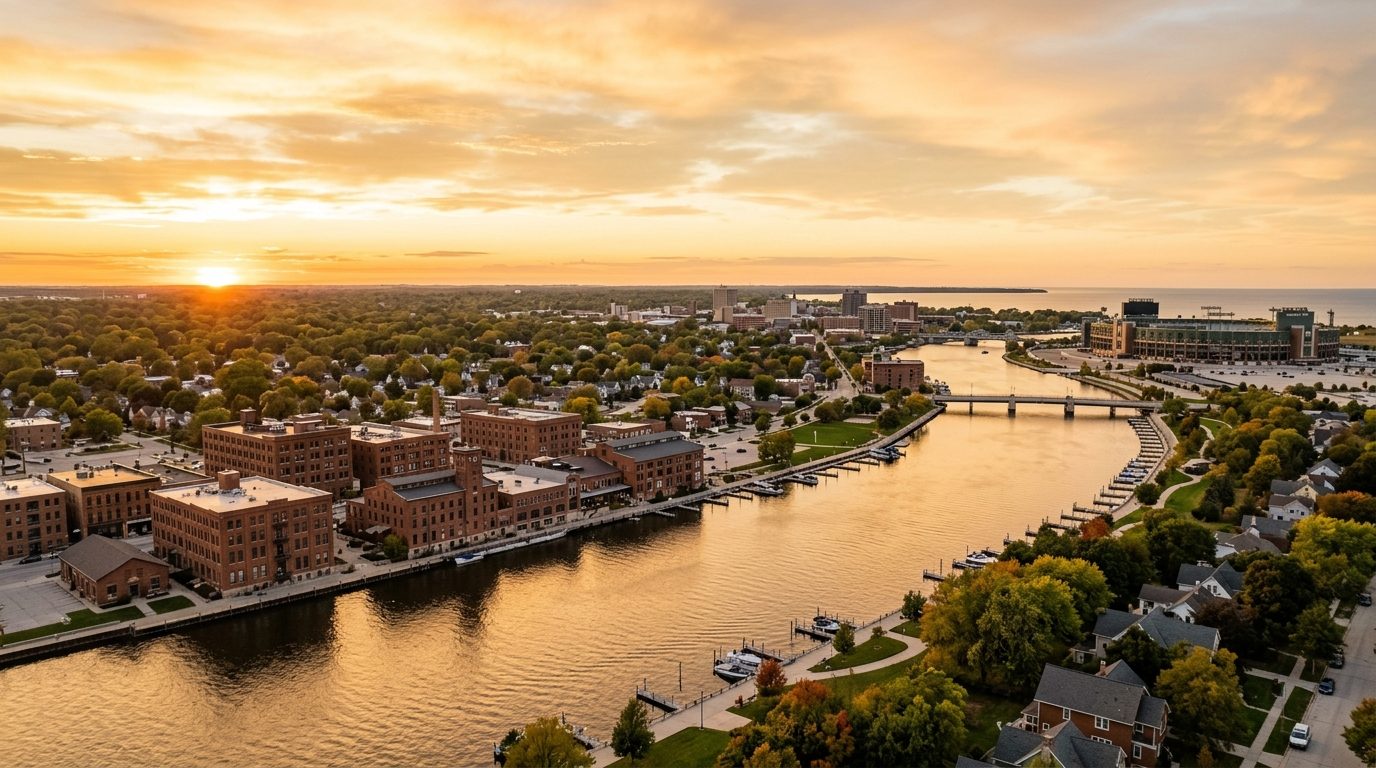
The Green Bay metro sits where the Fox River empties into the bay for which the city is named, a sheltered arm of Lake Michigan that shapes both the region’s economy and its neighborhoods. Green Bay itself straddles the river, with the older core — wrapping around downtown, the Astor and Navarino districts, and the Broadway corridor — built up during the city’s industrial heyday and still defined by tree-lined streets of early-twentieth-century homes. Ring suburbs including Allouez, Ashwaubenon, and De Pere hug the river and bay more closely and mix that older housing with mid-century construction, while Howard, Suamico, Hobart, and Bellevue to the north and west have absorbed most of the metro’s newer subdivision growth. Kewaunee and Oconto counties, which round out the metro to the east and north, stay largely rural and forested, with small lakeshore and river towns rather than suburban tracts.
Waterfront and riverfront parcels carry a premium wherever they appear, and De Pere — home to St. Norbert College — along with Allouez are generally regarded as the metro’s most established, tree-shaded addresses close to the urban core. The newer growth corridors in Howard, Suamico, Ledgeview, and Bellevue draw buyers looking for contemporary construction and larger lots, trading some proximity to downtown for that newness. Older neighborhoods nearer the historic mills and rail lines tend to offer the most affordable entry points into the market, and that gap narrows or widens depending on how close a given block sits to the river, the bay, or a strong school attendance area. Kewaunee and Oconto counties, being rural and agricultural, generally price well below the suburban core, though lake and riverfront lots there can buck that pattern.
Green Bay’s economy still carries the imprint of the paper and packaging industry that built it, anchored today by Georgia-Pacific’s riverside mill on the site of the historic Fort Howard operation, alongside food processors like Schreiber Foods, one of the country’s largest employee-owned dairy companies. Financial and insurance employment is unusually concentrated here, with Associated Banc-Corp headquartered downtown and a significant Humana presence, while KI, a major employee-owned commercial furniture maker, and healthcare systems Bellin Health and HSHS St. Vincent Hospital round out the list of large regional employers. The Oneida Nation, whose reservation lands extend into the metro, is itself a major employer through gaming, hospitality, retail, and agriculture. And, of course, the Green Bay Packers and Lambeau Field anchor a sports and tourism economy that has expanded in recent years with adjacent mixed-use development.
Winters here are long and can include lake-effect snow off the bay, a real consideration for heating costs and home maintenance that buyers moving from milder climates should budget for. Parts of the metro along the Fox River, Duck Creek, and the Suamico River sit within mapped floodplains, so a flood-zone check is worthwhile before making an offer near any of the waterways. Wisconsin property assessments and tax rates are set locally by municipality and school district rather than statewide, so otherwise similar homes a few miles apart can carry noticeably different tax bills — worth confirming directly with the local assessor. Public transit is limited to the urban core, so commuters from the outer suburbs and rural counties should plan around a car-dependent lifestyle.
Cities and Towns in the Green Bay Metro Area
Notable Communities and Neighborhoods
Green Bay Real Estate Market FAQ
How is the Green Bay housing market organized geographically?
The metro splits between the urban core of Green Bay and its close-in suburbs like Allouez, Ashwaubenon, and De Pere, a ring of newer-growth communities including Howard, Suamico, and Bellevue, and the more rural Kewaunee and Oconto counties to the east and north.
Which parts of the Green Bay metro tend to carry higher prices?
Waterfront and riverfront parcels along the bay and the Fox River carry a premium, and De Pere and Allouez are generally viewed as the metro’s most established close-in addresses, while the rural counties tend to be more affordable.
What should buyers verify before purchasing in the Green Bay area?
Confirm floodplain status for any property near the Fox River, Duck Creek, or the bay, and check the specific municipal and school-district tax rate, since Wisconsin sets both locally rather than statewide.
What regional risk factor is most relevant to Green Bay homeowners?
Winter severity and occasional lake-effect snow off Green Bay itself, which affects heating costs, snow removal, and general home maintenance more than in much of the Midwest.
Nearby Markets