
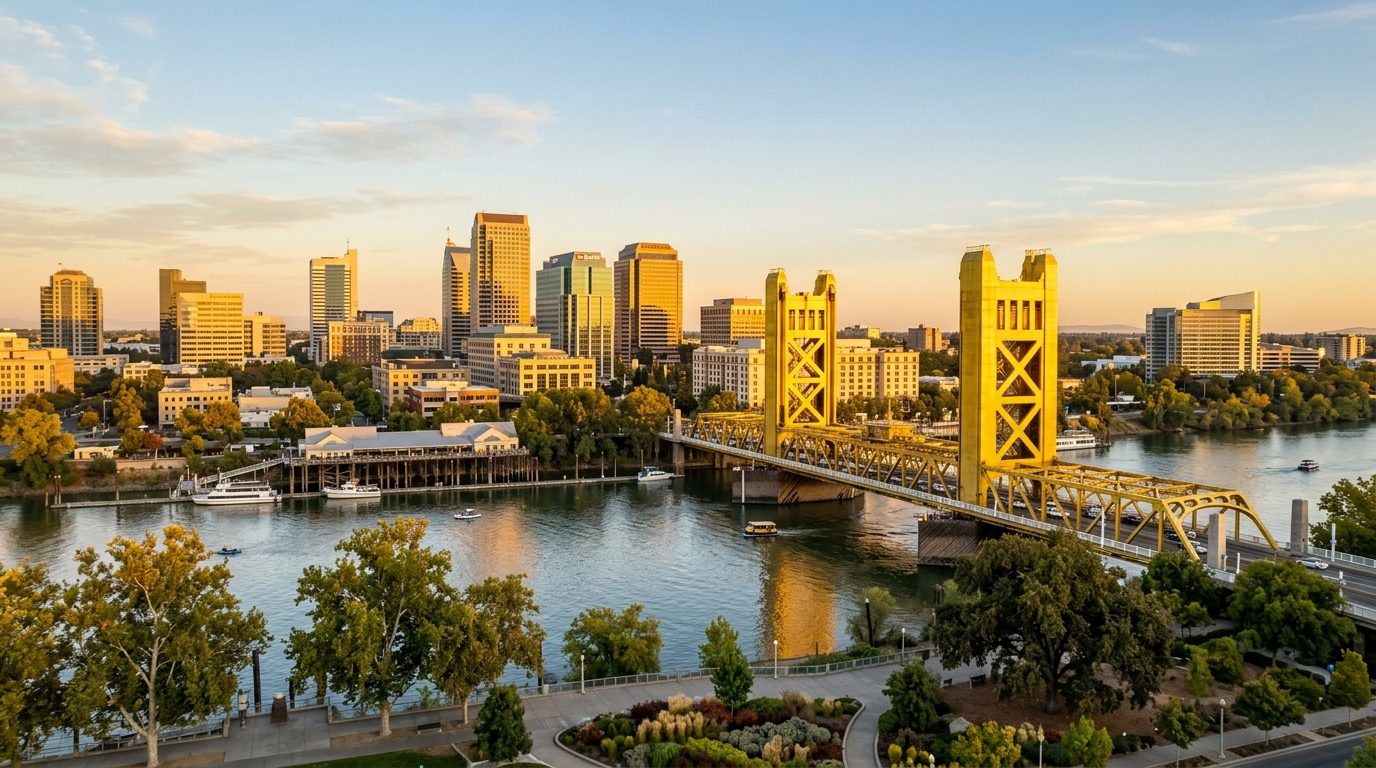
Current real estate market data, news and analysis for the Sacramento-Roseville-Folsom, CA metropolitan area — 2.5M residents across El Dorado, Placer, Sacramento and Yolo counties.
Data as of May 2026. Sources: Redfin Data Center, U.S. Census Bureau.
Latest Sacramento Real Estate News
Sacramento Real Estate Market Overview
Sacramento-Roseville-Folsom extends from California’s capital and the Sacramento River through established suburbs, planned growth areas, agricultural Yolo County and Sierra Nevada foothill communities. Central Sacramento contains Victorian houses, Craftsman bungalows, apartments, duplexes, condominiums and newer infill. Citrus Heights, Rancho Cordova and older portions of Sacramento County contain substantial postwar housing. Roseville, Rocklin, Lincoln, Folsom and Elk Grove include large subdivisions, master-planned communities and expanding commercial centers. Davis has a university-oriented housing market with compact neighborhoods and substantial bicycle infrastructure, while Placerville and El Dorado County add foothill houses, wooded parcels and rural properties.
Higher price tiers are generally associated with East Sacramento, Land Park, Sierra Oaks, Granite Bay, Loomis, El Dorado Hills, selected parts of Folsom and Davis, and foothill properties with larger lots or views. These locations tend to combine established architecture, school access, limited land, larger parcels or proximity to major employment and recreation areas. More attainable choices are often found in portions of south Sacramento, older suburban corridors, Rancho Cordova, Citrus Heights, Woodland and communities farther from central employment. New construction at the metro’s edge may offer modern layouts but can include special taxes, homeowners association obligations and dependence on future roads, schools and commercial development.
State government is the region’s central economic anchor, supporting public administration, contracting, legal services and related professional employment. Health care, education, technology, logistics, agriculture and manufacturing provide additional jobs. UC Davis and its medical and research operations influence employment and housing in Davis and Sacramento. Sutter Health, UC Davis Health and other medical systems maintain major facilities, while Intel operates a substantial campus in Folsom. Distribution and industrial development follow interstate and rail corridors, and the region’s role as a government center supports office activity in downtown Sacramento and nearby districts.
Flood control, heat, wildfire and water conditions vary across the metro. Low-lying areas near the Sacramento and American rivers require review of levees, flood zones, drainage and insurance. Foothill communities face greater wildfire, smoke, slope and evacuation concerns, while urban and suburban properties experience prolonged summer heat and drought-related landscaping issues. Regional transit serves central corridors, but many outer communities remain automobile-dependent. California development fees, Mello-Roos districts, homeowners associations and local permitting rules can affect newer housing. Buyers should verify special-tax obligations, utility providers, flood and fire maps, solar arrangements, insurance availability and whether adjacent open land is protected, agricultural or approved for future construction.
Cities and Towns in the Sacramento Metro Area
Notable Communities and Neighborhoods
Sacramento Real Estate Market FAQ
How is the Sacramento metro housing market geographically organized?
The market includes Sacramento’s central neighborhoods, established suburbs, newer northern and eastern growth corridors, university-oriented Davis, agricultural Yolo County and foothill communities extending toward Lake Tahoe. Rivers, flood-control systems, freeways and elevation create distinct submarkets.
Which Sacramento-area locations generally sit in higher price tiers?
East Sacramento, Land Park, Granite Bay, Loomis, El Dorado Hills, selected parts of Folsom, Davis and foothill communities generally occupy higher tiers. Larger lots, established architecture, school access, views and proximity to major employment centers contribute.
What should buyers verify in a Sacramento-area new development?
Buyers should review homeowners association rules, Mello-Roos or other special-tax obligations, builder warranties, utility plans, school capacity and nearby approved land uses. Planned roads, transit and commercial centers should be treated as future projects until construction and funding are confirmed.
What natural hazards should Sacramento-area buyers investigate?
Buyers should review river and levee flood exposure, wildfire hazards, extreme heat, drought, smoke and earthquake conditions for the specific property. Foothill properties may also require examination of defensible space, insurance, wells, septic systems and evacuation access.
Nearby Markets