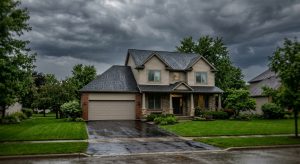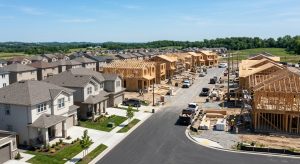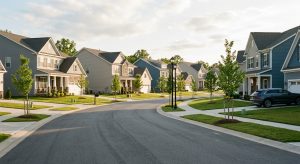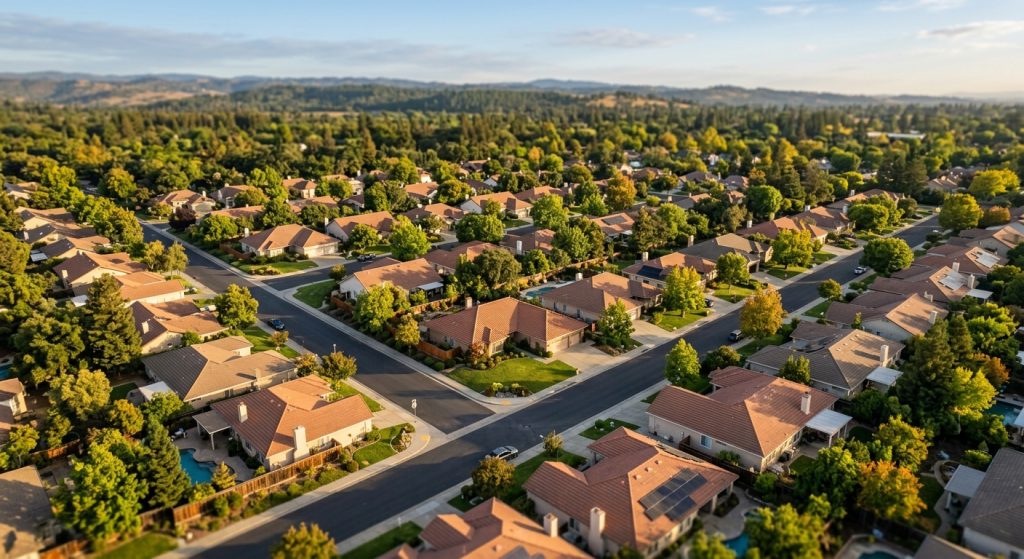
San Jose, Calif., has directed its planning staff to draft rules that would quadruple the allowable housing density in the city’s single-family neighborhoods, a step that would open most of the residential land in California’s third-largest city to small apartment buildings.
The City Council took up the General Plan Four-Year Review Policy Framework on Aug. 18. The action was direction to staff rather than a zoning change: as the staff memorandum puts it, if the framework is approved “staff will initiate work on General Plan and Zoning Code amendments, continue work on required environmental review” under the California Environmental Quality Act.
Public broadcaster KQED reported the vote as 8-3. The city’s legislative record had not published minutes or a roll call as of Friday.
From eight units an acre to 32
The central proposal would “increase the density in the Residential Neighborhood land use designation from 8 DU/AC to 32 DU/AC” — dwelling units per acre — and “allow a maximum building height of 35 feet and 3 stories in Residential Neighborhood.”
Staff are explicit about the reach: “This change in density in RN would be applicable wherever the designation currently exists, which includes the city’s single-family neighborhoods.”
Mayor Matt Mahan, joined by council members Pamela Campos, Peter Foley, David Cohen and George Casey, filed a memorandum on Aug. 13 softening the approach. It directs staff to environmentally review three density options — 16, 24 and 32 units per acre — and return with all three in December 2027 rather than committing now to the highest figure.
The mayoral memo also directs staff to create a minimum parking standard in residential neighborhoods with low transit access as defined by state law, and to explore allowing neighborhood-serving commercial uses beyond home-based occupations.
State law is driving the timeline
The memo is direct about why the city is acting. “Failure to approve an increase in residential density risks decertification of the City’s Housing Element and loss of local land use authority,” it states.
It also argues the practical change is smaller than it sounds, noting that “most residential lots in the city already allow up to four units and, in some cases under Senate Bill 1123, up to ten,” and that the recommendation “creates a pathway under the Residential Neighborhood (RN) designation for two to four homes per lot that does not force lot splits or multiple ADU’s.”
On the underlying problem, the memo notes that “San José and California’s homeownership rate remains 10% below the national average.”
What is excluded
The framework carves out categories of land. Excluded from the small-multifamily program are very high and high fire severity zones, airport safety zones, wetlands and habitat conservation areas, and “sites with rent-stabilized or rent-regulated units or sites subject to the City’s Ellis Act Ordinance.”
Discretionary review is retained for certain flood zones, riparian corridors, city landmarks, candidate landmarks and landmark district properties.
Other designations change too. Mixed Use Neighborhood would move from a cap of 30 units per acre to a range of 20 to 50, with heights of four to five stories. Urban Residential would shift from 30 to 95 units per acre to a floor-raised range of 50 to 95.
The framework also converts an approximately 4.67-acre site at 5585 Cottle Road, the Southside Community Center, from Public/Quasi-Public to Transit Residential. For public and quasi-public sites of 1.5 acres or less, the mayoral memo directs allowing 100% affordable housing, removing a 25% permanent-supportive-housing requirement and setting a minimum density of 60 units per acre.
The Planning Commission was split
San Jose’s Planning Commission voted 11-0 in favor of most components on June 24, but only 9-2 on the residential density item. A separate proposal covering the Winchester Boulevard corridor failed to gain a majority, leaving it without a commission recommendation.
The city has 62 designated urban villages, 46 of which remain unplanned. State density and height allowances under Senate Bill 79 supersede local zoning in those buffer areas beginning July 1, 2026.
What it means
The verified facts are the documents: what staff proposed, what the mayoral memo modified, what is excluded, and the December 2027 return date.
RealtyWire’s analysis is that the Housing Element decertification risk named in the mayor’s own memo is the operative pressure here, not local enthusiasm for density. California cities that lose Housing Element certification face the “builder’s remedy,” under which developers can bypass local zoning for qualifying projects. Framed that way, upzoning is the option that preserves local control rather than surrendering it.
The three-option environmental review is the part worth noticing. Studying 16, 24 and 32 units per acre rather than only 32 gives the council room to adopt a lower number in 2027 while still showing the state it acted. That is a hedge, and a deliberate one.
Whether any of it produces housing is a separate question. Single-family permitting has been declining nationally while multifamily activity holds up better, and July starts fell sharply. Zoning capacity is a precondition for building, not a cause of it; at current financing costs, permission to build four units on a San Jose lot does not by itself make four units pencil.
What to watch
The December 2027 return date is the real decision point, and it is more than a year out. Between now and then the environmental review will test each density option, and the council that votes on the final ordinance may not be the one that voted this week.
Nearer term, watch whether the state Department of Housing and Community Development signals that this framework satisfies its concerns. That determination, not the council vote, is what settles the decertification question the mayor’s memo raised.