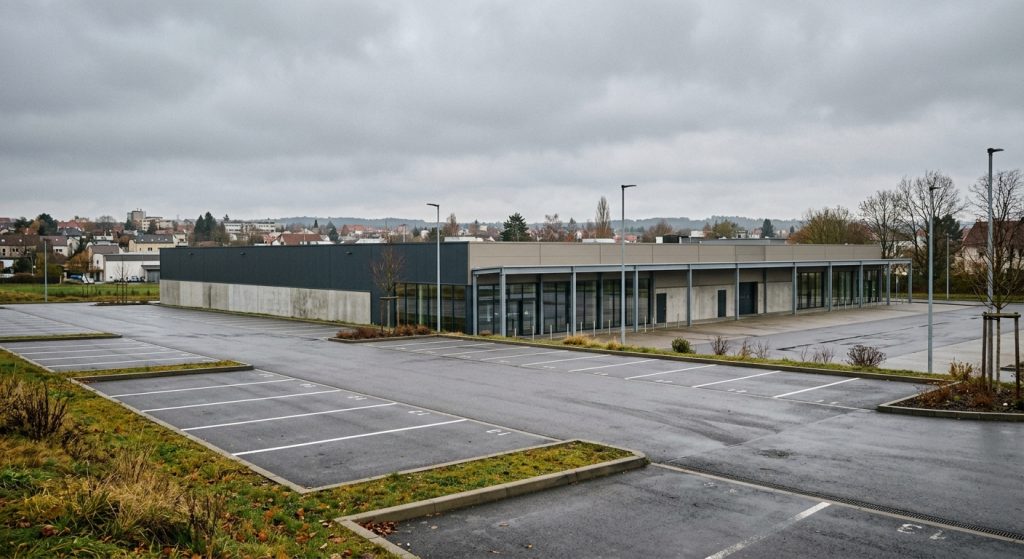
Realty Income is selling nearly half of a stabilized European property portfolio to KKR and keeping the keys. The two companies said on Sept. 14, 2026 that capital accounts advised by KKR will invest €528 million for a 49% stake in a new euro-denominated joint venture holding net lease assets contributed by Realty Income, with the San Diego-based REIT retaining 51% and continuing to run the properties through its European platform.
The structure matters more than the size. Realty Income gets equity capital priced against the assets rather than against its own share price, keeps the management fees, and — per the deal’s own framing — expects rating agencies to treat the whole €528 million as permanent equity. It continues a shift toward growing the way an asset manager grows, not only the way a REIT does.
“This transaction marks another important step in Realty Income’s evolution as the leading global net lease platform,” Sumit Roy, the company’s president and chief executive, said in the announcement. “Building on the private capital foundation we have established in the U.S., our strategic partnership with KKR extends this strategy into Europe and demonstrates both the portability of our competitive advantages across borders and the confidence that leading institutional investors have in our platform.”
Roy added that “the long-term cost and structure of this equity financing create meaningful upside for our shareholders, while further diversifying our capital sources beyond the public markets.”
The terms
Realty Income expects gross proceeds of roughly €528 million. The portfolio is being contributed at an effective 5.9% initial cap rate after the recurring asset management fees Realty Income will collect, and the REIT will manage the assets under a long-term management agreement while keeping control of day-to-day asset management.
KKR’s exit is pre-negotiated. Realty Income holds a call option to redeem KKR’s stake beginning after year 10 and running through year 17, at a price set to deliver KKR a capped internal rate of return. That cap will be fixed at closing and is expected to land between 6.3% and 6.5%.
On our reading, set alongside the 5.9% going-in cap rate, those terms describe a financing more than a sale. Realty Income is effectively borrowing long-term equity at a capped mid-6% cost while retaining the upside above it, the operating control and the fee stream. The transaction is expected to close on Sept. 30, 2026, subject to customary conditions.
What is in the portfolio
The assets sit in four countries — Spain, Ireland, Poland and the Netherlands. As of June 30, 2026, the anticipated portfolio carried an estimated first-year cash net operating income of €67.7 million and a weighted average remaining lease term of 7.2 years. Investment-grade tenants account for 59% of base rent, and contractual rent growth is expected to compound at 1.6% a year.
The tenant mix is defensive rather than exciting: the top five client categories are grocery, transportation services, home improvement, home furnishings and automotive parts. Realty Income cautioned that the metrics are subject to finalization and could change with the portfolio’s final composition.
Lazard advised Realty Income financially with DLA Piper as legal counsel; Citi advised KKR with Latham & Watkins as counsel.
A capital strategy taking shape
The European venture is the third piece of a private-capital build-out Realty Income has assembled in roughly six weeks of disclosure. In its second-quarter results the company disclosed a $6 billion hyperscale data center joint venture and said it was launching its first evergreen institutional private-capital fund aimed at pensions, sovereign wealth funds, endowments and insurers. The KKR deal extends the same idea across the Atlantic and into the existing balance sheet rather than into new acquisitions.
The logic is familiar across the listed REIT sector. Issuing common shares to fund growth is expensive when a REIT trades below the value of its assets; third-party equity, priced deal by deal and paired with a management fee, is not. Realty Income has the scale to make that work — an S&P 500 company founded in 1969, with more than 15,500 properties across all 50 states, the U.K. and eight other European countries as of June 30, 2026, and 675 consecutive monthly dividends behind it.
For KKR, the investment lands in a real assets business that has been expanding quickly; the firm’s real assets segment reached $211 billion of assets under management in the second quarter, up 18% from a year earlier, and raised more capital than any other KKR segment that quarter.
“We are pleased to invest alongside Realty Income, one of the world’s largest net lease REITs, in a diversified portfolio of high-quality, hard-to-replace assets across key markets in Europe,” said Seb d’Avanzo, co-head of European real estate equity at KKR. Christopher Sheldon, a KKR partner, described the arrangement as “a bespoke capital solution, designed with the flexibility to expand in line with the company’s evolving needs” — language suggesting both sides expect to do this again.