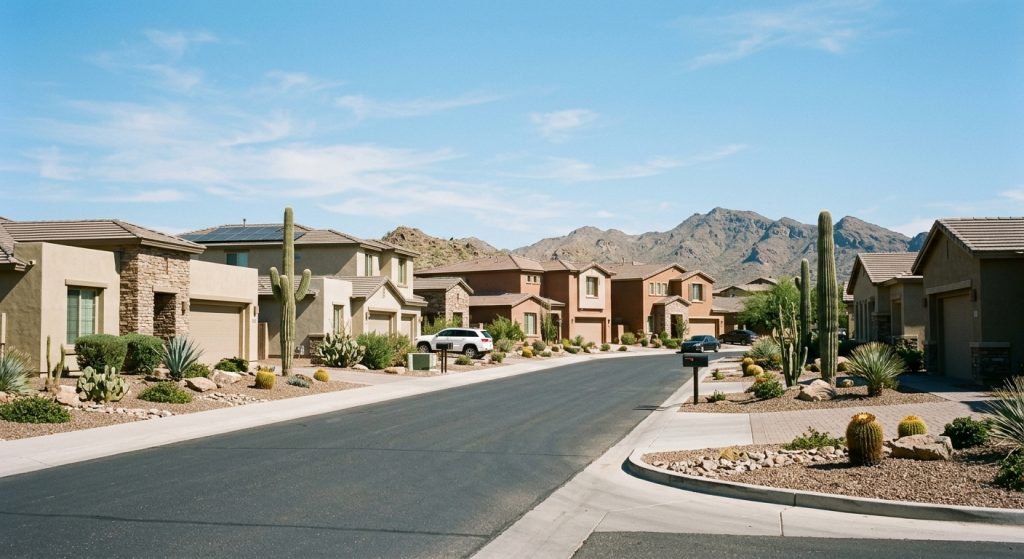
Phoenix, Ariz., is bracing for cuts to its Colorado River water supply as the federal government prepares to update century-old water-rights rules governing seven Western states, with Arizona facing what state officials call a disproportionate share of the burden. Phoenix Mayor Kate Gallego said the city has “spent decades planning for a moment like this” but pushed back on the scale of the proposed reductions, according to reporting by Realtor.com published Aug. 21, 2026.
The federal plan, expected to be finalized later this year, aims to break a deadlock among the seven states that draw from the Colorado River. Under the century-old priority system governing the river, Arizona’s rights are junior to those of states like Colorado and Nevada, and the state could face reductions of up to 20% in the “lower basin,” which draws from the shrinking reservoirs at Lake Powell and Lake Mead. “Upper basin” states relying on the river’s headwaters and tributaries are likely to face less severe cuts. RealtyWire has previously reported on an earlier version of the federal proposal that would cut Arizona, California and Nevada’s combined use by up to 3 million acre-feet.
“We Have to Take Some Pretty Serious Action”
“Phoenix has spent decades planning for a moment like this, and is prepared to use less Colorado River water, but it is wrong to lay a disproportionate share of the burden on Arizona,” Gallego said. Tom Buschatzke, director of Arizona’s Department of Water Resources, said in June that cities have been planning for potential reductions for years and will have some flexibility in how they manage them, though outdoor water restrictions are more likely than curbs on tap water. The state is also scrutinizing water-intensive projects like data centers more closely. “We have to take some pretty serious action,” Buschatzke said. “It means we’re going to have to take additional reductions; it’s one tool that we have that’s certain.”
What It Could Mean for Housing
Benji Edelstein, an assistant professor of economics at Loyola University Chicago who has studied how water scarcity affects home values in Colorado, said mandated water reductions tend to push developers toward smaller lots and more water-conscious home and yard design — changes that don’t necessarily make housing cheaper, since water fees and costs can be significant. Large-scale mandated cuts are more likely to slow the pace of homebuilding altogether. “We know we have this structural deficit of housing and only a few places in the U.S. with elastic housing supply,” Edelstein said. “Las Vegas, Phoenix, Denver, these areas have built a lot of housing over the past few years to absorb the demand. If we make that harder to do, we certainly can expect that to drive affordability challenges.” He added that the changes are “not necessarily a barrier to development,” but utility impact-fee policy could shift the type of housing that gets built.
Neil Brooks, a Phoenix-based real estate agent of 27 years with Brooks Residential Group, said water scarcity is a familiar topic for buyers relocating to the area, and new developments must already have 100-year water-supply plans in place — a requirement that can complicate new construction. “People in Arizona that own houses, they’re not going to turn the faucet on one day and there’s no water,” Brooks said. “The biggest issue is going to be the cost of water. Water’s going to get more expensive. Electricity is going to get more expensive.” Brooks said the pressure could ultimately push the state to prioritize housing over water-intensive agriculture, especially as Arizona’s economy shifts toward semiconductor manufacturing with new investment from TSMC and Intel. “Arizona is still a great up-and-coming state,” he said. “We can’t build the houses fast enough and we’re working on allocating the water in a way that we can continue building homes for the next 50, 100 years.”
What It Means
The Colorado River supplies water and hydroelectric power to roughly 40 million people and irrigates 5 million acres of farmland. Two decades of scarcity have already reshaped Phoenix-area landscaping and building codes, but a finalized federal rule this year would mark the most significant reallocation of the river’s water in a century — with Phoenix’s continued growth as one of the nation’s largest metros directly tied to how much flexibility the state retains to keep building homes under tighter water constraints.