Massachusetts lawmakers are negotiating final language on competing House and Senate housing bills that would ease zoning restrictions statewide, after a June court ruling knocked a rent-stabilization ballot question out of contention. Both chambers passed separate versions before their regular session ended July 31, and the bills remain alive in a conference committee working to reconcile them.
The push for more housing supply comes as the state falls behind its own targets. Gov. Maura Healey’s administration has set a goal of 222,000 new homes between 2025 and 2035 to keep pace with population and household growth, according to a June 25, 2026 press release from the state. Massachusetts added more than 34,500 homes in 2025 — about 15.3% of the way toward the decade-long goal. “We know that we need to build more homes to lower costs across the state. This new data shows that we are making serious progress,” Healey said in the release. Lt. Gov. Kim Driscoll called the 2025 pace “an important milestone,” and Housing and Livable Communities Secretary Juana Matias said the state’s new housing production tracker would help identify where more work is needed.
Rent Stabilization Is Off the Table
Neither chamber’s bill includes rent stabilization. Massachusetts’s highest court blocked a statewide rent-stabilization ballot question in June, ruling that a religious exemption written into the measure violated the state constitution, and a separate compromise bill that would have let individual cities and towns opt into capping rent increases failed to advance. With that path closed for now, both chambers have concentrated their reform efforts on supply-side measures instead.
A $500 Million House Bill Built Around Church-Owned Land
The House’s roughly $500 million bill centers on a “Yes in God’s Backyard,” or YIGBY, provision that would let religious institutions build multifamily housing as-of-right on up to four acres they own, without needing a special permit, so long as at least 20% of units are income-restricted and buildings stay under 45 feet unless local zoning allows more. An analysis by the Lincoln Institute of Land Policy identified nearly 5,000 developable parcels statewide owned by religious institutions, totaling more than 20,000 acres — land the analysis estimated could yield more than 60,000 new homes. California enacted the nation’s first YIGBY law, and Massachusetts would join a small but growing list of states, including Virginia, extending the model to faith-owned property.
A $325 Million Senate Bill Built Around Duplexes
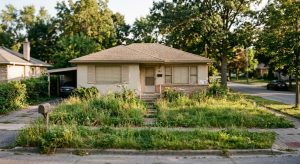
The Senate’s roughly $325 million bill skips YIGBY and instead would end single-family-only zoning statewide, allowing duplexes on most residential lots — a provision the House version does not include. Municipalities could still set standards for height and design and exempt lots that would need septic systems, but local rules could not be “unreasonably restrictive” or make duplexes “physically or financially infeasible.” Both chambers’ bills would also standardize site-plan review statewide in place of rules that currently vary town by town; under the House version, a municipality that fails to complete review within 90 days of a complete application would see the project automatically approved.
What It Means
The reconciliation process is happening outside the normal legislative calendar: because both bills were referred to a conference committee before the July 31 session deadline, they remain alive under a formal exception even as lawmakers work informally rather than in scheduled sessions. RealtyWire has tracked similar supply-focused pushes in other states, including Texas Gov. Greg Abbott’s threat to strip funding from cities blocking housing and San Jose’s move to quadruple density in single-family neighborhoods. Massachusetts’s version is notable for pairing two structurally different approaches — unlocking underused institutional land versus loosening zoning on existing residential lots — rather than picking one, leaving the conference committee to decide whether the final law includes both, either, or some blend of the two.