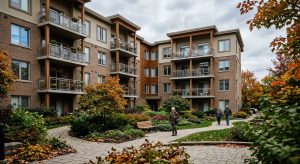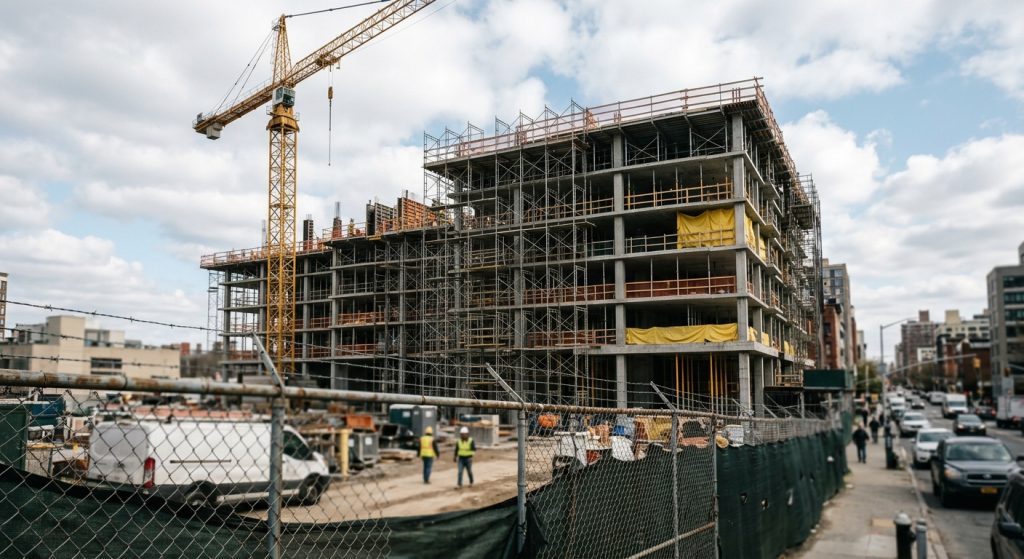
Multifamily developer confidence weakened in the second quarter of 2026, according to the National Association of Home Builders’ Multifamily Market Survey, as regulatory barriers, financing difficulties and elevated construction costs offset improving job growth.
NAHB’s Multifamily Production Index (MPI), which measures builder and developer sentiment about new apartment starts, fell to 43 in the second quarter, down 3 points from a year earlier. The Multifamily Occupancy Index (MOI), which tracks perceptions of how existing units are leasing up, dropped more sharply to 74, down 8 points year over year. Readings above 50 indicate more developers view conditions as good than poor; all of the occupancy index’s components remained above that breakeven line even as they declined, while several production components sit well below it.
Where the weakness is concentrated
The MPI is built from four segments, and the pullback was uneven across them. Subsidized affordable-housing production fell the most, down 7 points to 54. Mid- and high-rise construction sentiment dropped 4 points to 32, by far the weakest of the four segments. Garden and low-rise construction slipped 2 points to 48. The lone bright spot was built-for-sale condominiums, which gained 3 points to 38, though that segment remains among the smallest slices of new multifamily supply nationally.
The occupancy index tells a similar story of broad-based softening. Mid- and high-rise occupancy sentiment fell 11 points to 62, the sharpest decline of the three MOI components. Subsidized housing occupancy dropped 8 points to 82, and garden and low-rise occupancy fell 7 points to 77.
What’s driving the decline
NAHB attributed the weakening sentiment to a familiar mix of supply-side pressures: regulatory barriers, difficulty securing financing, high interest rates, delays in obtaining permits and utility connections, elevated material costs, and ongoing skilled-labor shortages. Those constraints have weighed on multifamily starts even as underlying rental demand has held up better than the confidence readings might suggest — NAHB pointed to improving job growth during the second quarter as a demand-side offset that kept the occupancy index comfortably above the neutral 50 mark despite the year-over-year decline.
NAHB also noted that the 21st Century ROAD to Housing Act, a federal housing package, was expected to provide some relief to developers, though the group cautioned that implementation will take time to work through the pipeline and show up in builder sentiment.
Context: a construction pipeline already skewing toward larger buildings
The Q2 pullback in mid- and high-rise sentiment is notable given how dominant that segment has become in actual completions. RealtyWire has reported that buildings with 50 or more units captured 57% of all multifamily completions in 2025, the highest share since 2021 and the ninth consecutive year that high-density buildings represented the majority of new multifamily construction — a reversal of the pre-2017 pattern when smaller buildings predominated. If developer confidence in that segment continues to soften, it could eventually show up as a slowdown in the completions pipeline for the buildings that now account for the majority of new apartment supply.
The weakening also comes as builders across the housing industry face a separate, fast-growing competitive pressure for land and construction resources: data center developers have been outbidding homebuilders for land in fast-growing submarkets, and a recent NAHB analysis found the AI infrastructure boom is pulling skilled construction labor and buildable land away from residential projects in some of the same regions where multifamily development is concentrated.
What it means
The Q2 readings describe how developers feel about current and near-term conditions, not a forecast of starts or completions — NAHB’s survey is a sentiment index, and sentiment can shift with financing conditions before it shows up in construction data. Still, a broad-based decline across nearly every segment of both the production and occupancy indexes suggests the constraints developers face — financing costs, permitting delays, materials and labor — are affecting the multifamily pipeline more uniformly than in recent quarters, when weakness had been more concentrated in specific building types. Investors and lenders watching the apartment construction pipeline should expect the sentiment softening to translate into a more cautious pace of new mid- and high-rise starts over the coming quarters, absent meaningful relief on financing costs or the promised regulatory streamlining from the ROAD to Housing Act.