
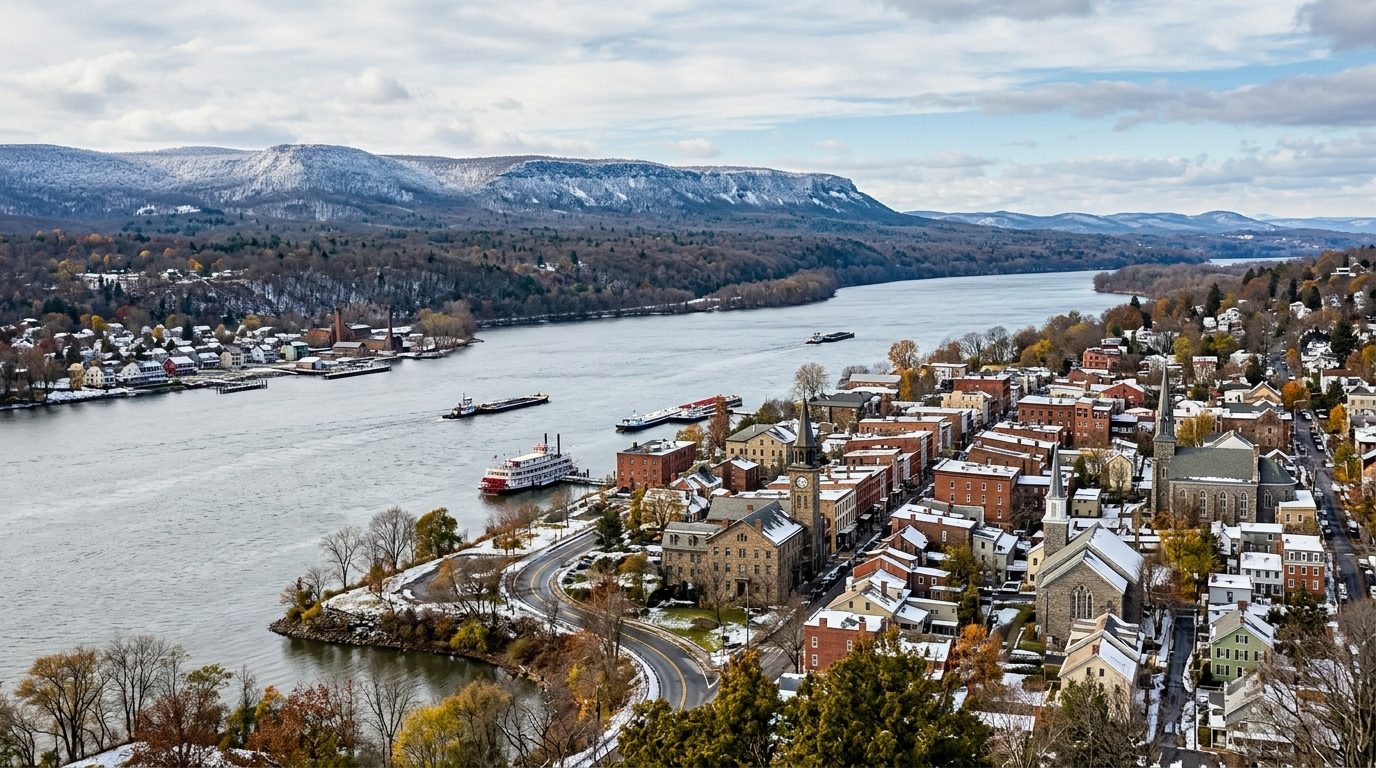
Current real estate market data, news and analysis for the Watertown-Fort Drum, NY metropolitan area — 111,540 residents across Jefferson county.
Data as of May 2026. Sources: Redfin Data Center, U.S. Census Bureau.
Latest Watertown Real Estate News
Coverage of this market is coming soon. Browse all housing market news.
Watertown Real Estate Market Overview
Watertown sits in New York’s North Country, near the eastern end of Lake Ontario and the head of the St. Lawrence River and Thousand Islands region, with the Black River running through the city on its way to the lake. The Tug Hill Plateau rises to the east and southeast, a forested upland that separates the Black River valley from the Adirondacks and receives some of the heaviest lake-effect snowfall in the eastern United States, though Watertown itself sees meaningfully less than the deep snowbelt further inland. Housing in Watertown’s historic downtown around Public Square reflects the city’s nineteenth- and early-twentieth-century commercial growth, while surrounding towns and hamlets — Evans Mills, Carthage, Black River, Glen Park — carry a more rural, small-town character shaped in part by their proximity to Fort Drum.
The historic waterfront villages along Lake Ontario and the St. Lawrence River — Sackets Harbor, Clayton, Alexandria Bay, Cape Vincent, Chaumont — tend to command the strongest buyer interest, drawing on water access, historic architecture, and tourism demand; Sackets Harbor in particular has a nationally recognized historic district built around its War of 1812 history. Watertown’s own historic core, including the Public Square and Factory Square districts, has distinctive older housing stock within an otherwise moderately priced small city. Towns closest to Fort Drum’s gates, particularly Evans Mills, see steady demand tied to military families, while Carthage and the more rural stretches of the county offer a more affordable, small-town alternative.
Fort Drum, home to the 10th Mountain Division, is by far the dominant force in the local economy, supporting a large base population of soldiers and families along with thousands of civilian jobs and driving the majority of off-post housing demand in Watertown, Evans Mills, Carthage, and nearby hamlets. Samaritan Medical Center in Watertown is the region’s largest employer outside the base, and New York Air Brake — part of the global rail-systems company Knorr-Bremse — has manufactured railroad braking equipment in Watertown for well over a century. Jefferson Community College and county and state government offices round out a local economy centered on serving both the base and the wider North Country region.
The Black River floods periodically from spring snowmelt and heavy rain, with documented impacts in Watertown, Carthage, and Dexter, so riverside buyers should review flood-zone status carefully. New York carries one of the country’s higher average property tax burdens, though the STAR school-tax exemption is available to reduce the bill on an owner-occupied home. Because Fort Drum’s presence drives so much of the rental and for-sale market, buyers should also understand how military housing allowances and the base’s periodic personnel turnover affect local demand cycles. Winters are long and heating costs are a real budget line for anyone new to the region, particularly in the towns closest to the Tug Hill snowbelt.
Cities and Towns in the Watertown Metro Area
Notable Communities and Neighborhoods
Watertown Real Estate Market FAQ
How is the Watertown-Fort Drum housing market organized?
The market centers on Watertown’s historic downtown core, the towns nearest Fort Drum’s gates that serve military families, and the historic waterfront villages along Lake Ontario and the St. Lawrence River.
Which parts of the metro tend to be pricier?
Waterfront villages such as Sackets Harbor, Clayton, and Alexandria Bay tend to command the most buyer interest for their water access and historic character, while Watertown’s own core and towns near Fort Drum are generally more moderately priced.
What should buyers verify before purchasing here?
Buyers near the Black River should check current flood-zone maps, and anyone buying to serve military-family demand should understand how Fort Drum’s housing allowance rates and permanent-change-of-station cycles affect local rental and resale demand.
What is the main regional risk factor to know about?
Black River flooding from spring snowmelt and heavy rain is the metro’s most consistent local risk, along with the practical cost of long, heavy-snowfall winters near the Tug Hill Plateau.
Nearby Markets