
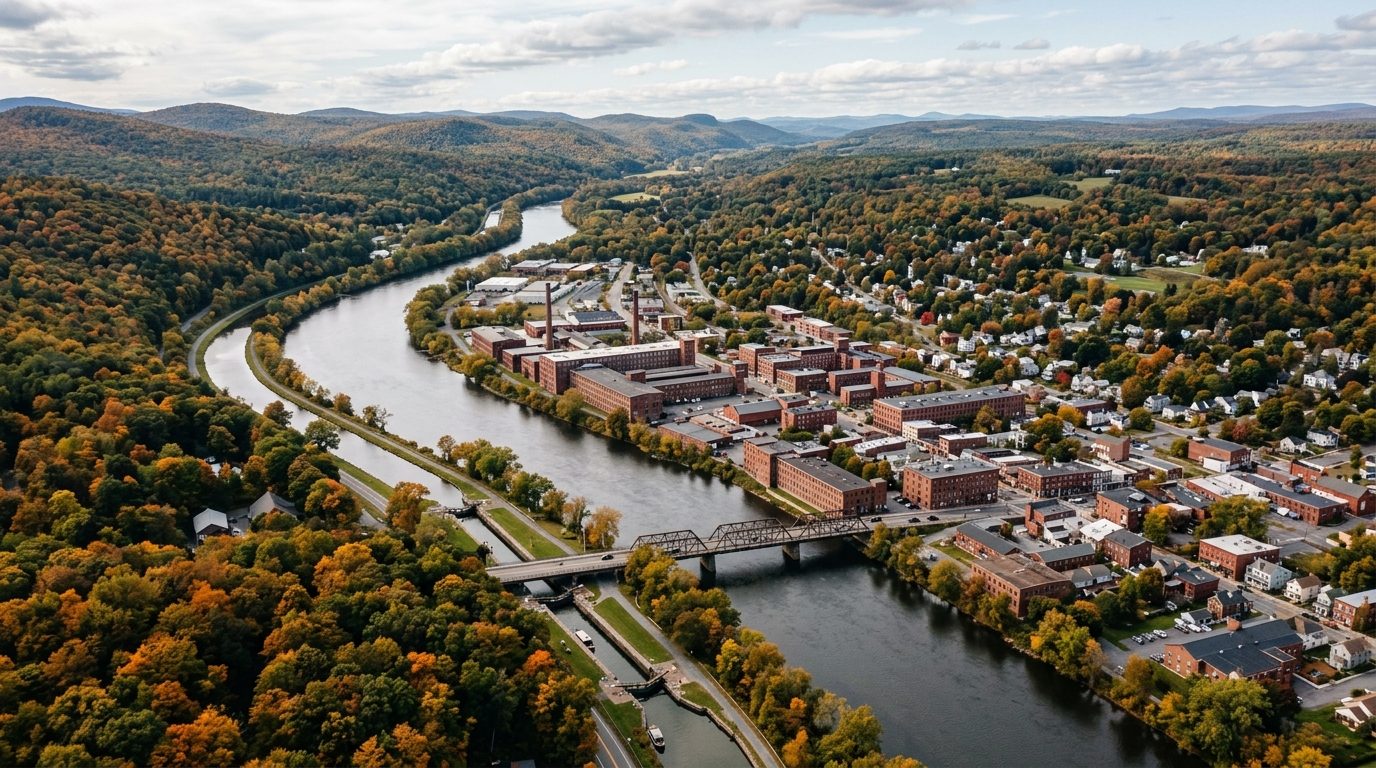
Current real estate market data, news and analysis for the Utica-Rome, NY metropolitan area — 285,611 residents across Herkimer and Oneida counties.
Data as of May 2026. Sources: Redfin Data Center, U.S. Census Bureau.
Latest Utica Real Estate News
Coverage of this market is coming soon. Browse all housing market news.
Utica Real Estate Market Overview
The Utica-Rome metro sits in the Mohawk Valley of central New York, a corridor carved by the Mohawk River between the Adirondack foothills to the north and upland terrain to the south. The Erie Canal historically followed this corridor and shaped settlement along it, from Utica and Rome down through smaller mill towns such as Little Falls, Herkimer, Ilion, Frankfort, and Dolgeville. Because the region industrialized early around textile mills, metalworking, and canal- and rail-based trade, much of the core housing stock in Utica and Rome dates to the late nineteenth and early twentieth centuries, brick rowhouses and multi-family homes in neighborhoods like Cornhill, East Utica, and West Utica, alongside modest wood-frame houses on tight lots. Surrounding towns such as New Hartford, Whitesboro, Clinton, and New York Mills mix this older stock with newer suburban subdivisions.
Within the metro, demand tends to track distance from the older urban core and proximity to newer construction and well-regarded school districts. The Town of New Hartford and adjoining New York Mills, along with the village of Clinton in the Town of Kirkland, home to Hamilton College, are generally regarded as more sought-after, reflecting newer housing stock and suburban school systems. The older urban centers of Utica and Rome, including neighborhoods like Cornhill, East Utica, and West Utica, tend to offer more affordable housing, with smaller lots, higher density, and an older building stock. Outlying mill towns such as Little Falls, Ilion, Frankfort, Herkimer, and Dolgeville follow a similar pattern, while rural hamlets such as Sauquoit, Vernon, Holland Patent, and Barneveld offer more land farther from the urban corridor.
The regional economy has historically centered on manufacturing, healthcare, and institutional employment, and is now being reshaped by a major semiconductor investment. Wolfspeed operates a large silicon carbide wafer fabrication facility at the Marcy Nanocenter in the Town of Marcy, part of a broader effort to build out chip-manufacturing capacity in the Mohawk Valley. In Rome, the former Griffiss Air Force Base, closed under a federal base-realignment process in the 1990s, has been redeveloped as the Griffiss Business and Technology Park, home to Griffiss International Airport, an Air Force Research Laboratory presence, a New York Air National Guard installation, and technology and light-industrial tenants. Mohawk Valley Health System, which consolidated Utica-area hospital services into the newly built Wynn Hospital downtown, is a leading healthcare employer, alongside other hospital, insurance, and public-sector employers based in the region.
Buyers should weigh several region-specific factors. Winters bring sustained cold and, especially near the Adirondack foothills, periodic lake-effect snow, affecting heating costs, roofing, and road access. Communities along the Mohawk River and its tributaries, including Sauquoit Creek, have a documented history of flooding, so flood-zone status and drainage history are worth confirming for riverside and low-lying properties. Property taxes in upstate New York are a significant ongoing carrying cost that varies by municipality and school district, so confirming applicable taxing jurisdictions is worthwhile. Given the age of much of the housing stock in the urban cores and older mill villages, buyers should budget for inspections covering older wiring, lead paint, aging heating systems, foundation condition, and roof age. The continuing chip-manufacturing buildout near Marcy and the redevelopment at Griffiss are worth monitoring, since both could influence local housing demand over time.
Cities and Towns in the Utica Metro Area
Notable Communities and Neighborhoods
Utica Real Estate Market FAQ
How is the Utica-Rome real estate market organized geographically?
The metro follows the Mohawk River corridor and includes the cities of Utica and Rome, the town of New Hartford and its villages, and smaller communities in Herkimer County such as Little Falls, Herkimer, Ilion, and Dolgeville. Utica and Rome form the older urban cores, historically built along the Erie Canal and rail lines, while surrounding towns and villages developed later as suburban and rural extensions along the valley.
Which areas of the Utica-Rome metro tend to be pricier or more sought-after?
The Town of New Hartford and nearby New York Mills, along with the village of Clinton (home to Hamilton College) in the Town of Kirkland, are generally viewed as more desirable due to newer housing stock, larger lots, and suburban school districts. The older urban neighborhoods of Utica and Rome, such as Cornhill, East Utica, and West Utica, and the historic mill towns of Herkimer County tend to be more affordable, reflecting denser development and an older building stock.
What should buyers verify before purchasing in this market?
Because much of the housing stock in the urban cores and mill towns is older, buyers should confirm the condition of wiring, heating systems, foundations, and roofing, and check for lead paint. It is also worth confirming which city, village, town, and school district a property falls under, since property tax jurisdictions and rates vary by municipality in Oneida and Herkimer counties, and confirming flood-zone status for any property near the Mohawk River or its tributaries.
What region-specific risk should buyers be aware of in the Mohawk Valley?
Flooding is a documented risk along the Mohawk River and its tributaries, including Sauquoit Creek, with a history of overflow events affecting riverside and low-lying communities. Buyers considering property near these waterways should review flood-zone maps and local drainage and flood-mitigation history as part of due diligence, in addition to accounting for winter weather, including lake-effect snow near the Adirondack foothills.
Nearby Markets