
Current real estate market data, news and analysis for the Urban Honolulu, HI metropolitan area — 988,703 residents across Honolulu county.
Sources: U.S. Census Bureau.
Latest Urban Honolulu Real Estate News
Urban Honolulu Real Estate Market Overview
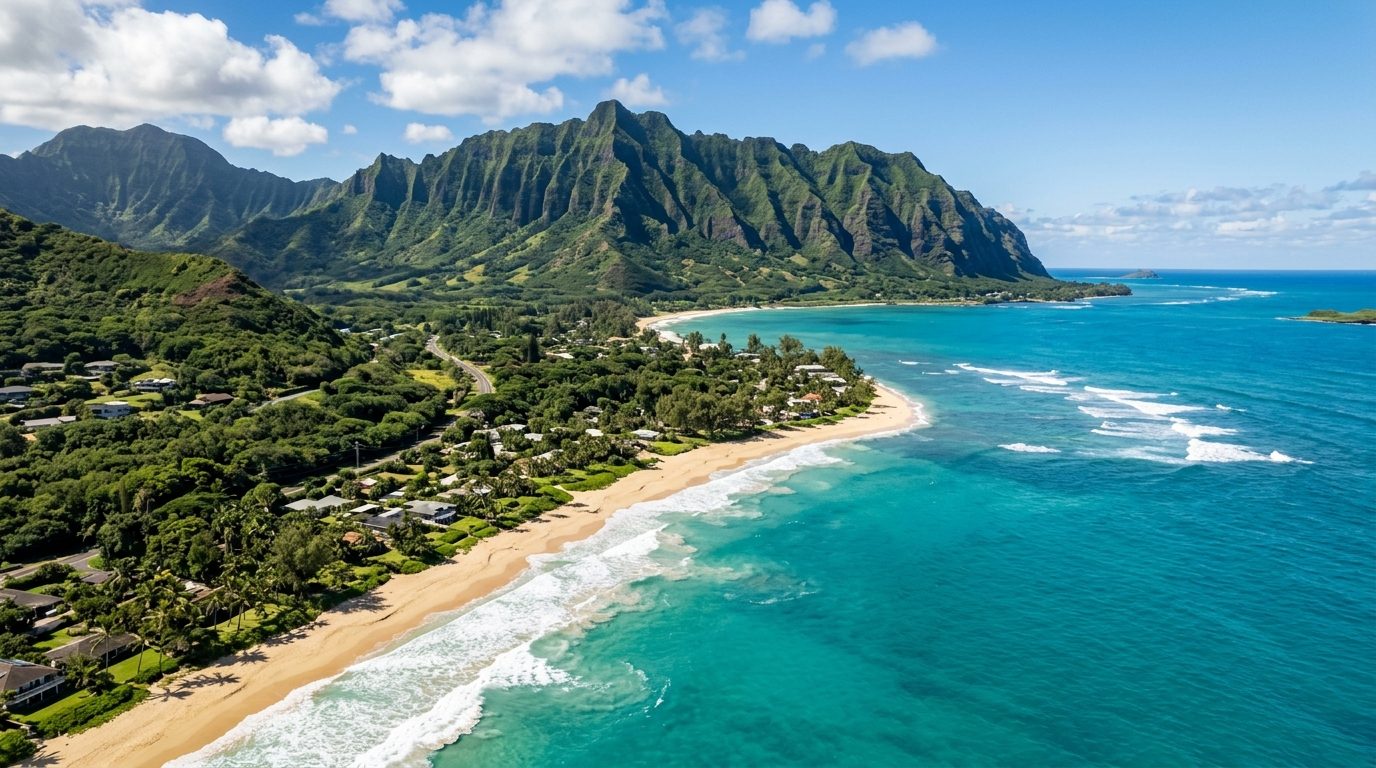
The Urban Honolulu metro is coextensive with the entire island of Oahu — Honolulu County has no incorporated cities or towns, and "Honolulu" itself is a place name rather than a municipality. The island formed from two extinct shield volcanoes, the Waianae Range in the west and the Koolau Range in the east, with a central plain between them. This geography produces sharply different sub-regions: the dense high-rise core around downtown and Waikiki on the leeward south shore; a lush, rainier Windward Coast backed by dramatic cliffs; a drier, more rural Leeward Coast; a rural North Shore known for surf; and a Central Oahu plain between the mountain ranges. Housing ranges from older plantation-era single-family homes and postwar suburban tracts to a large concentration of high-rise condominiums concentrated in the urban core, where new development is increasingly steered toward infill given how little buildable land remains on the island.
Ocean-adjacent neighborhoods on the island’s south and windward shores, prized for beach access and low-density exclusivity, sit at the top of the market, along with select view lots in and around the urban core. Affordability generally improves moving toward the Leeward Coast and Central Oahu’s newer "second city" development, which offer more space but longer commutes on the island’s limited highway network into the main job centers. Neighborhoods closer to downtown and the university trade some affordability for shorter commutes and urban amenities.
The U.S. military is a defining economic presence, anchored by a major joint Navy and Air Force base and a large Army installation in Central Oahu that together account for a substantial share of regional employment. Tourism and hospitality form the core of the private-sector economy, concentrated in and around Waikiki and the island’s resort areas. Healthcare is another major pillar, with the state’s largest private hospital and two additional health systems operating across the island, and the University of Hawaii’s flagship campus is a significant employer in its own right.
Hurricane exposure during the Central Pacific season and documented tsunami risk are both real considerations on Oahu, and the county publishes tsunami evacuation zone maps that any coastal buyer should check, including guidance on vertical evacuation for coastal high-rises. Property tax works differently here than on the mainland: Honolulu County applies a flat rate to owner-occupied homes claiming the standard home exemption, while higher-value non-owner-occupied homes fall into a separate tiered classification. Land available for new development is extremely limited given the island’s mountainous terrain, military land, and state agricultural and conservation zoning, which concentrates growth in a handful of designated areas. A uniquely Hawaii wrinkle worth understanding before buying: some condominiums, particularly in the urban core, are sold on a leasehold basis, meaning the buyer owns the structure but leases the underlying land — verifying fee-simple versus leasehold status, and the remaining lease term if applicable, is essential before making an offer.
Cities and Towns in the Urban Honolulu Metro Area
Notable Communities and Neighborhoods
Urban Honolulu Real Estate Market FAQ
How is the Urban Honolulu market organized?
The metro covers the entire island of Oahu, with no separate incorporated towns — Honolulu County government covers the whole island. The market runs from the dense high-rise urban core around downtown and Waikiki outward to the Windward Coast, Leeward Coast, North Shore, and Central Oahu, each with a distinct character.
Which parts of Oahu tend to be more expensive?
Ocean-adjacent neighborhoods on the south and windward shores, prized for beach access and low density, sit at the top of the market. Affordability generally improves moving toward the Leeward Coast and Central Oahu’s newer development areas, which involve longer commutes into the main job centers.
What should buyers verify before purchasing on Oahu?
Confirm whether a property, especially a condominium in the urban core, is fee simple or leasehold, and if leasehold, the remaining lease term. Check the county’s tsunami evacuation zone maps for any coastal property, and understand which property tax classification — owner-occupied or non-owner-occupied — will apply.
What natural-hazard risks should Oahu buyers plan for?
The island carries hurricane exposure during the Central Pacific storm season and documented tsunami risk along its coastlines. Coastal high-rise buyers in particular should review the county’s vertical-evacuation guidance and tsunami zone maps before purchasing.
Nearby Markets