
Current real estate market data, news and analysis for the Kahului-Wailuku, HI metropolitan area — 160,674 residents across Kalawao and Maui counties.
Data as of May 2026. Sources: Redfin Data Center, U.S. Census Bureau.
Latest Kahului Real Estate News
Coverage of this market is coming soon. Browse all housing market news.
Kahului Real Estate Market Overview
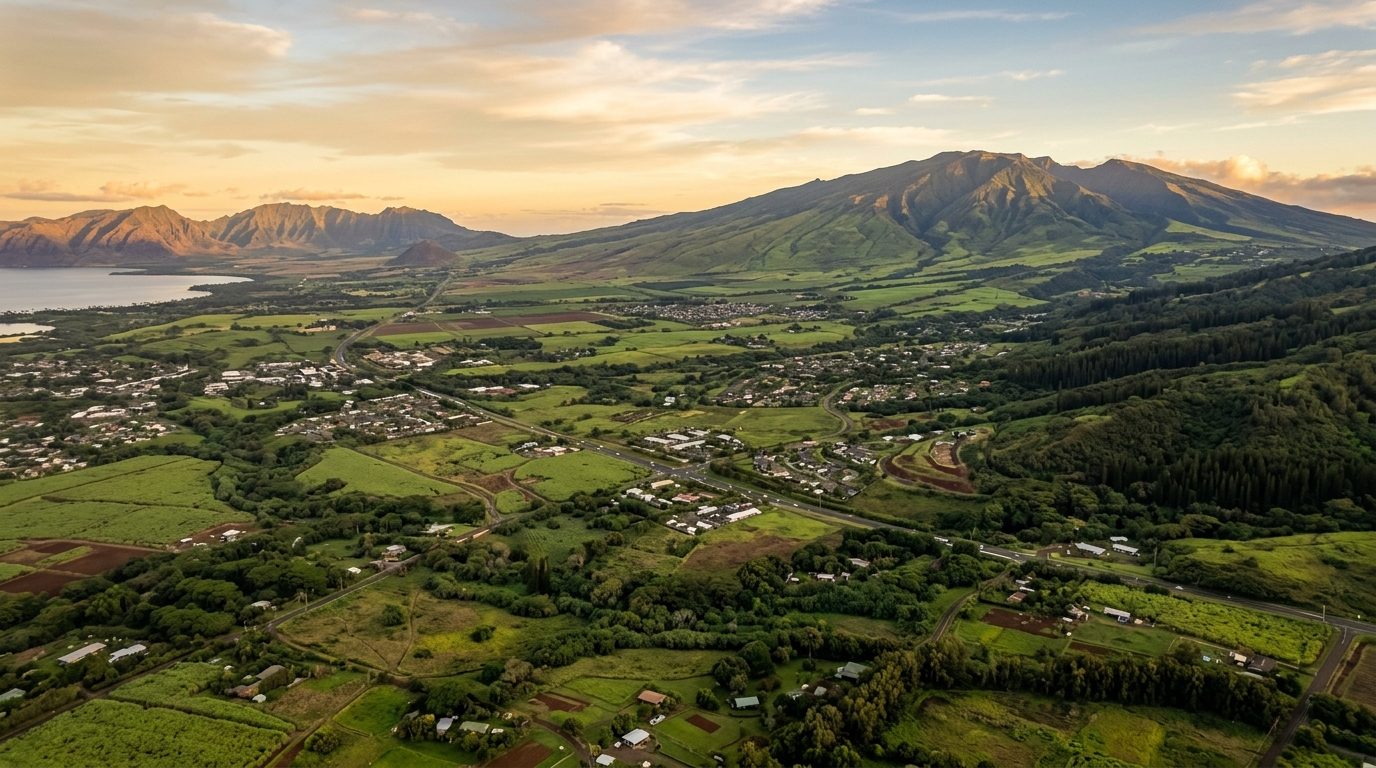
Maui is shaped by two volcanic masses joined by a low, flat isthmus: the eroded West Maui Mountains on one side and the much larger dormant volcano Haleakalā on the other. The central valley between them, once planted almost entirely in sugarcane, gives the island its old nickname, the Valley Isle, and is where Kahului sits as the commercial core, harbor, and airport gateway. Wailuku, just west of Kahului, is the county seat, with older plantation-era single-family homes on small lots. Away from this central corridor, housing shifts by region: low-rise condominiums cluster along the resort coasts of West and South Maui, ranch-style and custom homes with larger lots spread across the cooler Upcountry slopes of Haleakalā, and small older homes and cottages appear in the more isolated North Shore and East Maui communities along the Hana coast.
Within this geography, price tiers track proximity to the ocean, resort infrastructure, and privacy rather than any single factor. The West and South Maui resort corridors, anchored by golf courses, private beach clubs, and full-service hotels, sit at the top of the market because they were master-planned for high-end tourism and second-home ownership, with little remaining land for new construction. Upcountry neighborhoods on Haleakalā’s slopes command a different premium, built on acreage, cooler climate, and long views rather than beach access. Central Maui, around Kahului and Wailuku, is comparatively more attainable as the year-round working core, closest to the airport, harbor, hospital, and government offices, with older, denser housing built for residents rather than visitors. The remote Hana district, though scenic, trades on different logic: distance from services limits development and buyer pools, keeping activity thin regardless of the setting’s appeal.
Tourism is the dominant force in Maui’s economy, supporting resort hotels, restaurants, and visitor services along the West and South Maui coasts; major employers include the Grand Wailea, the Ritz-Carlton Kapalua, the Fairmont Kea Lani, the Westin Maui Resort & Spa, and Four Seasons properties on Maui and neighboring Lanai. County of Maui government is itself among the largest employers, and health care is significant through Maui Health, the nonprofit Kaiser Permanente affiliate operating Maui Memorial Medical Center, Kula Hospital, and Lanai Community Hospital. Agriculture remains part of the island’s identity even after the closure of the last sugar plantation in the central valley; much of that land was acquired by Mahi Pono, now shifting it toward diversified fruit and vegetable crops. Construction, retail, and education, including the University of Hawaii Maui College, round out the employment base.
A defining, ongoing factor here is the August 2023 wildfire that destroyed much of historic Lahaina town; rebuilding continues under county-led recovery programs, though it remains gradual and West Maui’s housing and rental supply are still adjusting. That disaster also reshaped Hawaii’s property insurance market statewide, with insurers reassessing wildfire and construction-type risk, so buyers should confirm insurability and premium cost before offering. Maui County has also moved to phase out many apartment-zoned short-term rentals under a recent ordinance, contested in court, so it is important to verify a property’s actual zoning and rental registration status rather than assume past use will continue. Beyond fire, buyers should weigh flood zone designation, hurricane exposure, and, Upcountry, water source, since some properties rely on catchment or agricultural water rather than county service.
Cities and Towns in the Kahului Metro Area
Notable Communities and Neighborhoods
Kahului Real Estate Market FAQ
How is the Maui real estate market organized geographically?
The island splits into a handful of distinct districts: Central Maui around Kahului and Wailuku, the West Maui resort coast running from Lahaina through Kaanapali to Kapalua, the South Maui resort coast covering Kihei, Wailea, and Makena, the cooler Upcountry slopes of Haleakalā including Kula, Makawao, and Pukalani, the North Shore around Paia and Haiku, and the remote East Maui communities along the road to Hana. Each district has its own housing character, from condominiums on the resort coasts to plantation-era homes in Wailuku and larger-lot properties Upcountry.
Which parts of Maui tend to be higher-priced, and why?
The West and South Maui resort corridors, including Kaanapali, Kapalua, Wailea, and Makena, are generally the highest-priced areas because they were master-planned around oceanfront resorts, golf courses, and private beach access, with little remaining land for new supply. Upcountry areas on Haleakalā command their own premium for acreage and long views rather than beach proximity. Central Maui and more remote districts like Hana tend to be more moderate, reflecting their role as year-round residential and working areas rather than resort destinations.
What should buyers verify before purchasing property on Maui?
Buyers should confirm a property’s zoning and legally permitted use, since Maui County is phasing out many apartment-zoned short-term rentals and litigation over that policy is ongoing. It is also important to verify flood zone status, obtain a current property insurance quote before closing given the tightened post-wildfire insurance market, and, for rural or Upcountry parcels, confirm the actual water source, since some properties depend on catchment systems or agricultural water rather than county water.
What wildfire, hurricane, and insurance factors are specific to Maui?
The August 2023 wildfire that destroyed much of Lahaina remains a significant, ongoing factor in West Maui’s housing market, with rebuilding still underway. That event also drove a broader tightening of Hawaii’s property insurance market, with many insurers reassessing wildfire and construction-type risk statewide, so premiums and even availability of coverage can vary considerably by property and should be confirmed directly with insurers. Maui is also within the Pacific hurricane belt and subject to seasonal storm risk, which buyers should factor in alongside standard flood and fire insurance questions.
Nearby Markets