
Current real estate market data, news and analysis for the St. George, UT metropolitan area — 213,670 residents across Washington county.
Data as of May 2026. Sources: Redfin Data Center, U.S. Census Bureau.
Latest St. George Real Estate News
Coverage of this market is coming soon. Browse all housing market news.
St. George Real Estate Market Overview
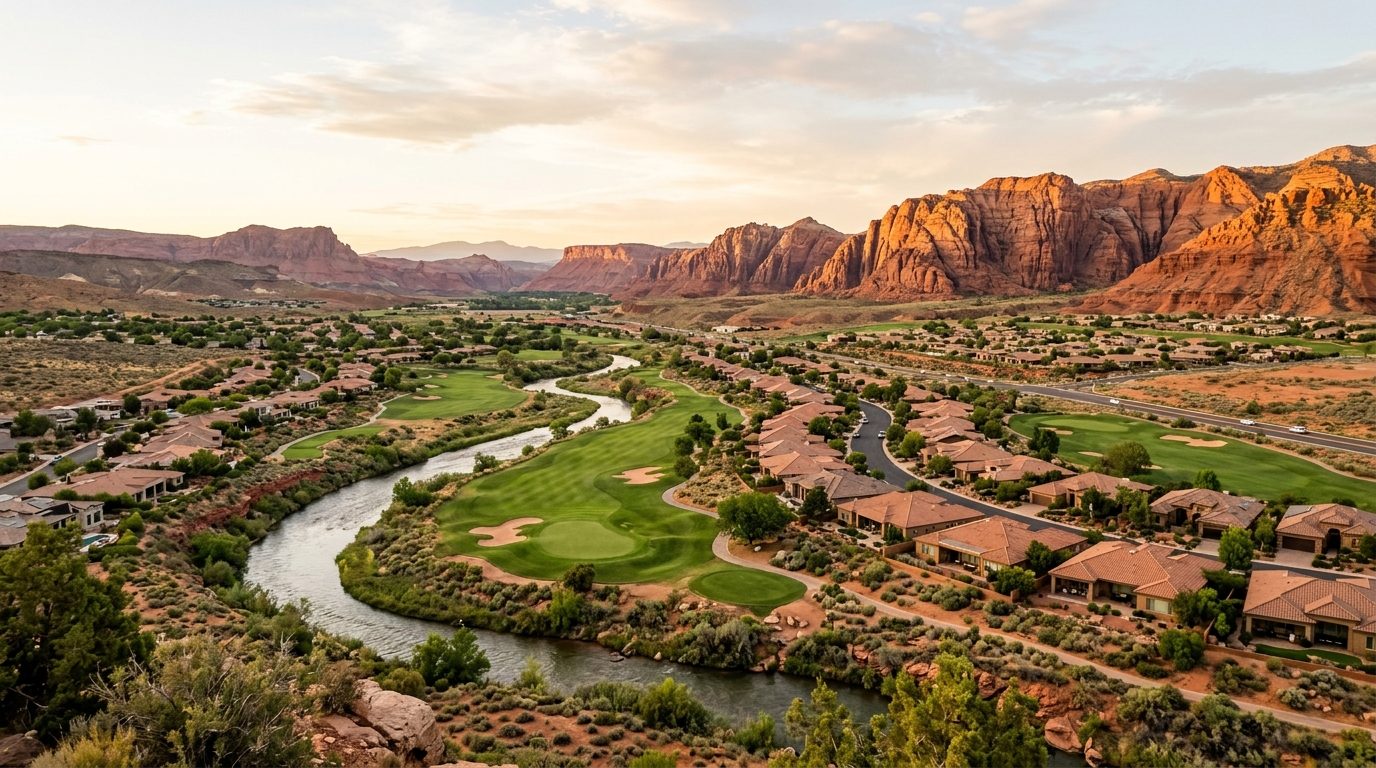
St. George anchors Washington County in the far southwestern corner of Utah, a desert basin where the Virgin River and Santa Clara River converge amid red sandstone cliffs, black lava mesas, and the transition between the Colorado Plateau and the Mojave Desert. The metro sits at a lower elevation than the rest of Utah, giving it a warmer, drier climate than Salt Lake City or Provo and placing it a short drive from Zion National Park and Snow Canyon State Park. Housing stock reflects rapid recent growth: stucco, tile-roofed homes in golf and resort subdivisions dominate new construction, alongside a rising share of townhomes and condominiums. Older neighborhoods in St. George proper and Santa Clara retain mid-century and orchard-era homes, while satellite towns such as Hurricane, Washington, and Ivins have absorbed much of the newest subdivision growth.
Price tiers track proximity to red-rock scenery, golf amenities, and resort infrastructure. Communities built around golf courses with dramatic cliff or canyon views, such as those near Snow Canyon State Park in Ivins and the newer resort-anchored development on St. George’s south side, draw retirees, second-home buyers, and out-of-state relocators willing to pay for view lots and clubhouse amenities. Established golf communities on the west side and long-standing planned neighborhoods on the south side carry premiums tied to mature landscaping and country-club membership. Lower-priced housing sits farther from these amenities: older in-town neighborhoods without view lots, subdivisions oriented toward year-round local workers in Hurricane and Washington City, and outlying rural towns such as Enterprise and La Verkin that trade proximity for more land.
The regional economy has diversified beyond its historical base of tourism and retirement living. Intermountain Health’s St. George Regional Hospital anchors a growing healthcare sector, joined by additional rehabilitation and specialty facilities drawn by the area’s growth. Utah Tech University is both a major employer and a workforce training source in health sciences, education, and emerging technology fields. SkyWest Airlines, one of the largest regional airlines in the country, is headquartered in St. George and supports aviation jobs tied to St. George Regional Airport. Washington County School District, Walmart, and construction and homebuilding firms round out the largest employers, while tourism tied to Zion National Park, Snow Canyon State Park, and area golf courses drives significant retail and hospitality employment.
Water is the defining long-term constraint on growth in this desert region: the Virgin River and local groundwater supply the area through the Washington County Water Conservancy District, which promotes turf-reduction and conservation programs as population expands faster than water sources. Flash flooding along the Virgin River and its tributaries is a recognized hazard, and portions of the metro carry flood-zone designations affecting insurance. Wildfire exposure is concentrated where neighborhoods meet Dixie National Forest and surrounding foothills, prompting new state assessments on structures in mapped high-risk zones. Utah’s property tax structure is comparatively light, though buyers should confirm irrigation or secondary water fees and HOA dues, which can be substantial in resort communities. Transit is limited and the area is largely car-dependent, with growth managed city by city; buyers should verify water rights, HOA rules, floodplain status, and wildfire mitigation requirements before purchasing.
Cities and Towns in the St. George Metro Area
Notable Communities and Neighborhoods
St. George Real Estate Market FAQ
How is the St. George metro organized geographically?
The metro is centered on St. George itself along the Virgin River, with satellite communities such as Ivins, Santa Clara, Washington, and Hurricane extending along the Interstate 15 corridor and toward the Hurricane Valley near Zion National Park’s south entrance, while smaller rural towns like Enterprise and Apple Valley sit farther out toward the Great Basin side of the county.
Which areas tend to be pricier and why?
Neighborhoods built around golf courses, framed by red-rock canyon or cliff views, or anchored by resort-style amenities near Snow Canyon State Park and newer south-side developments tend to command premiums, largely because they draw retirees and second-home buyers who pay for view lots, gated access, and clubhouse membership rather than proximity to employment centers.
What should buyers verify locally before purchasing?
Buyers should confirm a property’s culinary and secondary (irrigation) water source and any associated fees, review HOA governance documents and rental restrictions common in golf and resort communities, check floodplain status along the Virgin River and its washes, and ask about wildfire risk designation for homes near the wildland-urban interface.
What is the main region-specific risk to weigh?
Long-term water supply is the central risk in this desert region, since the Virgin River and local groundwater serve a rapidly growing population; buyers should also weigh flash-flood exposure near washes and rivers and wildfire exposure in foothill neighborhoods bordering national forest land.
Nearby Markets