
Current real estate market data, news and analysis for the Provo-Orem-Lehi, UT metropolitan area — 773,426 residents across Juab and Utah counties.
Data as of May 2026. Sources: Redfin Data Center, U.S. Census Bureau.
Latest Provo Real Estate News
Coverage of this market is coming soon. Browse all housing market news.
Provo Real Estate Market Overview
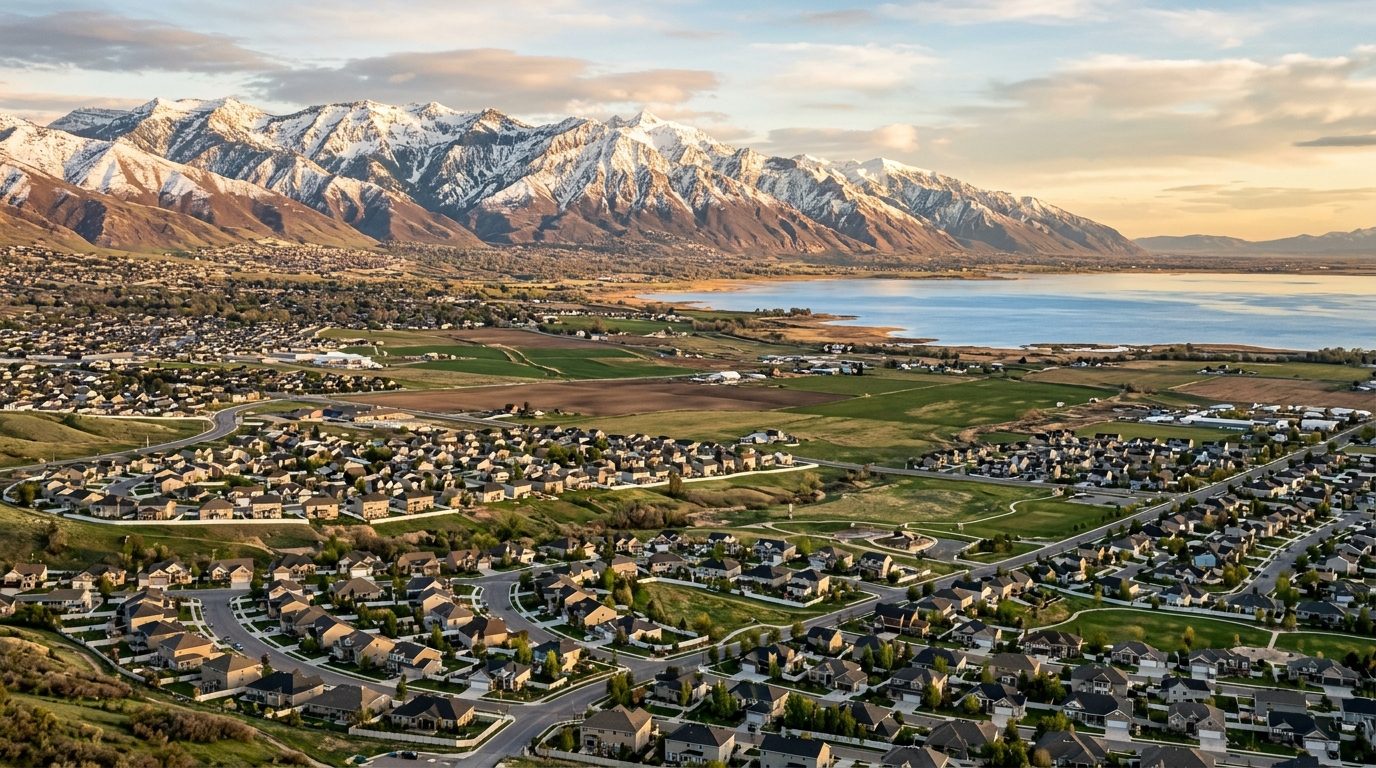
The Provo-Orem-Lehi metro sits in Utah Valley, a basin along the Wasatch Front where the Wasatch Range rises sharply to the east and Utah Lake fills much of the valley floor to the west. Provo and Orem anchor the core at the base of Rock Canyon and Provo Canyon, while newer cities such as Lehi, Saratoga Springs, and Eagle Mountain spread across the benches and flats of Cedar Valley, and older agricultural towns continue south through Payson and Santaquin into Juab County. The climate is a four-season, semi-arid mountain climate, with cold winters prone to valley inversions and hot, dry summers. Housing stock reflects this layered growth: the older core cities have brick bungalows, early-1900s homes near Brigham Young University, and mid-century ranch houses on grid streets, while the benches above town and the newer western cities are dominated by stucco-and-vinyl subdivisions of two-story homes built from the 1990s onward, many organized into HOA-governed master-planned communities with curving streets and shared trails.
Homes tend to command more along the foothills and canyon-adjacent areas of Provo and Orem, where mountain and valley views, mature landscaping, and proximity to the universities and established schools add value; Provo’s Riverbottoms, Edgemont, and Rock Canyon neighborhoods illustrate this pattern. In the newer western cities, pricing varies more by the age of a given development phase, lot size, and whether a home has a lake or mountain view, with view lots near Utah Lake or Lehi’s Traverse Mountain area commanding more than interior tract lots. Older rental-heavy pockets near the universities, along with smaller farm towns farther south and in Juab County, such as Santaquin, Genola, Goshen, Mona, and Nephi, tend to sit at the lower end, reflecting older housing stock, longer commutes, or a more rural land base.
The metro’s economy centers on higher education, technology, and manufacturing and health care. Brigham Young University in Provo and Utah Valley University in Orem are among the area’s largest employers, anchoring research, hospitality, and support services. Lehi and the metro’s northern part form the southern edge of Utah’s technology corridor known as Silicon Slopes, home to offices for companies including Adobe, Qualtrics, and Ancestry, alongside homegrown firms Nu Skin Enterprises and Vivint, both headquartered locally. Nestlé operates a frozen foods plant in the region, and Intermountain Health’s Utah Valley Hospital in Provo is a major health care employer. Retail, construction, and logistics have expanded quickly alongside the metro’s rapid growth.
Buyers should look into several local factors. Utah Valley lies along the Wasatch Fault, an active seismic zone, so earthquake risk and related insurance considerations are worth researching, particularly for older buildings near the historic cores of Provo and Orem. Water rights and irrigation shares matter in a semi-arid valley where agriculture and suburban growth compete for water drawn from the Provo River, Utah Lake, and regional aqueduct systems, so buyers of larger lots or older farmhouses should confirm what water rights transfer with the property. Homeowners associations are common in the master-planned communities of Lehi, Saratoga Springs, and Eagle Mountain; covenants and fees are worth reviewing before purchase. Growth pressure is intense on the valley’s western and southern edges, where infrastructure is still catching up to new development. Transit is limited to the FrontRunner commuter rail line and UTA buses, leaving many outlying communities car-dependent.
Cities and Towns in the Provo Metro Area
Notable Communities and Neighborhoods
Provo Real Estate Market FAQ
How is the Provo-Orem-Lehi metro organized geographically?
The metro fills Utah Valley between the Wasatch Range and Utah Lake. Provo and Orem form the historic core near the mountains, Lehi and American Fork anchor the northern edge closest to Salt Lake County, and cities like Saratoga Springs and Eagle Mountain extend growth west into Cedar Valley. Smaller agricultural towns continue south through Payson and Santaquin into Juab County.
Which areas of the metro tend to be pricier, and why?
Foothill and canyon-adjacent neighborhoods in Provo and Orem tend to price higher because of mountain and valley views, mature trees, and proximity to the universities and established schools. In the newer western cities, the newest phases of master-planned communities and lots with lake or mountain views generally cost more than interior tract lots in the same subdivision.
What should buyers verify locally before purchasing in this metro?
Buyers should confirm any water rights or irrigation shares tied to a property, review HOA covenants and fee schedules in master-planned communities, check a city’s general plan for nearby planned development or infrastructure projects, and look into a home’s age and construction type given the region’s seismic setting.
What is the main natural hazard buyers in this area should be aware of?
The Wasatch Fault runs along the base of the mountains through Utah Valley, making earthquake risk the primary hazard to research, particularly for older or unreinforced masonry buildings near the historic cores of Provo and Orem. Buyers should also ask about water supply reliability given the valley’s semi-arid climate.
Nearby Markets