
Current real estate market data, news and analysis for the Prescott Valley-Prescott, AZ metropolitan area — 252,552 residents across Yavapai county.
Data as of May 2026. Sources: Redfin Data Center, U.S. Census Bureau.
Latest Prescott Valley Real Estate News
Coverage of this market is coming soon. Browse all housing market news.
Prescott Valley Real Estate Market Overview
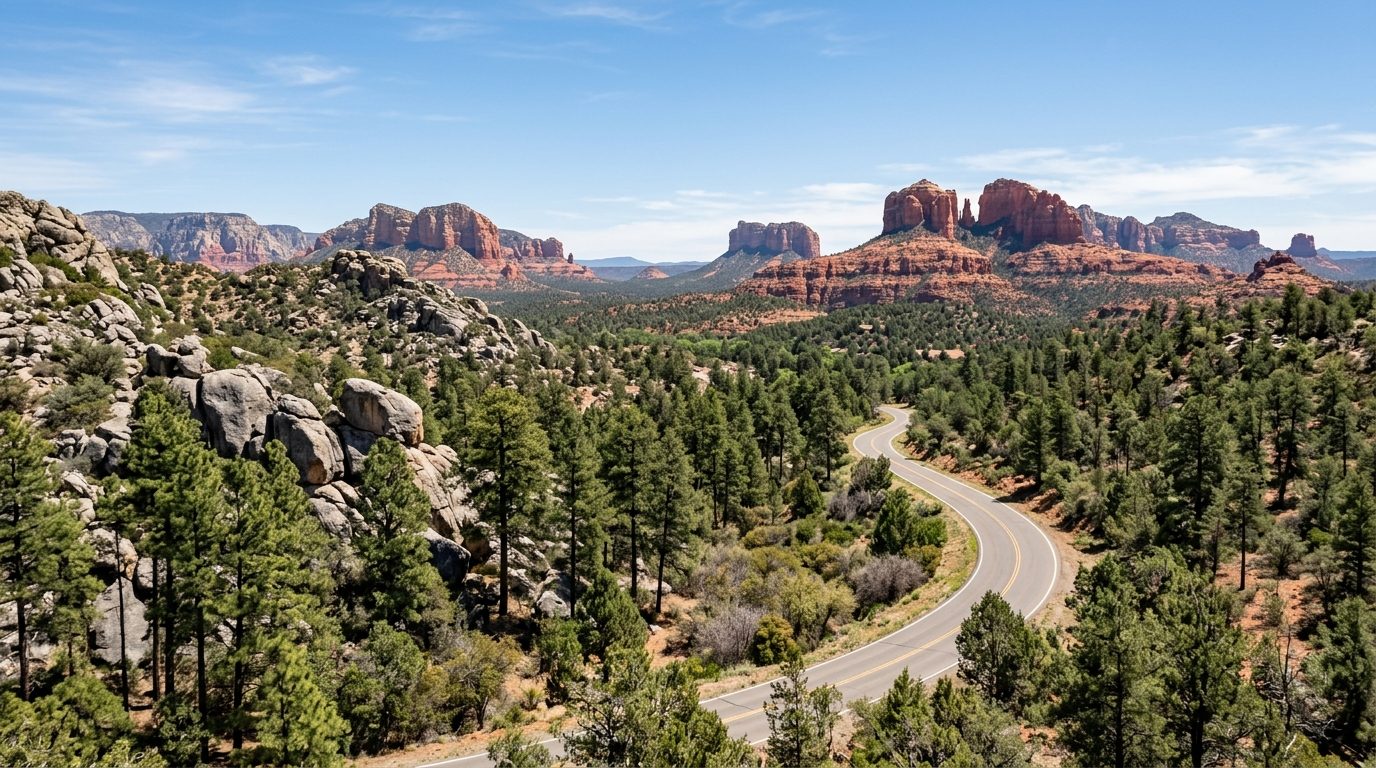
The Prescott Valley-Prescott metro sits in central Arizona’s high country, on the transition between Mogollon Rim ponderosa pine forest and the drier grassland and chaparral of the Verde Valley. Prescott and the Bradshaw Mountains foothills sit at higher elevation, with granite boulder outcrops including the Granite Dells and a four-season climate of cold winters and mild summers. Prescott Valley, Chino Valley, and the Verde Valley towns of Cottonwood, Clarkdale, and Camp Verde sit lower and drier, in pinon-juniper woodland and high-desert scrub. Housing reflects this range: downtown Prescott has Victorian and early-20th-century homes on small in-town lots, Prescott Valley and Cottonwood favor newer stucco, tile-roof subdivisions built from the 1990s onward, and outlying towns keep a rural mix of older ranch houses, manufactured homes, and larger parcels. The metro reads as a small urban core surrounded by suburban planned growth and rural-fringe towns.
Homes near downtown Prescott’s historic courthouse square and the Mount Vernon and Hassayampa/Country Club historic districts tend to sit higher, reflecting walkability, mature tree cover, and historic-district protections limiting teardown and infill. Golf-course communities such as Prescott Lakes, built around the Granite Dells, and large-lot equestrian areas like Williamson Valley also carry a premium tied to views and lot size. Around Sedona, properties with direct red-rock views or proximity to Village of Oak Creek sit higher still, since the rock formations are the main draw. Farther out, Prescott Valley subdivisions along the Highway 69 corridor, Chino Valley, Dewey-Humboldt, and Camp Verde tend to price lower, sitting farther from downtown Prescott and Sedona’s scenery. Jerome, a former copper-mining town on a steep hillside, is a small, distinct market shaped by historic structures and scarce buildable land.
Healthcare and education anchor the local economy. Yavapai Regional Medical Center, part of Dignity Health/CommonSpirit Health, operates hospital campuses in Prescott and Prescott Valley and ranks among the metro’s largest employers. Embry-Riddle Aeronautical University’s residential Prescott campus, focused on aviation and aerospace degrees, is a major employer with a year-round student population. Yavapai College, based in Prescott with sites in Prescott Valley, Chino Valley, Clarkdale, and Sedona, adds education jobs. The Bob Stump VA Medical Center adds federal jobs. Yavapai County and local town governments are significant employers, as are the Yavapai-Prescott Indian Tribe’s casinos in Prescott and the Yavapai-Apache Nation’s Cliff Castle Casino in Camp Verde. Tourism tied to Sedona’s red rocks, historic Jerome, and Verde Valley wine-tasting rooms supports a substantial hospitality and retail base.
Wildfire is the dominant local risk factor: much of the metro borders Prescott National Forest, and homes in the wildland-urban interface face defensible-space expectations and tighter insurance underwriting. Water supply is a related, ongoing issue; some subdivisions rely on municipal systems while others depend on private wells or shared water companies, and buyers should confirm the water source before purchasing. Arizona’s property tax structure keeps rates comparatively low relative to home value, though rates and assessments vary by jurisdiction. Transit is limited and the metro is largely car-dependent, with Ernest A. Love Field in Prescott serving as the regional airport. Land use varies too: Prescott’s historic districts carry design-review restrictions, many subdivisions are HOA-governed, and Sedona straddles Yavapai and Coconino counties, affecting which county handles permitting for a given parcel. Buyers should also check floodplain status near the Verde River, Oak Creek, and Granite Creek.
Cities and Towns in the Prescott Valley Metro Area
Notable Communities and Neighborhoods
Prescott Valley Real Estate Market FAQ
How is the Prescott Valley-Prescott market area organized?
The metro is defined as Yavapai County, Arizona, and includes the incorporated towns of Prescott, Prescott Valley, Chino Valley, Clarkdale, Cottonwood, Jerome, Dewey-Humboldt, and Camp Verde, plus unincorporated communities such as Williamson Valley and Village of Oak Creek. Sedona is included as part of the metro, though the city itself straddles the Yavapai-Coconino county line, with the western portion of Sedona in Yavapai County.
Which areas of the metro tend to be more expensive, and why?
Homes closest to downtown Prescott’s historic courthouse square, protected historic districts, golf-course communities built around the Granite Dells, large-lot equestrian areas, and Sedona-area properties with red-rock views or proximity to the trail network tend to command a premium. These areas combine walkability or scenic value with limited additional land available for new construction, while subdivisions farther from downtown Prescott and from Sedona’s red rocks generally price lower.
What should buyers verify locally before purchasing in this metro?
Buyers should confirm each property’s water source, since some subdivisions use municipal systems while others rely on private wells or shared water companies, and check for wildfire defensible-space requirements given proximity to Prescott National Forest and other wildland vegetation. In and around Sedona, buyers should also confirm which county (Yavapai or Coconino) a given parcel falls in, since that affects permitting and recording. HOA rules, floodplain status near local waterways, and any historic-district design-review restrictions in Prescott are also worth checking before purchase.
What is the most significant region-specific risk in this market?
Wildfire is the most significant regional risk. Much of the metro sits in or adjacent to forested or wildland vegetation, and homes in the wildland-urban interface face defensible-space expectations and increasingly selective property insurance underwriting. This risk is compounded by periodic drought conditions in the region, which affect both fire behavior and local water supply.
Nearby Markets