
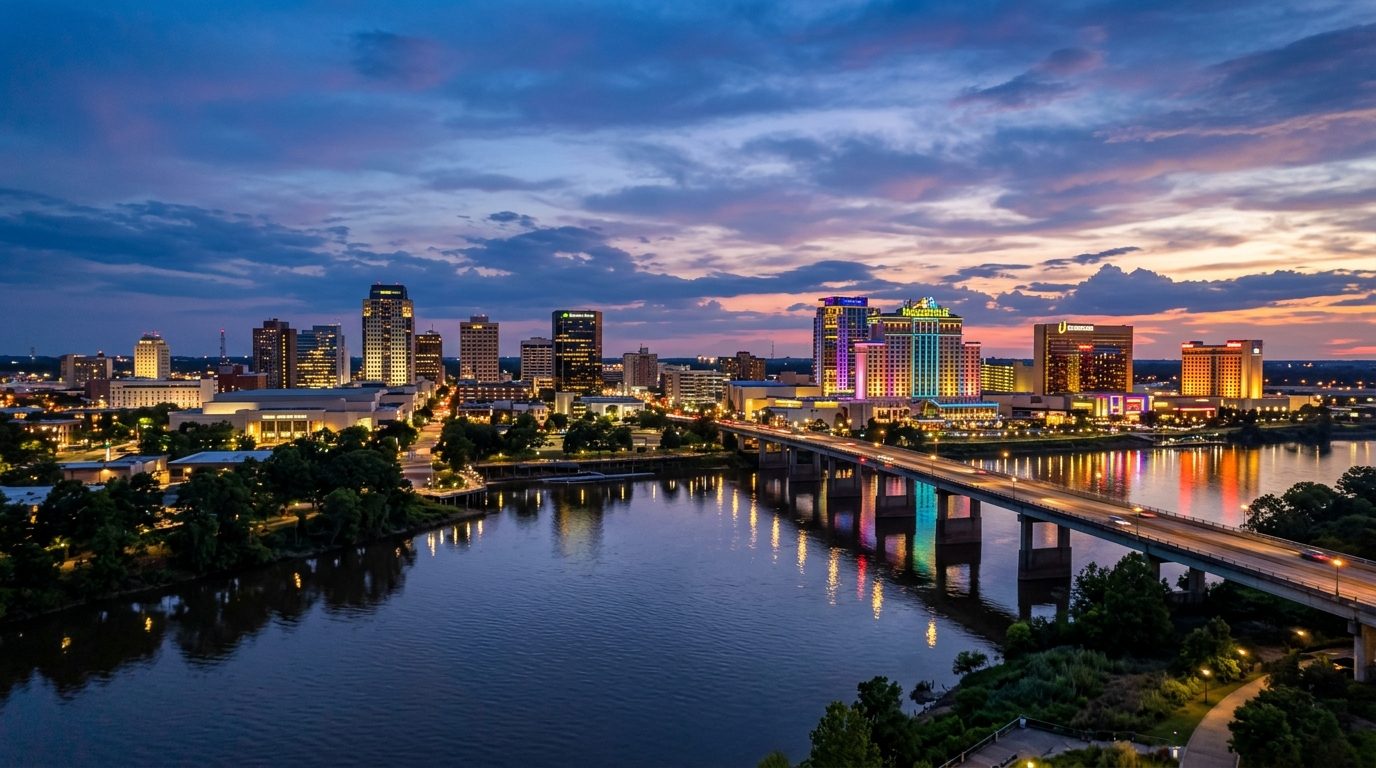
Current real estate market data, news and analysis for the Shreveport-Bossier City, LA metropolitan area — 383,474 residents across Bossier Parish, Caddo Parish and De Soto Parish counties.
Data as of May 2026. Sources: Redfin Data Center, U.S. Census Bureau.
Latest Shreveport Real Estate News
Coverage of this market is coming soon. Browse all housing market news.
Shreveport Real Estate Market Overview
The Shreveport-Bossier City metro sits in the northwest corner of Louisiana along the Red River, spanning Caddo Parish on the west bank, Bossier Parish on the east bank, and De Soto Parish to the south. Shreveport and Bossier City form the urban core, linked by several bridges across the river, while the surrounding parishes hold a mix of suburban subdivisions, rural crossroads towns, and pine timberland stretching toward the Texas and Arkansas state lines. Housing stock reflects this layered growth: brick ranch and traditional homes from the mid-twentieth century fill the older Shreveport neighborhoods, postwar-era subdivisions ring the inner suburbs, and newer traditional-neighborhood-style developments with sidewalks, mixed uses, and planned green space have emerged on the outer edges of both cities. Site-built homes on larger lots are common in the outlying parish towns.
Higher-priced housing in the metro tends to cluster in established, tree-lined sections of southern and southeast Shreveport and in newer planned communities built around private amenities such as golf courses, gated entries, or town-center commercial nodes. These areas draw a premium for mature landscaping, larger lots, proximity to well-regarded schools, and, in some cases, architectural or historic character. More affordable housing is generally found closer to the urban core, in older working-class neighborhoods of Shreveport and industrial corridors of Bossier City, as well as in the smaller outlying towns of the three parishes, where land is more plentiful but commute times to the city centers are longer. Neighborhoods nearer the Red River floodplain or older industrial districts also tend to carry lower price points relative to comparable inland properties.
The regional economy is anchored by Barksdale Air Force Base in Bossier Parish, home to Air Force Global Strike Command and a major driver of both direct employment and civilian contracting activity. Healthcare is another core pillar, led by Willis-Knighton Health System and the Ochsner LSU Health Shreveport academic medical campus, alongside other hospital systems serving the wider Ark-La-Tex region. Gaming and hospitality form a distinct local sector, with several riverboat and land-based casinos operating along the Red River in both cities, supported by the Louisiana Boardwalk entertainment and retail district on the Bossier riverfront. To the south, De Soto and Caddo parishes sit atop the Haynesville Shale, and natural gas exploration and production remain an active part of the local economy, alongside longstanding employment from parish school systems, state government offices, and manufacturing and utility operations.
Buyers should be aware that Louisiana assesses property taxes differently than many states, with a homestead exemption that reduces the taxable value of an owner-occupied primary residence, and with parish and municipal millage rates that vary by taxing district and can change with voter-approved measures. Because the metro is built along a working river, flood zone status is an important factor to confirm parcel by parcel with FEMA maps and the relevant parish or city floodplain office, particularly for property near the Red River, Cross Bayou, Cross Lake, or other low-lying drainage areas; flood insurance requirements and elevation certificates can affect both financing and long-term costs. Buyers should also verify whether a property lies inside city limits or unincorporated parish territory, since this affects services, permitting, and applicable tax rates, and should check with the local parish assessor for any pending drainage or infrastructure projects that could affect a specific address.
Cities and Towns in the Shreveport Metro Area
Notable Communities and Neighborhoods
Shreveport Real Estate Market FAQ
How is the Shreveport-Bossier City metro organized geographically?
The metro is built around the Red River, which divides Shreveport in Caddo Parish on the west bank from Bossier City in Bossier Parish on the east bank; several bridges connect the two downtowns. De Soto Parish extends south of Shreveport and is more rural in character. Beyond the Shreveport-Bossier urban core, each parish contains smaller incorporated towns and unincorporated crossroads communities, with development generally thinning out toward the Texas and Arkansas state lines.
Which areas of the metro are pricier, and why?
Established neighborhoods in southern and southeast Shreveport, along with newer planned communities built around golf courses, gated entries, or town-center amenities, tend to command the highest prices. These areas benefit from mature tree cover, larger lots, well-regarded schools, and, in some historic sections, distinctive early-twentieth-century architecture. Areas closer to the urban core and older industrial corridors, along with the smaller outlying parish towns, tend to be more affordable, generally reflecting older housing stock, greater distance from employment centers, or proximity to industrial land use.
What should buyers verify locally before purchasing in this metro?
Buyers should confirm whether a property sits inside city limits or unincorporated parish territory, since this affects tax rates, permitting, and service provision. It is also worth checking with the parish assessor’s office on homestead exemption eligibility and current millage rates, confirming flood zone status through FEMA maps, and asking the relevant parish or city planning office about any pending drainage, road, or utility projects that could affect the property.
What flood-related risks should buyers near the Red River be aware of?
Because Shreveport and Bossier City sit directly on the Red River, and lower-lying areas near Cross Bayou and Cross Lake also drain toward it, flood zone designation varies significantly by parcel. Levees protect much of the urban riverfront, but property near the river, its tributaries, or other low drainage areas should have its FEMA flood zone status and any elevation certificate confirmed directly with the parish or city floodplain office, since this affects insurance requirements and financing.
Nearby Markets