
Current real estate market data, news and analysis for the Monroe, LA metropolitan area — 222,390 residents across Morehouse Parish, Ouachita Parish, Richland Parish and Union Parish counties.
Data as of May 2026. Sources: Redfin Data Center, U.S. Census Bureau.
Latest Monroe Real Estate News
Coverage of this market is coming soon. Browse all housing market news.
Monroe Real Estate Market Overview
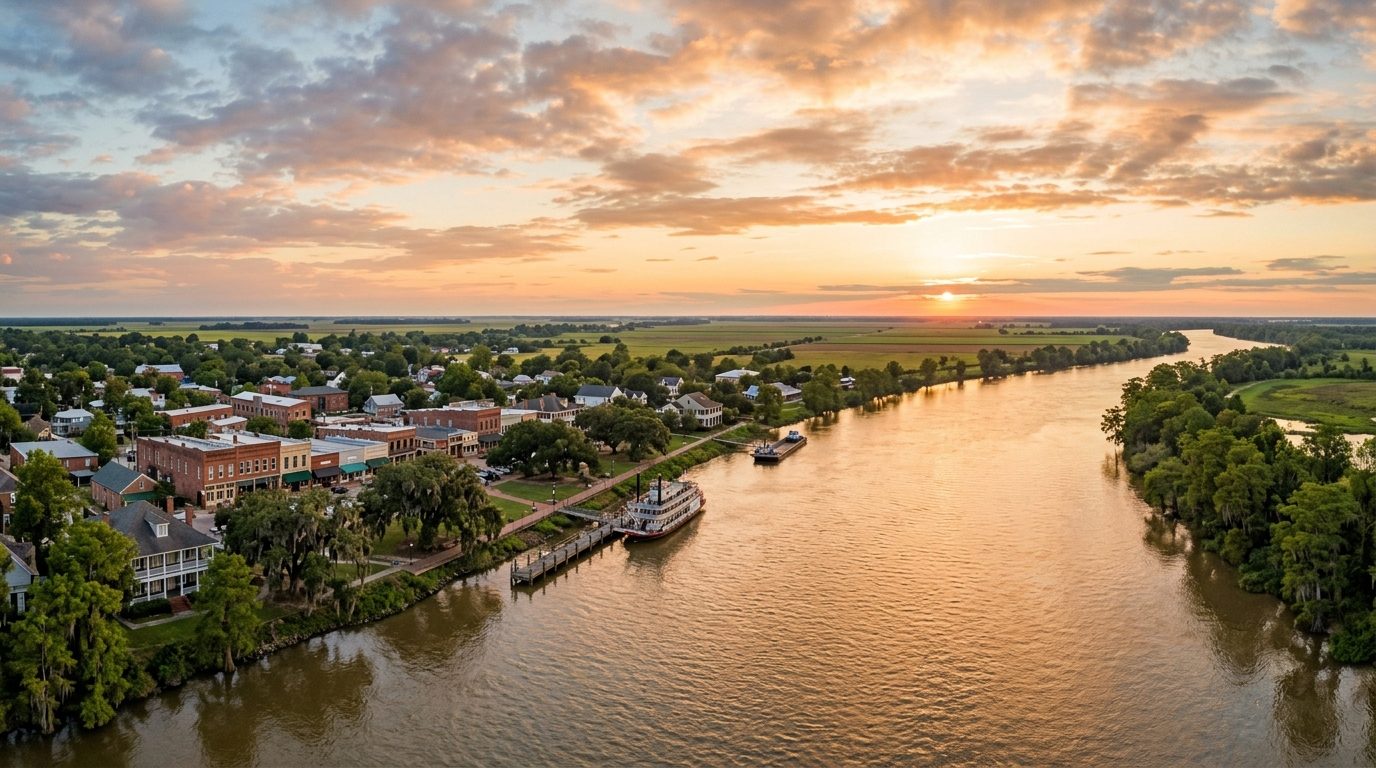
The metro sits in the Mississippi Delta region of northeast Louisiana, split by the Ouachita River, with Monroe on the east bank and its sister city on the west bank connected by bridges. The core parish is flat delta and coastal-plain terrain prone to heavy seasonal rainfall, while the three outlying parishes are more agricultural and rural. Housing stock includes an older streetcar-era core in Monroe with early-twentieth-century bungalow and revival-style homes, newer suburban subdivisions and lake-oriented development on the metro’s edges, and older farmhouse and rural housing spread across the outlying parishes.
A historic neighborhood near downtown Monroe, developed in stages beginning in the late nineteenth century and tied to the area’s early oil and beverage-industry fortunes, remains one of the metro’s most desirable addresses for its architecture and mature tree canopy. A golf-oriented community along the river on the west side of the metro offers newer, higher-end custom construction, and growth areas around a nearby lake in the outlying parishes are drawing newer suburban and lake-recreational development. More industrial, working-class neighborhoods near former mill sites and the smaller towns in the most rural outlying parishes are the metro’s most affordable, reflecting both older housing stock and a contracting local timber and paper economy in parts of the region.
A regional public university anchors the core parish’s economy and is known for operating the state’s only publicly funded pharmacy program. Two hospital systems, one tied to a Baton Rouge-based Catholic health network and a separate regional medical center, are among the metro’s largest employers. A long-established local telecommunications company remains headquartered in the metro on paper, though its physical footprint and operational presence here have shrunk considerably in recent years as the company has consolidated elsewhere; a paperboard manufacturing plant with roots going back roughly a century continues to operate after a substantial capital modernization. The most rural outlying parish’s economy has historically leaned on a large paper mill that closed some years ago, and agriculture remains a backbone of that parish’s economy today.
This metro sits in a genuinely humid, rainy part of the country, and both the river running through its core and smaller bayous have flooded repeatedly, so flood insurance is worth carrying even for property outside a mapped high-risk zone. Louisiana’s property taxes are low by national standards, and the state’s homestead exemption shields a meaningful portion of a primary residence’s value from parish-level taxes. Public transit is limited, and the metro is car-dependent outside its two core cities. State law specifically allows rural subdivisions on well and septic systems outside incorporated areas, which explains the pattern of scattered rural residential development across the outlying parishes, and buyers there should verify water and sewer provider status parcel by parcel. Homeowners associations are less universal here than in some fast-growing Louisiana parishes, showing up mainly in the newer golf-oriented and lake-area developments rather than across the board.
Cities and Towns in the Monroe Metro Area
Notable Communities and Neighborhoods
Monroe Real Estate Market FAQ
How is the Monroe-area housing market organized?
The metro centers on twin cities split by the Ouachita River, surrounded by three more rural, agricultural parishes, with the core parish carrying most of the area’s job base and housing variety.
Which parts of the metro tend to be pricier?
A historic in-town neighborhood near downtown Monroe and a golf-oriented riverfront community on the west side of the metro generally price above the area’s older industrial neighborhoods and the smaller towns in the more rural outlying parishes.
What should buyers verify locally before purchasing?
Confirm well and septic status for rural property outside the two core cities, check flood history and current flood-zone maps for anything near the river or its bayous, and ask specifically whether a subdivision has an active homeowners association.
What’s a region-specific risk buyers should know about?
Heavy seasonal rainfall and a history of significant flooding along the river and surrounding bayous make flood insurance worth considering even for property that isn’t in a mapped high-risk zone.
Nearby Markets