
Current real estate market data, news and analysis for the Pittsburgh, PA metropolitan area — 2.4M residents across 8 counties in Pennsylvania.
Data as of May 2026. Sources: Redfin Data Center, U.S. Census Bureau.
Latest Pittsburgh Real Estate News
Pittsburgh Real Estate Market Overview
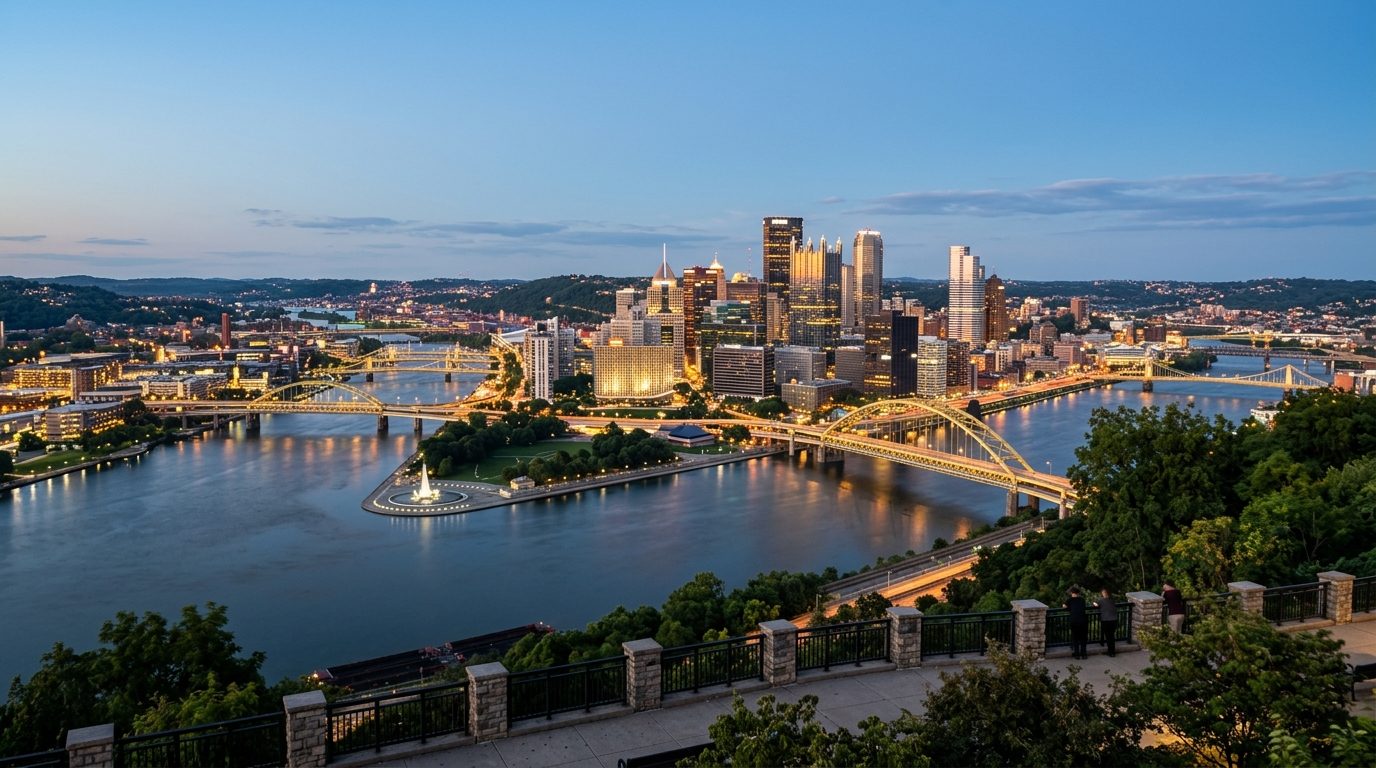
Pittsburgh, PA spans the confluence of the Allegheny, Monongahela and Ohio rivers and extends through steep urban hills, established suburbs, former industrial towns and rural counties. Pittsburgh contains brick rowhouses, detached houses, duplexes, apartment buildings, converted factories and housing built into hillsides and narrow valleys. Close-in communities such as Dormont, Mount Lebanon, Wilkinsburg, Bellevue and Millvale developed around streetcar and industrial corridors. Allegheny County’s outer areas and Butler, Washington and Westmoreland counties contain newer subdivisions, townhouses and larger-lot housing, while Beaver, Armstrong, Fayette and Lawrence counties include mill towns, small boroughs, farms and wooded properties.
Higher price tiers are generally associated with Shadyside, Squirrel Hill, Point Breeze, Sewickley, Fox Chapel, Mount Lebanon, Upper St. Clair, Peters Township and selected northern suburban communities. Their position reflects proximity to employment and universities, established architecture, school districts, larger lots or limited buildable land. More attainable choices are commonly found in former mill communities, portions of the Mon Valley, Beaver County, New Castle, Uniontown and older neighborhoods farther from the principal education and medical centers. Lower acquisition costs can be accompanied by aging infrastructure, renovation needs, steep access, local inspection requirements or limited employment and transit options.
Health care, higher education, technology, finance, advanced manufacturing, energy and professional services anchor the regional economy. UPMC, Allegheny Health Network, the University of Pittsburgh and Carnegie Mellon University support major medical, research and academic employment. PNC Financial Services and other corporate employers maintain operations in the region, while robotics, autonomous systems and life-science firms have expanded around university research. Manufacturing, logistics and energy-related work remain important in outer counties. Employment is concentrated in downtown Pittsburgh, Oakland, the airport corridor and suburban business districts, but river crossings and topography can make travel times highly route-dependent.
Topography and older construction create distinctive property concerns. Hillside homes may require review of retaining walls, drainage, foundations, driveways and access during winter weather. Mine-subsidence risk affects some areas, while river valleys and low-lying properties may be exposed to flooding. Freeze-thaw cycles, heavy rain and aging sewer systems can contribute to basement water and pavement damage. Light rail, buses and inclines serve selected urban and southern corridors, but many outer communities remain automobile-dependent. The region’s numerous municipalities have different taxes, schools, occupancy inspections, utilities and permitting rules. Buyers should verify the precise jurisdiction, sewer responsibility, mine maps, flood conditions and maintenance obligations for private roads, shared driveways or retaining structures.
Cities and Towns in the Pittsburgh Metro Area
Show all 175
Notable Communities and Neighborhoods
Pittsburgh Real Estate Market FAQ
How is the Pittsburgh metro housing market geographically organized?
The region is divided by the Allegheny, Monongahela and Ohio rivers, steep hills, valleys and numerous independent municipalities. Housing ranges from dense city rowhouses and hillside neighborhoods to streetcar suburbs, former mill towns, newer subdivisions and rural properties.
Which Pittsburgh-area locations generally sit in higher price tiers?
Shadyside, Squirrel Hill, Point Breeze, Sewickley, Fox Chapel, Mount Lebanon, Upper St. Clair, Peters Township and selected northern suburbs generally occupy higher tiers. Proximity to major institutions, established schools, larger lots and limited developable land contribute.
What should buyers inspect in an older Pittsburgh-area home?
Buyers should review foundations, retaining walls, roofs, masonry, sewer laterals, electrical systems, plumbing and evidence of basement water. Hillside drainage, mine-subsidence exposure and prior structural repairs may also require specialized evaluation.
Why does municipality matter in the Pittsburgh region?
The metro contains many cities, boroughs and townships with different taxes, schools, inspections, utilities and permitting rules. Two nearby properties can therefore have different services and ownership requirements despite sharing the same general location.
Nearby Markets