
Current real estate market data, news and analysis for the Morgantown, WV metropolitan area — 141,995 residents across Monongalia and Preston counties.
Data as of May 2026. Sources: Redfin Data Center, U.S. Census Bureau.
Latest Morgantown Real Estate News
Coverage of this market is coming soon. Browse all housing market news.
Morgantown Real Estate Market Overview
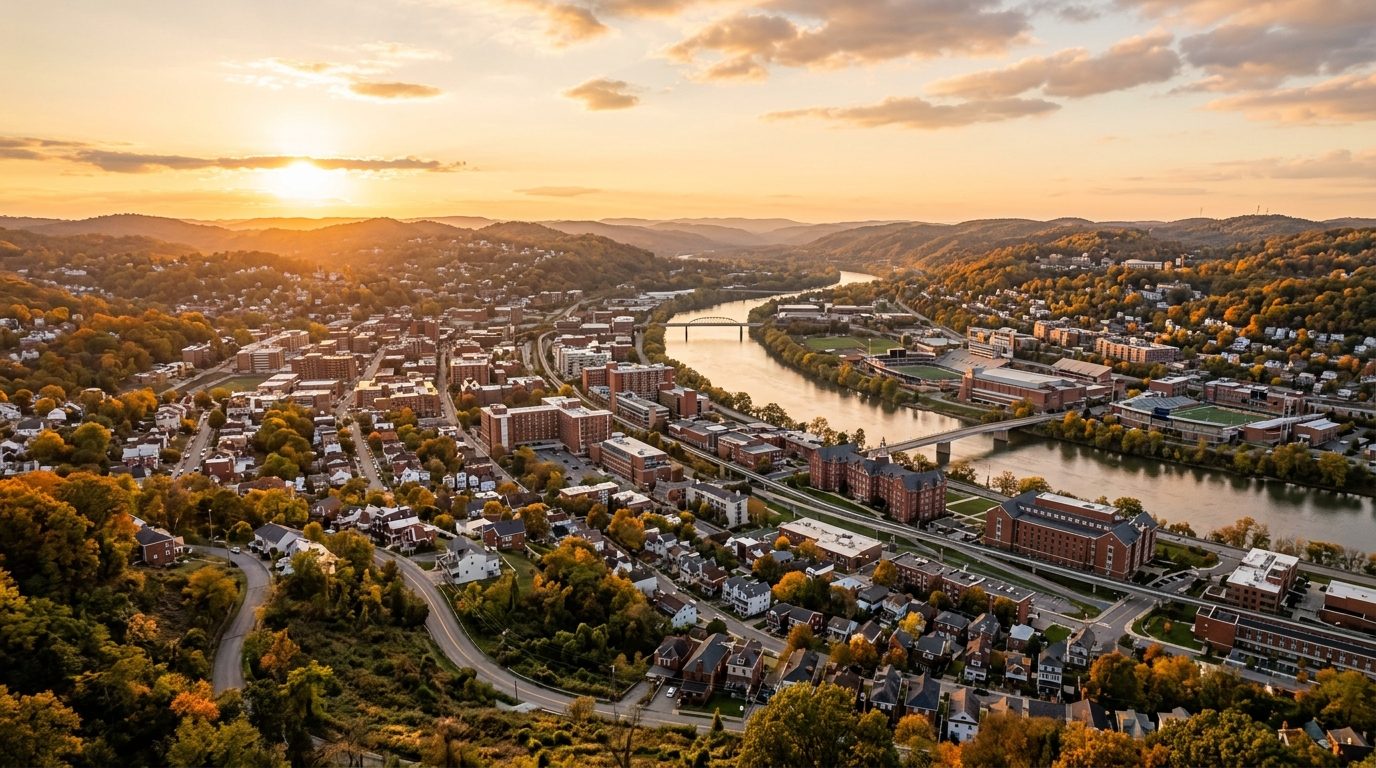
Morgantown sits along the Monongahela River in the Appalachian hills of north-central West Virginia, its streets folded around bluffs and terraces rather than laid out flat. West Virginia University anchors the city physically and economically, with a downtown campus near the river and a second Evansdale campus reached by hillside roads and an elevated rail transit line built to solve the terrain problem. The housing stock reflects this layered history: dense, walkable blocks of older brick and frame homes and student-oriented multifamily buildings sit close to campus and downtown, giving way to postwar single-family neighborhoods on the surrounding ridges and newer subdivisions further out toward the county line. Rowhouses, duplexes, and small apartment buildings mix with single-family homes in the core, shaped by the university’s presence and by limited buildable land in the valley.
Proximity to WVU and downtown generally commands a premium, particularly in established, tree-lined neighborhoods on the ridge above the river valley where lots are larger and terrain flattens enough for conventional yards and driveways. Areas favored by faculty, medical staff, and long-tenured residents sit apart from the dense student rental corridors surrounding campus, trading walkability for quiet streets and stronger owner-occupancy. Neighborhoods closer to the river and the main commercial corridors carry a more mixed character, with older housing stock, more rental and student-occupied units, and greater variability in condition block to block. Newer construction toward the eastern edge of the metro, near the lake formed by the Cheat River, draws buyers seeking larger modern homes and level lots away from the university core. Hillside neighborhoods closer in offer character and views but often come with steep driveways and retaining walls.
The local economy is dominated by education and healthcare rather than a single industry. West Virginia University is the region’s largest employer, drawing students, faculty, and staff from across the state and supporting a secondary economy of housing, dining, and services tied to the academic calendar. WVU Medicine, anchored by Ruby Memorial Hospital, is the region’s major healthcare system and among the largest private employers in the state. The pharmaceutical legacy of the former Mylan manufacturing complex, now redeveloped by WVU as a life-sciences business hub, continues to shape the local economy after the original manufacturing operation wound down. County government, public schools, and a steady base of retail, hospitality, and professional services round out the employment picture, giving the metro a more institutional, less cyclical character than many comparable Appalachian metros.
Buyers should account for terrain when evaluating any property here: steep lots, retaining walls, and hillside drainage are common concerns, and slope stability is worth checking before purchase on older streets built into hillsides. The river valley setting means some low-lying areas near the Monongahela and its tributaries carry flood risk worth verifying through local floodplain maps rather than assuming from a listing. Winters bring snow and ice on hilly roads, and older housing in the university core may carry deferred maintenance behind attractive facades. The large student population shapes zoning and rental patterns near campus, so buyers wanting a quieter setting should confirm a neighborhood’s rental density and any local occupancy ordinances. Property taxes and insurance should be confirmed with Monongalia or Preston County officials, since Morgantown spans both, and land-use rules should be reviewed with the relevant planning office before renovation.
Cities and Towns in the Morgantown Metro Area
Notable Communities and Neighborhoods
Morgantown Real Estate Market FAQ
How is the Morgantown housing market organized geographically?
The market centers on West Virginia University and downtown Morgantown along the Monongahela River, with denser, older, and more rental-heavy housing near campus giving way to single-family neighborhoods on the surrounding ridges and newer subdivisions toward the edges of Monongalia and Preston counties.
Which areas of Morgantown tend to be pricier, and why?
Established neighborhoods on higher ground away from the densest student rental corridors, along with newer development near the lake formed by the Cheat River, tend to command higher prices because they offer larger lots, flatter terrain, and quieter, more owner-occupied streets, while areas closest to campus trade those features for walkability and rental demand.
What should buyers verify locally before purchasing in the Morgantown area?
Buyers should confirm floodplain status near the river and its tributaries, check slope and drainage conditions on hillside lots, verify property tax rates and insurance costs with the appropriate county office since Morgantown spans both Monongalia and Preston counties, and review any local zoning or rental-occupancy rules if the property sits in or near a student housing area.
What region-specific risks should buyers be aware of in Morgantown?
Hillside terrain and river-valley flooding are the primary physical risks, since many streets are built into slopes with retaining walls and drainage systems that require upkeep, and some lower-lying parcels near the Monongahela River sit within or close to mapped floodplains that affect insurance and building requirements.
Nearby Markets