
Current real estate market data, news and analysis for the Parkersburg-Vienna, WV metropolitan area — 87,264 residents across Wirt and Wood counties.
Data as of May 2026. Sources: Redfin Data Center, U.S. Census Bureau.
Latest Parkersburg Real Estate News
Coverage of this market is coming soon. Browse all housing market news.
Parkersburg Real Estate Market Overview
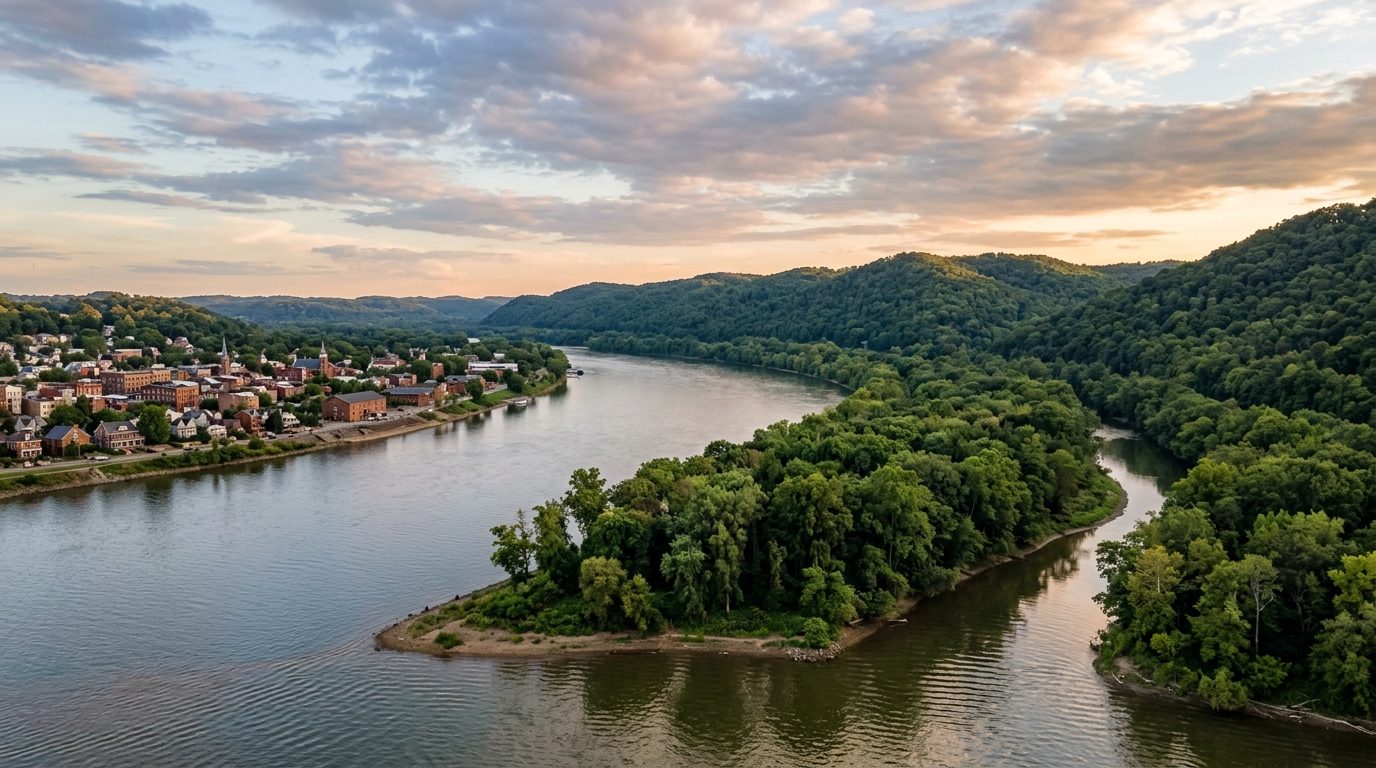
Parkersburg and Vienna sit at the confluence of the Ohio and Little Kanawha rivers in Wood County, ringed by the steep, unglaciated hills typical of the Allegheny Plateau, while rural Wirt County stretches upstream along the Little Kanawha around its seat of Elizabeth. Parkersburg’s older core neighborhoods hold a substantial stock of Victorian-era homes from an oil, glass, and rail boom in the late 1800s and early 1900s, protected in part by two National Register historic districts, while Vienna, which grew mostly after World War II, is built out mainly in ranches, bungalows, and split-levels with newer custom subdivisions on its outskirts. A municipal floodwall built in the mid-1900s still rings downtown Parkersburg along the river.
Vienna’s newer subdivisions away from its commercial strip, along with North Hills — a small, fully residential incorporated town on the edge of the metro — and Parkersburg’s historic Julia-Ann Square and Avery Street districts tend to be the more desirable parts of the metro, the first two for space and privacy and the historic districts for their architecture. Parkersburg’s older core neighborhoods and the former city of South Parkersburg, annexed decades ago, are generally more affordable, as is rural Wirt County around Elizabeth, which has a much smaller and more remote housing market. Williamstown sits in between, with modest, older housing tied historically to its glass industry.
The local economy has long been anchored by chemical manufacturing, led by the Washington Works plant in Wood County — originally built by DuPont and now owned by Chemours — alongside a hospital, WVU Medicine Camden Clark Medical Center, and a large federal employer, the Bureau of the Fiscal Service, which relocated to Parkersburg decades ago. The local school district and county government are also major employers, and legacy industries including glassmaking and rail once shaped Williamstown and the wider county. Manufacturing has continued to evolve, with a newer medium-duty truck plant operated by Hino Motors now located in Wood County.
The area’s biggest known environmental concern is historic PFOA (or "C8") contamination of drinking water linked to the Washington Works plant, which prompted a large class-action settlement and has led to ongoing monitoring of the local water supply; buyers, especially near Vienna and Washington, should check current water-district advisories. Flood risk is real and historically significant, with downtown Parkersburg protected by its floodwall but low-lying areas outside the wall and along the Little Kanawha warranting a FEMA flood-zone check. West Virginia and Wood County property taxes are relatively low, with a homestead exemption available to owners 65 and older or with disabilities. Transit is limited to a small local bus system serving only Parkersburg and Vienna, and buyers on rural or unincorporated land should confirm zoning and enforcement, which can vary meaningfully between the incorporated towns and the surrounding county.
Cities and Towns in the Parkersburg Metro Area
Notable Communities and Neighborhoods
Parkersburg Real Estate Market FAQ
How is the Parkersburg-area housing market organized?
Parkersburg and Vienna form the urban core along the Ohio River, with North Hills as a small, distinct residential enclave nearby. Williamstown and rural Wirt County around Elizabeth make up smaller, more affordable sub-markets farther from the metro’s job centers.
Which parts of the metro tend to be pricier?
Vienna’s newer subdivisions, the small residential town of North Hills, and Parkersburg’s historic Julia-Ann Square and Avery Street districts tend to be the most desirable and highest-priced parts of the metro. Older core Parkersburg neighborhoods and rural Wirt County are generally more affordable.
What should buyers verify before purchasing here?
Given the area’s history of PFOA contamination linked to a nearby chemical plant, buyers — especially near Vienna and Washington — should check current local water-quality advisories. It’s also worth confirming FEMA flood-zone status for any property outside downtown Parkersburg’s floodwall or near the Little Kanawha River.
What is the biggest region-specific risk for homeowners here?
Flood exposure along the Ohio and Little Kanawha rivers, outside the protection of Parkersburg’s downtown floodwall, is the most significant physical risk in the area. The region’s legacy chemical manufacturing and its associated water-quality monitoring are also worth understanding before buying near the plant.
Nearby Markets