
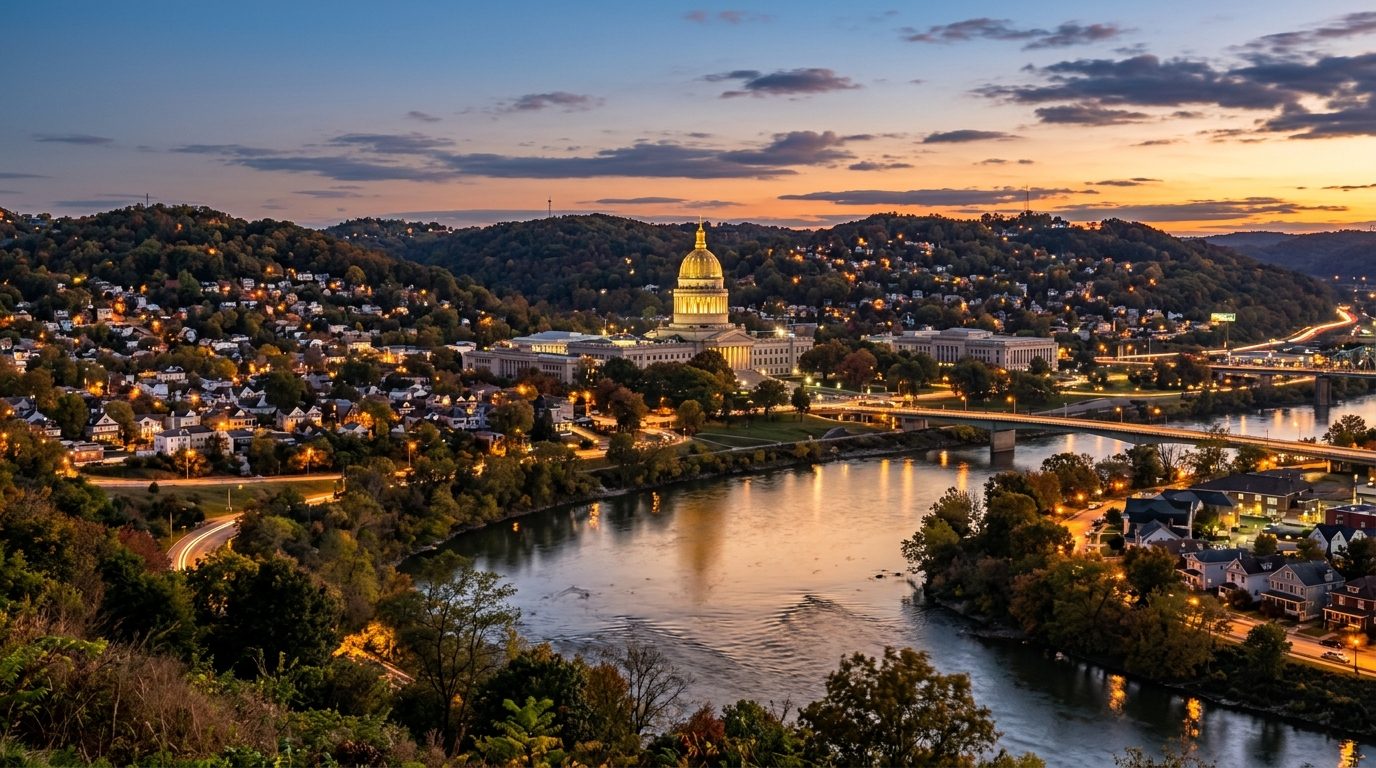
Current real estate market data, news and analysis for the Charleston, WV metropolitan area — 200,170 residents across Boone, Clay and Kanawha counties.
Data as of May 2026. Sources: Redfin Data Center, U.S. Census Bureau.
Latest Charleston Real Estate News
Coverage of this market is coming soon. Browse all housing market news.
Charleston Real Estate Market Overview
Charleston, West Virginia’s state capital, sits where the Elk River meets the Kanawha River in the Kanawha Valley, hemmed in by the steep, forested ridges typical of central Appalachia. The developed core occupies the narrow river floodplain, while residential neighborhoods climb the surrounding hillsides, and the outlying reaches of Boone and Clay counties are largely mountainous and sparsely populated. Summers are warm and humid, winters cold with regular snow, and the valley’s topography means weather and drainage patterns vary block by block more than they would on flatter ground. Housing stock in the city itself skews older, with a meaningful share dating to the early 20th century, when Charleston’s coal, chemical, timber, and salt industries built substantial homes on the surrounding hills. Flatter, river-adjacent neighborhoods hold an older, more modest housing stock built for the industrial workforce of that same era, while Boone and Clay counties retain the small-town and rural housing patterns of the coalfields.
Hillside and ridge neighborhoods such as South Hills carry a structural premium tied to their views, larger lots, and the substantial early-20th-century homes built there by the city’s industrial elite. Flatter, river-adjacent districts closer to downtown and the Elk River tend to sit at a different price point, shaped by older, smaller housing and greater flood exposure. Kanawha City, on the south bank of the Kanawha River, mixes riverfront housing with proximity to the University of Charleston. Boone and Clay counties, where the coal industry’s long decline has reshaped local economies, generally reflect that broader economic shift in their housing markets, and buyers there should weigh distance from Charleston’s job base along with the usual factors of home age and condition.
State and local government together make up the single largest employment category in the metro, a natural consequence of Charleston’s role as the seat of West Virginia’s government. Charleston Area Medical Center is the region’s largest individual employer and anchors a broader healthcare sector. Manufacturing has a real presence too: Toyota operates an engine and transmission plant in the area, and Dow Chemical maintains a significant chemical manufacturing operation, continuing a regional tradition dating back to the valley’s early-20th-century chemical-industry era. The University of Charleston and West Virginia State University both sit within the metro, adding higher education to the employment base.
Flooding is the area’s defining local risk: the Elk and Kanawha rivers have produced flooding well above modern base-flood thresholds multiple times, and steep tributary hollows are prone to flash flooding after heavy rain, so checking FEMA flood-zone status for any specific parcel is essential. The valley’s steep terrain also raises landslide and slope-stability considerations; the county’s subdivision regulations set limits on cut-and-fill slopes and require engineering review for steep-slope development, and the state geological survey publishes landslide-susceptibility mapping worth consulting before building or buying on a hillside lot. West Virginia assesses property at a fraction of market value with a comparatively low effective tax rate, and a homestead exemption is available to qualifying senior and disabled owner-occupants, so buyers should confirm current figures with the county assessor. Public transit is limited to the Kanawha Valley Regional Transportation Authority’s bus routes connecting Charleston with South Charleston, St. Albans, Nitro, and other valley communities; most of the metro is car-dependent.
Cities and Towns in the Charleston Metro Area
Notable Communities and Neighborhoods
Charleston Real Estate Market FAQ
How is the Charleston, WV housing market organized across the metro?
The market splits between hillside neighborhoods overlooking downtown, flatter river-adjacent districts closer to the Elk and Kanawha rivers, and outlying Boone and Clay county communities shaped by the region’s coal-industry history.
Which parts of the Charleston metro tend to carry higher prices?
Hillside neighborhoods such as South Hills, with their larger lots, views, and substantial early-20th-century homes, generally command more than flatter, older river-adjacent districts.
What should buyers verify before purchasing in the Charleston area?
Check FEMA flood-zone status for any property near the Elk or Kanawha rivers or a steep tributary hollow, and for hillside lots, confirm slope-stability and any required engineering review with the county.
Is flooding a significant risk for homeowners in the Charleston metro?
Yes — the city has recorded multiple floods well above the standard base-flood threshold, and flash flooding from steep hollows is a regular seasonal risk, so flood history and insurance requirements should be checked for any address.
Nearby Markets