
Current real estate market data, news and analysis for the Ocala, FL metropolitan area — 442,660 residents across Marion county.
Data as of May 2026. Sources: Redfin Data Center, U.S. Census Bureau.
Latest Ocala Real Estate News
Ocala Real Estate Market Overview
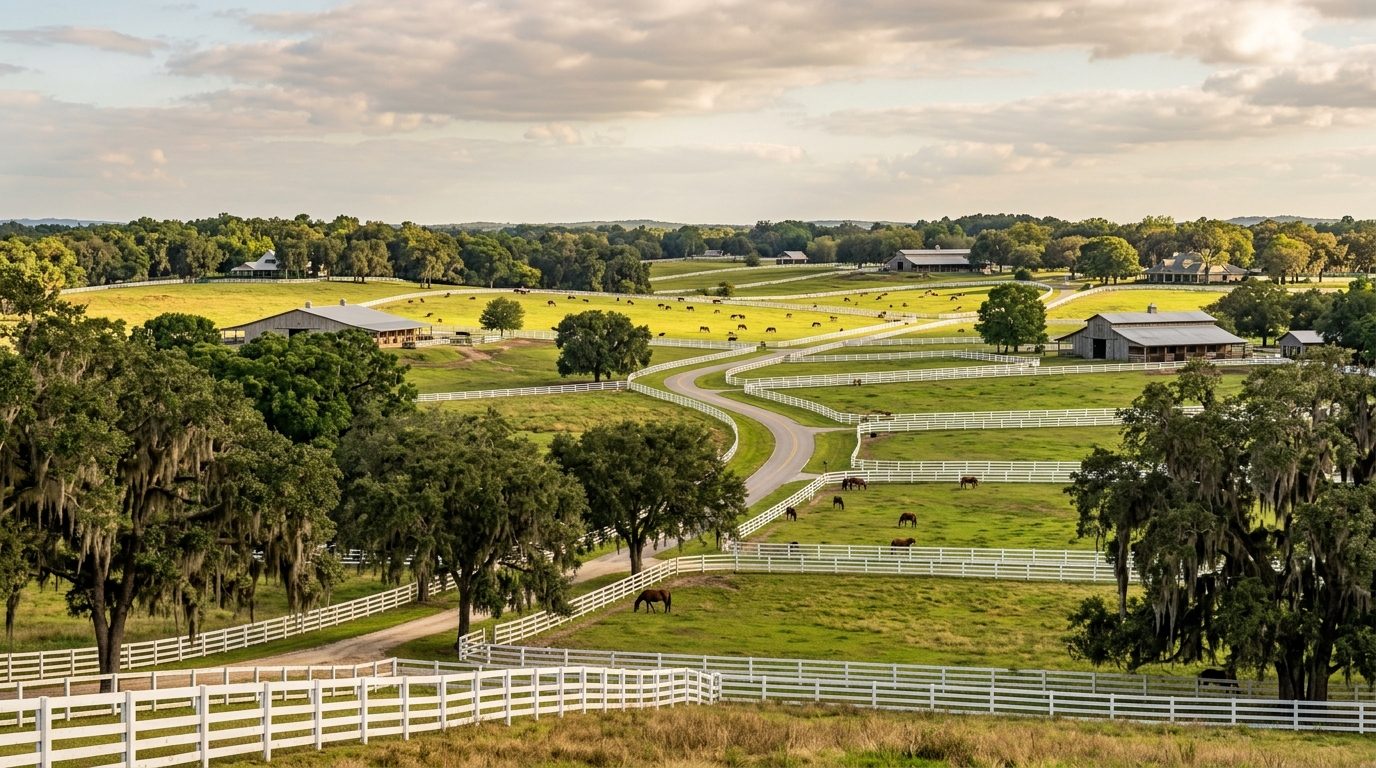
Ocala sits on the Ocala Uplift in north-central Florida, a limestone plateau of rolling hills, longleaf pine and sand-live-oak scrub, and karst terrain riddled with natural springs. The rural northwest is horse country, one of the world’s few major thoroughbred breeding centers, with an unusually high concentration of horse farms per square mile. Being inland rather than coastal moderates hurricane intensity by the time storms reach the area. Housing stock ranges from historic early-1900s homes downtown to large tracts of newer suburban subdivisions, extensive age-restricted communities built for retirees, gated equestrian estates on multi-acre parcels, and older platted neighborhoods dating to 1960s and 1970s land-boom developments.
Pricing tends to run highest around Golden Ocala and the equestrian corridor northwest of the city, near the World Equestrian Center, where gated, amenity-rich estates sit close to the region’s signature industry. Other gated horse-country acreage commands similar interest. Older, established communities such as Silver Springs Shores and Marion Oaks offer more affordable entry points, reflecting their smaller lots and older infrastructure from an earlier development era. Age-restricted communities vary widely within themselves, with pricing shaped by amenity level, home age, and proximity to the main commercial corridors.
Marion County Public Schools is the area’s largest employer, and healthcare adds substantial depth through AdventHealth Ocala and the HCA Florida hospital system. Manufacturing is represented by Lockheed Martin and fire-truck maker E-ONE, while logistics and distribution have grown quickly along the interstate corridor, drawing large warehouse operations from national retailers and shippers. The equine industry itself, spanning breeding, training, veterinary care, and events, is a defining piece of the local economy, and active-adult, age-restricted development is both a housing category and an economic driver in its own right.
Karst geology makes sinkhole risk a genuine and locally documented concern, worsened by heavy seasonal rainfall dissolving the limestone beneath the surface, so buyers should check county sinkhole records and disclosure history for a specific address before making an offer. Inland location reduces direct hurricane wind exposure relative to coastal Florida, but wind damage, localized flooding, and tornadoes spun off from storm bands remain real possibilities during the summer and fall storm season. Property tax bills combine county, school, and municipal rates, and many newer communities carry additional community development district assessments that buyers should confirm before purchasing, since those assessments are not always obvious from a listing alone. HOA governance is common in gated and age-restricted neighborhoods, and flood-zone status varies enough by parcel, given the springs, wetlands, and low-lying drainage areas nearby, that it should be checked individually rather than assumed from a neighborhood’s general reputation.
Cities and Towns in the Ocala Metro Area
Notable Communities and Neighborhoods
Ocala Real Estate Market FAQ
How is the Ocala-area housing market organized geographically?
The market splits between the horse-farm belt and gated equestrian estates northwest of the city, established mid-century subdivisions closer to downtown and to the east and south, and a substantial layer of age-restricted, active-adult communities spread across the metro.
Which areas tend to carry higher prices, and why?
Golden Ocala and the equestrian corridor near the World Equestrian Center command the highest prices, tied to gated access, amenities, and the prestige of the surrounding horse industry. Older platted communities like Silver Springs Shores and Marion Oaks sit at the more affordable end, reflecting smaller lots and older infrastructure.
What should buyers verify before purchasing in this market?
Check county sinkhole disclosure records for the specific parcel, given the area’s karst geology, and confirm whether a newer-community home carries a community development district assessment on top of standard property taxes. In age-restricted or gated neighborhoods, review HOA rules and fees as well.
What is the region’s biggest structural risk for homeowners?
Sinkhole risk from the underlying limestone geology is the area’s most distinctive hazard, particularly after heavy rain, and it affects both insurance availability and required disclosures. Buyers should treat it as a standard due-diligence item rather than a rare occurrence in this part of Florida.
Nearby Markets