
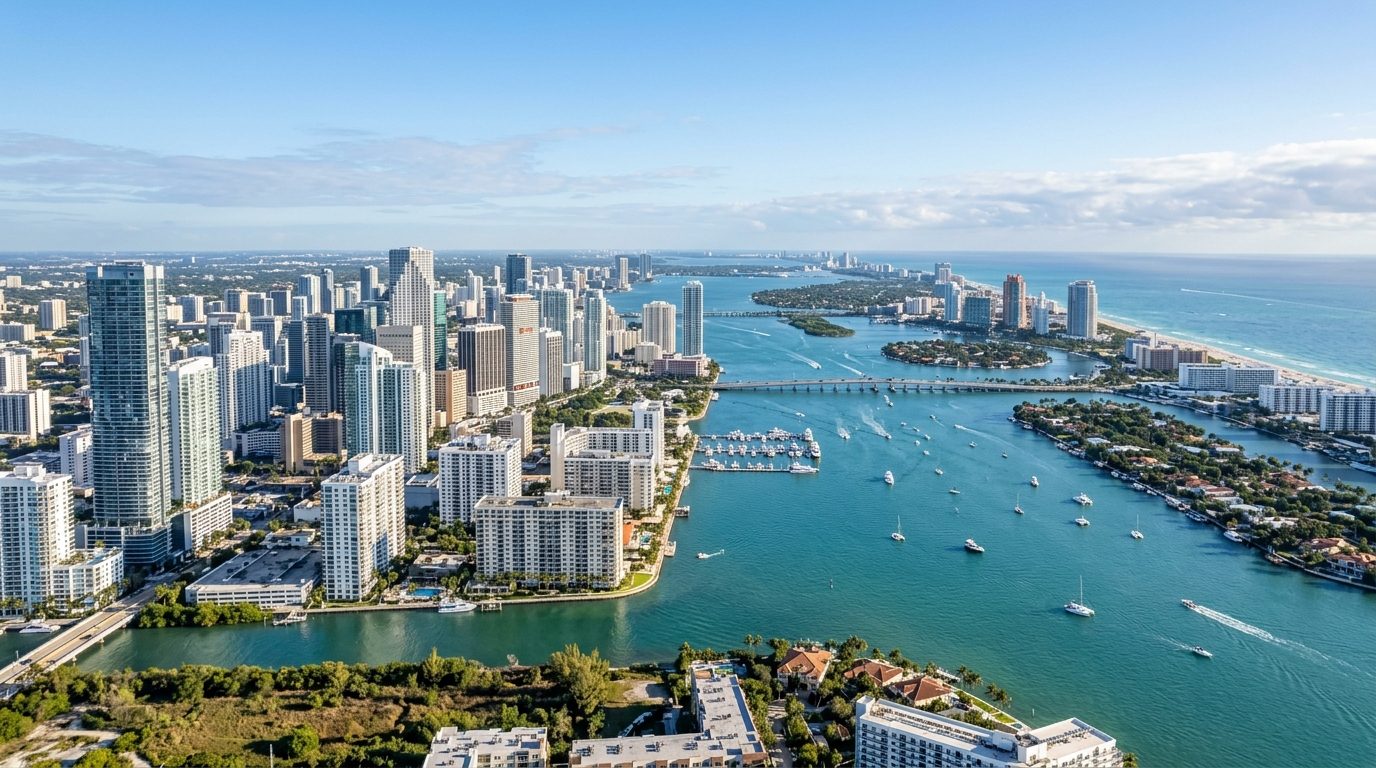
Current real estate market data, news and analysis for the Miami-Fort Lauderdale-West Palm Beach, FL metropolitan area — 6.4M residents across Broward, Miami-Dade and Palm Beach counties.
Data as of May 2026. Sources: Redfin Data Center, U.S. Census Bureau.
Latest Miami Real Estate News
Miami Real Estate Market Overview
Miami-Fort Lauderdale-West Palm Beach covers Miami-Dade, Broward and Palm Beach counties along South Florida’s Atlantic coast. The urbanized area forms a long north-south corridor between the ocean and the Everglades, with development concentrated around coastal barrier islands, downtown districts, older inland suburbs and western planned communities. Miami and Miami Beach contain condominium towers, apartment buildings, historic houses and dense infill. Fort Lauderdale combines waterfront homes, mid-century neighborhoods, townhouses and downtown development. Boca Raton, Delray Beach, West Palm Beach and coastal Palm Beach County add condominium districts, golf communities and established single-family areas. Farther west and south, housing includes master-planned communities, larger suburban tracts and agricultural-edge development.
Higher price tiers are generally associated with Palm Beach, Miami Beach, Bal Harbour, Indian Creek, Key Biscayne, Coral Gables, Pinecrest, waterfront Fort Lauderdale, coastal Boca Raton and selected communities in Delray Beach and Jupiter. Waterfront access, limited land, private security, larger lots, club amenities and proximity to business or cultural districts all influence those tiers. More attainable ownership options are commonly found in inland portions of Miami-Dade and Broward, older condominium buildings, southern Miami-Dade communities and parts of western Palm Beach County. A lower purchase cost does not necessarily mean lower monthly ownership expense because insurance, association fees, reserve funding, flood coverage, special assessments and commuting can materially alter the comparison.
The regional economy is supported by tourism, international trade, aviation, health care, finance, construction, logistics, higher education and professional services. PortMiami, Port Everglades and the area’s international airports connect the region to Latin America, the Caribbean and global shipping routes. Major employment anchors include county governments, Baptist Health South Florida, the University of Miami and its health system, Memorial Healthcare System, Broward Health and health institutions in Palm Beach County. Financial and professional-services activity is concentrated in downtown Miami, Brickell, Coral Gables, Fort Lauderdale, Boca Raton and West Palm Beach, while hospitality and marine industries are distributed along the coast.
Property risk and building governance require careful review. Hurricanes, wind-driven rain, storm surge, inland flooding, salt exposure and high groundwater can affect insurance, maintenance and building systems. Flood zones and evacuation zones are not identical, so buyers should examine both along with elevation and claims history. Florida condominium rules require attention to structural inspections, reserve funding, association records and pending assessments, especially in older coastal buildings. Homeowners association rules are also important in western planned communities. Metrorail, Metromover, Tri-Rail and Brightline serve selected corridors, but much of the region remains automobile-oriented. Buyers should verify wind and flood insurance, roof and opening protection, association finances, seawall condition where applicable, local short-term-rental rules and whether planned redevelopment could alter views, traffic or neighborhood character.
Cities and Towns in the Miami Metro Area
Show all 103
Notable Communities and Neighborhoods
Miami Real Estate Market FAQ
How is the Miami metro housing market geographically organized?
The market follows a long coastal corridor through Miami-Dade, Broward and Palm Beach counties, with barrier-island condominiums, waterfront neighborhoods, inland suburbs and western planned communities. The Everglades limits westward expansion and channels development along major north-south routes.
Which parts of the Miami metro generally sit in higher price tiers?
Palm Beach, Miami Beach, Bal Harbour, Indian Creek, Key Biscayne, Coral Gables, Pinecrest, waterfront Fort Lauderdale and selected coastal communities in Boca Raton, Delray Beach and Jupiter generally occupy higher tiers. Waterfront access, limited land, larger lots, private amenities and proximity to business districts are key influences.
What should buyers review in a South Florida condominium?
Buyers should examine structural inspection records, reserve studies, budgets, insurance, pending assessments, litigation and restrictions on leasing or renovations. The condition of the building envelope, roof, elevators and seawall can also affect future obligations.
How should a Miami-area buyer evaluate flood and storm risk?
Buyers should review the parcel’s flood zone, elevation, evacuation zone, prior claims and drainage history, then obtain wind and flood insurance quotes. Flood zones and evacuation zones measure different risks and should not be treated as interchangeable.
Nearby Markets