
Current real estate market data, news and analysis for the Manhattan, KS metropolitan area — 136,122 residents across Geary, Pottawatomie and Riley counties.
Data as of May 2026. Sources: Redfin Data Center, U.S. Census Bureau.
Latest Manhattan Real Estate News
Manhattan Real Estate Market Overview
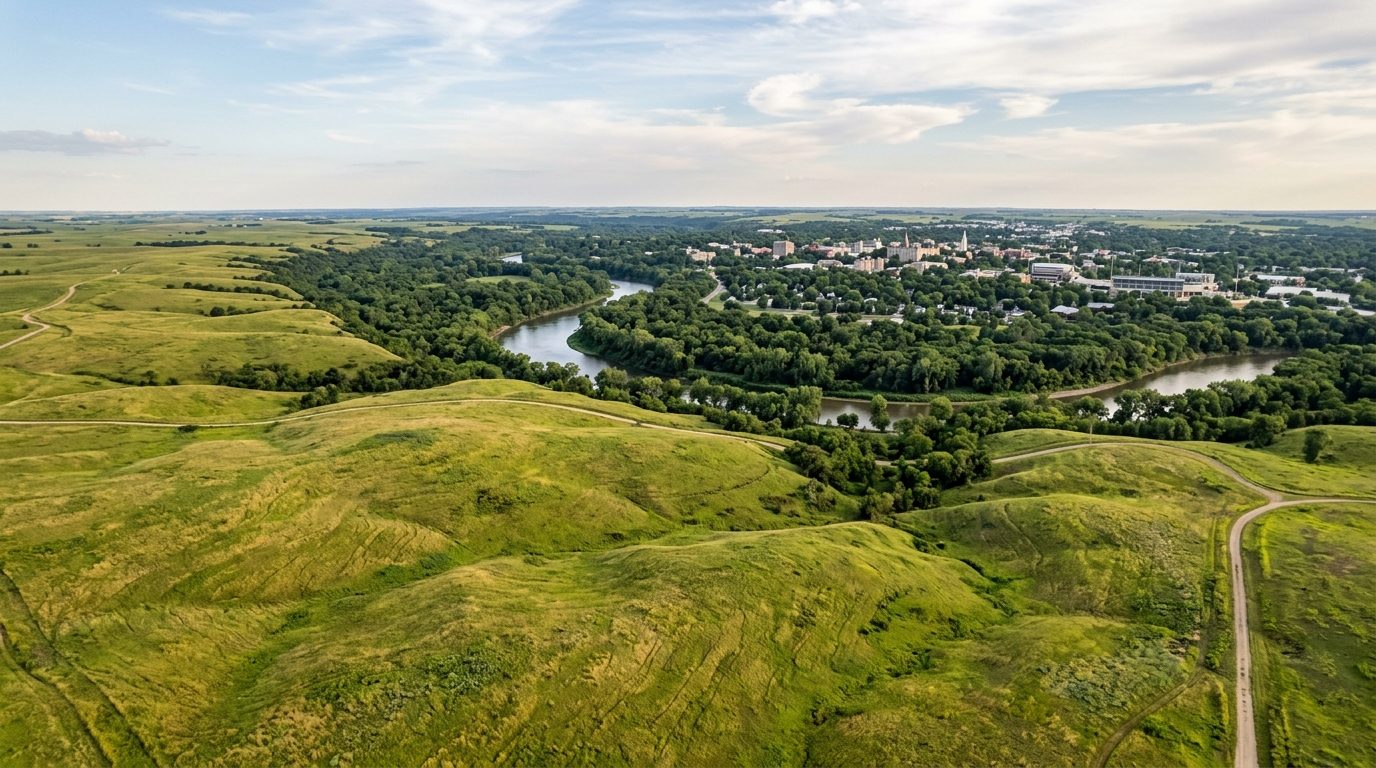
The Manhattan, Kansas metro sits at the eastern edge of the Flint Hills, a belt of tallgrass prairie and shallow limestone ridges. Manhattan occupies the valley where the Big Blue River meets the Kansas River, locally called the Kaw, with Tuttle Creek Lake impounded just north. Kansas State University anchors the west side, giving Manhattan the rhythm of a college town: a walkable core, older blocks around campus, and steady turnover of student rentals nearby. East of town, the Fort Riley military reservation spans Riley and Geary counties, with Junction City as its primary off-post community. Housing ranges from early limestone and brick homes near downtown and campus to mid-century ranch houses to newer subdivisions on the northwest and west sides. Smaller towns such as Wamego and Riley retain older farmhouse housing on larger lots, reflecting the region’s agricultural base.
Within Manhattan, newer construction on the northwest side, including the Grand Mere golf-course community and subdivisions near Stagg Hill, Northview, Amherst and Miller Parkway, and Green Valley, sits toward the upper end of the market, with larger lots, newer stock, and proximity to trails and parks. Closer to campus, in the Redbud and Sunset blocks nearest Aggieville, homes are older and smaller, valued as much for student rental demand as owner-occupant appeal. Junction City, nearest Fort Riley’s gates, differs: housing is older and more modest, turnover faster as the population rotates on military orders, and more homes are rentals tied to the post’s assignment cycle. Rural towns across the three counties sit at the lower end, shaped by small-town, agricultural character rather than any single employer.
The metro’s economy centers on two institutions. Kansas State University, a land-grant research university strong in agriculture, veterinary medicine, and engineering, is the area’s largest employer and the source of Manhattan’s nickname, the Little Apple. Fort Riley, home to the Army’s 1st Infantry Division, employs thousands of soldiers and civilians and supports a large population of military families. A third anchor is the National Bio and Agro-Defense Facility, a USDA lab studying animal and foreign diseases. Healthcare is represented by Ascension Via Christi Hospital and Pawnee Mental Health Services. Private employers such as Manko Window Systems, Champion Teamwear, and software company CivicPlus round out a base leaning on the university, the military, and federal research.
Several factors matter before buying here. Fort Riley’s deployment cycle affects housing and rental demand in Junction City and nearby towns, with swings tied to unit deployments and the summer PCS season. Flood risk is real along the Kansas River, the Big Blue River, and Wildcat Creek, which runs through Manhattan; local flood history stretches back over a century, and Tuttle Creek Dam followed a major mid-century flood, so buyers should check FEMA flood maps near these waterways. Kansas property taxes rest on county appraisals and mill levies that vary by school district, so buyers should confirm the tax burden per address. Transit is limited to a local bus service, and most of the metro is car-dependent. The region sits within the Great Plains tornado risk zone, so buyers should ask about storm shelters in older homes. In smaller towns and unincorporated areas, buyers should verify well and septic condition, since rural properties often lack municipal water and sewer.
Cities and Towns in the Manhattan Metro Area
Notable Communities and Neighborhoods
Manhattan Real Estate Market FAQ
How is the Manhattan, Kansas metro organized?
The metro centers on two very different anchors. Manhattan itself is built around Kansas State University, with a compact, walkable downtown, an entertainment and retail district near campus called Aggieville, and residential neighborhoods radiating out from the original campus toward newer subdivisions on the city’s northwest and west sides. To the east, Junction City sits closest to the Fort Riley military reservation and functions largely as the post’s off-post community, with a housing market shaped by soldiers and families rotating in and out on orders. The remainder of Geary, Pottawatomie, and Riley counties consists of small agricultural towns such as Wamego, Onaga, and Westmoreland, along with unincorporated rural land.
Which areas of the metro tend to be pricier, and why?
Newer subdivisions on Manhattan’s northwest side, including the Grand Mere golf-course community and areas near Stagg Hill and Northview, tend to sit toward the upper end of the market because of newer construction, larger lots, and proximity to trails and recreation. Areas immediately around K-State and downtown carry a different dynamic: many homes there are older and smaller, and pricing is influenced heavily by demand from landlords renting to students rather than by owner-occupant preferences alone. Junction City and the smaller rural towns generally sit at the lower end of the range, reflecting older housing stock and a market shaped more by military turnover or small-town, agricultural conditions than by amenities.
What should buyers verify locally before purchasing in this metro?
Buyers should check current FEMA flood zone status for any property near the Kansas River, the Big Blue River, or Wildcat Creek, since this metro has a documented flood history. In unincorporated parts of Geary, Pottawatomie, and Riley counties, buyers should confirm whether a property relies on a private well and septic system rather than municipal water and sewer, and have both inspected. It is also worth confirming zoning and any agricultural-use restrictions on rural parcels, checking permit history on additions or renovations with the relevant city or county office, and, for homes near Fort Riley, understanding how proximity to the post affects rental demand and resale patterns.
What is the biggest region-specific risk to understand here?
Two factors stand out. First, this part of Kansas sits within the broader Great Plains tornado risk zone, so buyers should ask whether a home has a storm shelter or safe room, particularly older houses that may not have one. Second, Fort Riley’s deployment and rotation cycle has an outsized effect on the local housing and rental market, especially in Junction City: unit deployments, permanent-change-of-station moves, and the broader military assignment cycle can shift rental vacancy and demand more sharply than in a typical civilian market, which is worth factoring into any investment or resale timeline near the post.
Nearby Markets